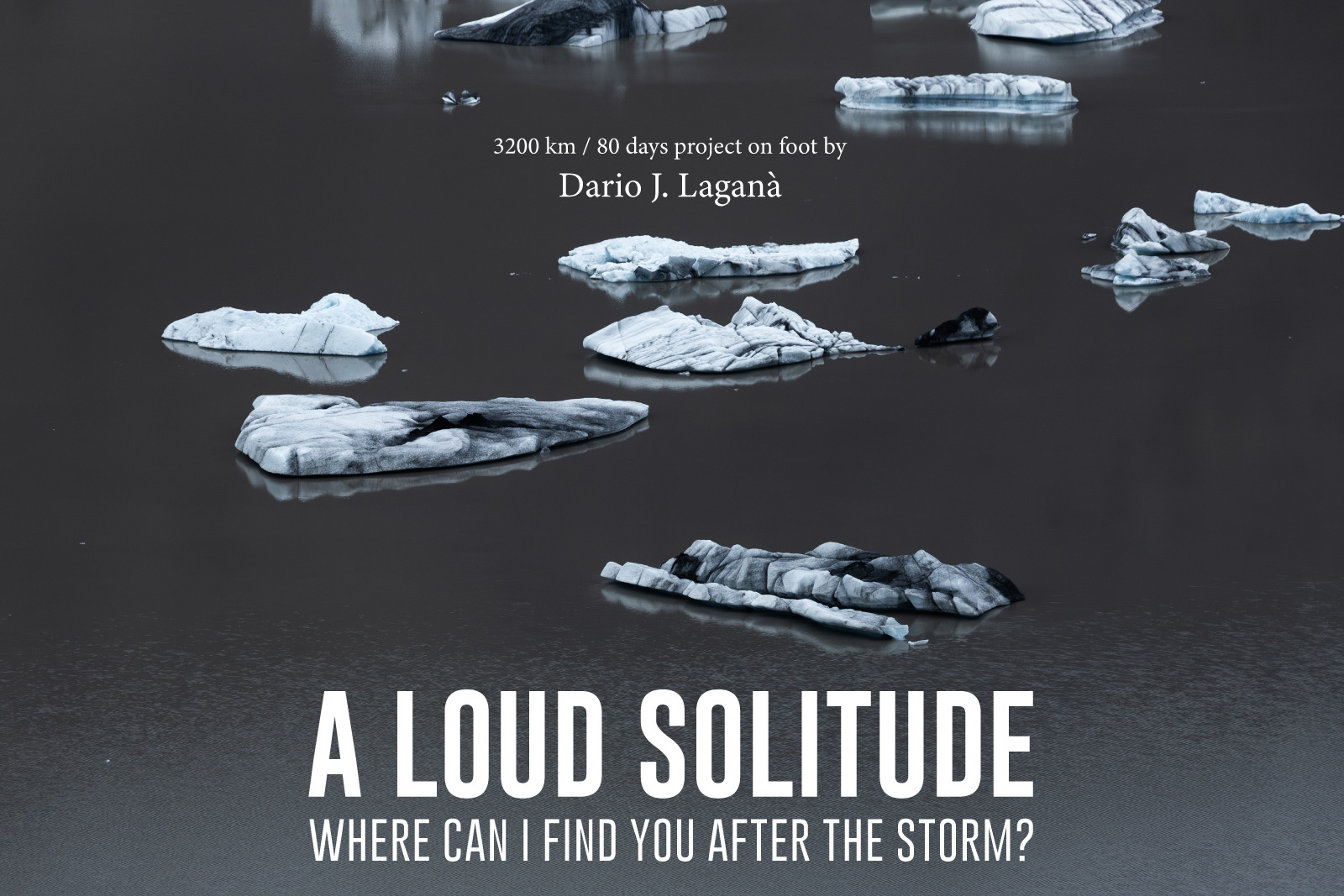
THE PLAYGROUND
During the summer of 2026, I spent nearly three months walking in a circle. Starting and ending in Reykjavík, I crossed the land counterclockwise on foot with a trolley.
To most people, it probably sounds bizarre, crazy, or just stupid. I don’t blame them. I felt the exact same way several times during those 80 days of walking, even though I chose to run the project in summer, a detail that should, in theory, reinforce the thesis of my sanity.
I planned this project for two years, first testing it in Norway in 2024, then taking a long break to figure out how to approach it, running experiments, enduring thousands of trial-and-error failures, breaking everything multiple times, and watching side projects collapse. Eventually, I arrived at the deadline with what I thought was a solid plan, only for it to fail in just two weeks.
But failure was never an alternative to the project itself. To fail is to understand the limits of a specific moment, to collect new ideas, get your thoughts in check, and try again differently. I got stopped by the wind after just 300 km, but then I walked nearly 3,000 km more.
This started as a project of solitude, an experiment in nomadic life built around my body as the center of action. Those were the premises, but everything shifted once I arrived in Iceland. I map out scenarios, not to control life, but to be ready, to avoid unnecessary drama, and to stay focused, much like the ordered chaos of Francis Bacon. Unfortunately, scenarios are just predictions. They might save your life and they can be correct, but they can never be complete.
Once I left Reykjavík, I walked for a couple of hours until the first big curve in the landscape hid the future from my eyes. Crossing that curve, I started crying. All the scenarios, all the tension, expectations, motivations, books, interviews, connections, preparations, and gear, after all of that, I was simply alone. From that moment on, I couldn't change how I had prepared. The reality of the wilderness was right in front of my face, and it was entirely up to my own two feet to handle it.
I was surprised by how fast the project shifted from me at the center of the action to this idea of a playground. Imagine sitting at your desk with all your tools, ready to work. But then the desk starts shifting. The tools stay, yet the object of your investigation is moving right beneath your feet, and you have to work with what you have. You never know if a specific condition will last a day, a week, or a month, or if you will have to follow up on it, or if it was just an instant’s game. You just have to live with it, make the best of what's in front of you, because that is what you get, and you just played with it.
Before leaving Berlin, two separate friends, both painters and experimenters, gave me the best advice ever: forget about producing works for the future, just enjoy the moment, have fun.
So I did. I just had fun.
The best way to follow this project is on Instagram or checking the Field diary
Kári - The wind
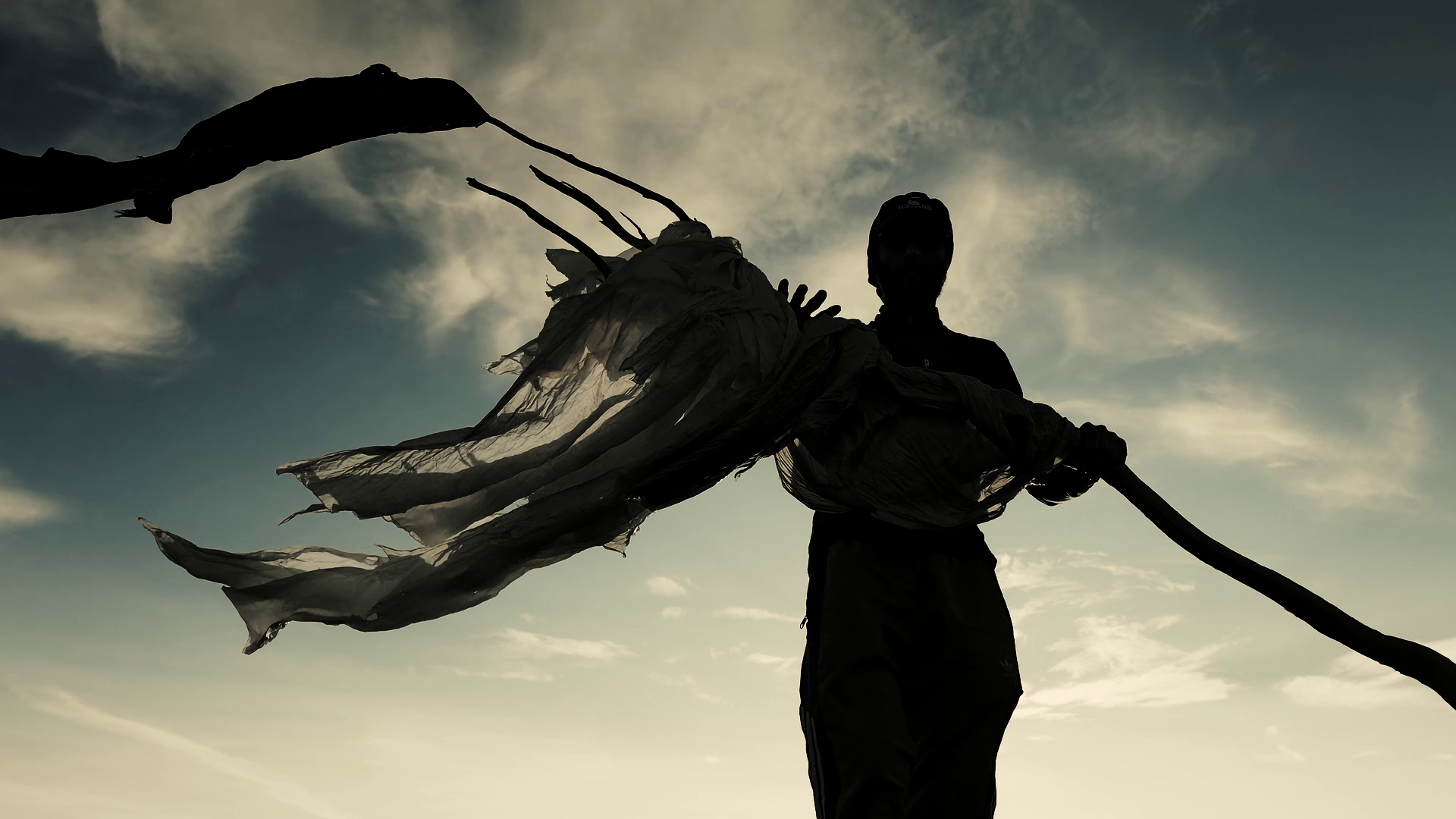
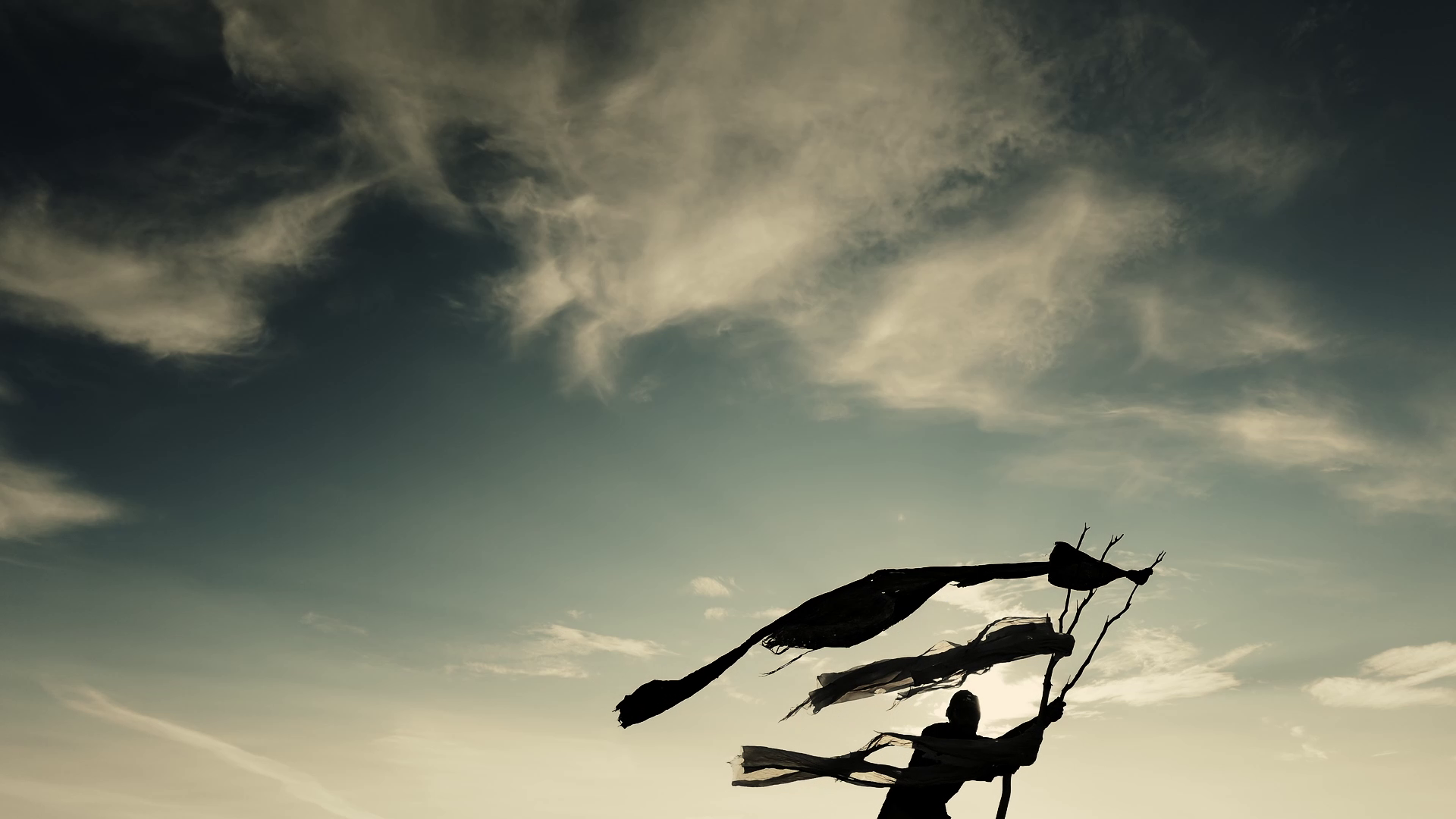
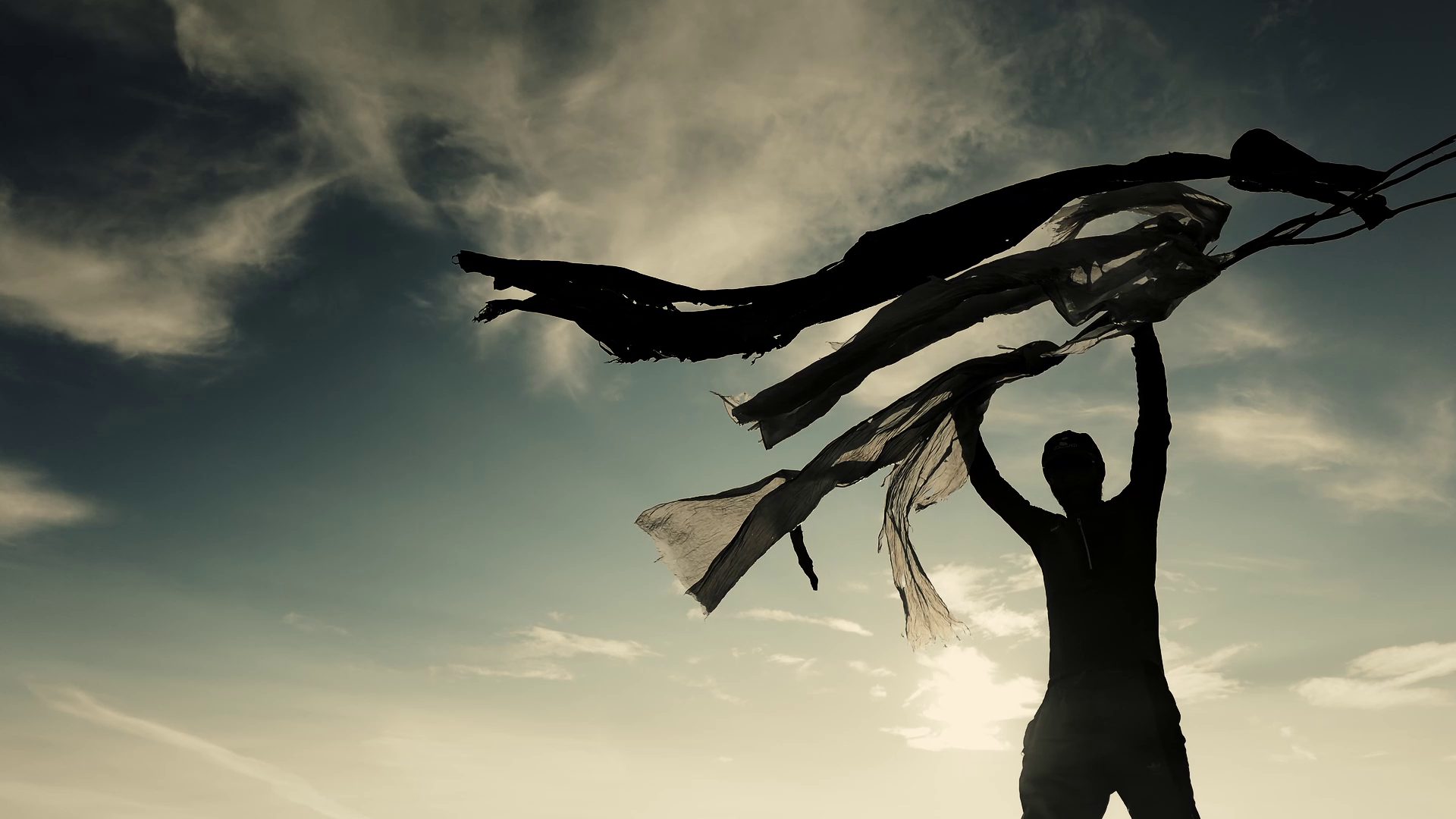
Video performance, single-channel video, 9 min 10 sec, 4K UHD, 16:9, colour, stereo sound, recorded on the 31th July 2026 at Innstrandavegur (Westfjords), Iceland
Two weeks into my 3,200-kilometre walk around Iceland, the wind destroyed my trolley. Scattered across a slope, its broken pieces forced me to stop, ask for help, repair what I could, and completely reconsider what I was doing, as I was scared. What had initially been a mere environmental condition became an entity I had to confront, investigate, and ultimately come to terms with.
In Norse tradition, the wind is called Kári, a name still used in Nordic countries today. I wanted to find a way to give Kári a voice and a body, to physically manifest an element that inherently has none. I made several attempts to build a piece, overlapping the iterations of our encounters using what I had in those exact moments.
To give Kári a physical body, I began gathering wandering plastic strips from the fields that I found sailing across the landscape. I wrapped them around my backpack at first, to give physical evidence of the wind's presence.
To find Kári's voice, I started from the obvious approach of recording the sound of the wind from my tent. Along the way, I collected other sounds: from metal pipes, to scratching surfaces, to the wind trapped in man-made objects. These are mixed together with natural sounds and the fierce voices of Arctic tern (kría) birds, reflecting the messy, deep entanglement of human presence within the landscape.
After two months of exposure, observation, and experimentation, these physical elements finally came together when I reached the Westfjords. There, I found smaller branches of driftwood, light and manageable enough to hold, and I attached the accumulated plastic to one of them.
The resulting performance became a physical encounter with the wind. Shot in slow motion, it captures how I abandoned myself to a mix of resistance and surrender, between being pushed and pushing back. There was no judgment or anger, only the solitude of my presence in the landscape, an attempt to understand and be understood.
When the performance ended, I removed the plastic and left the driftwood resting on the shore. The wind remained.
WHAT THE WATER KNOWS
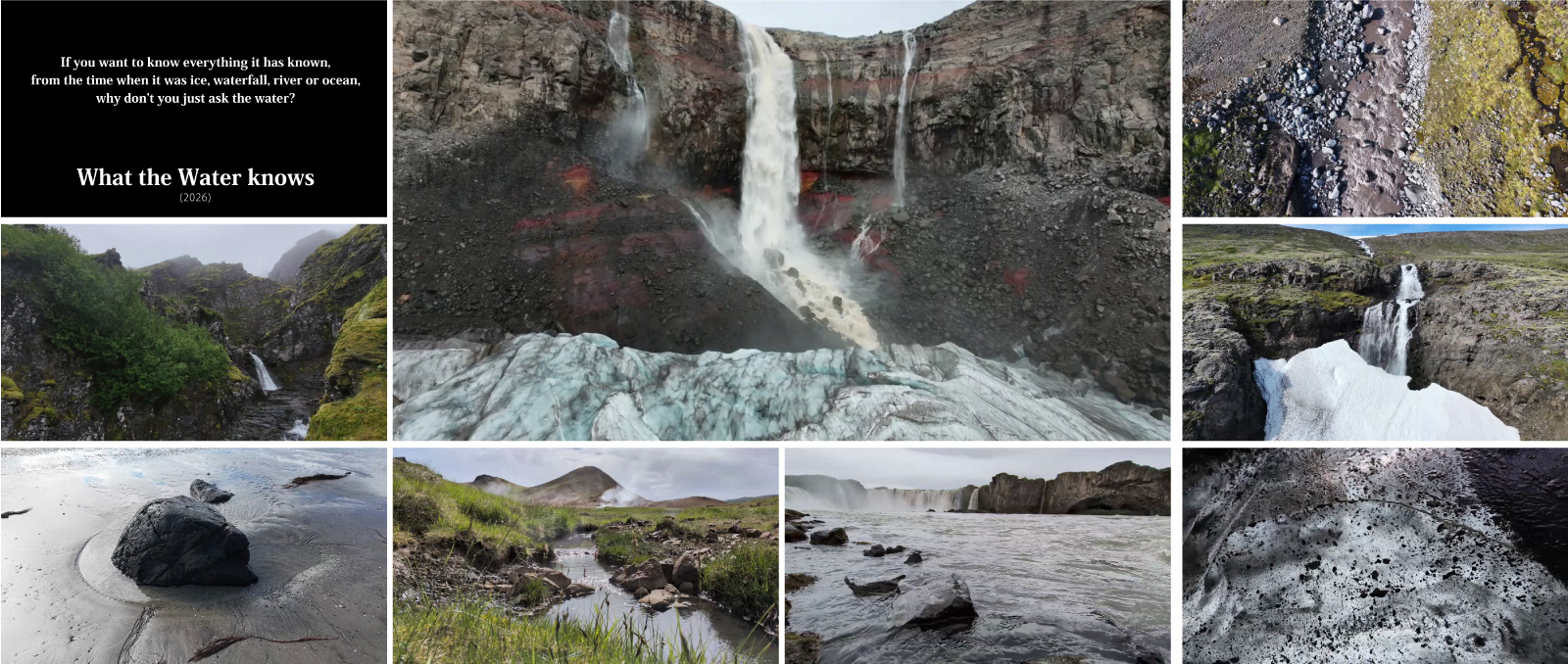
Single-channel video, 22 min, 4K UHD, 16:9, colour, stereo sound
If you want to know everything it has known, from the time
when it was ice, waterfall, river or ocean, why don’t you just ask the water ?
when it was ice, waterfall, river or ocean, why don’t you just ask the water ?
This work turns that question toward water, prompted by a dialogue with Bryndís Pétursdóttir, a Nordic seer, a völva, whose practice holds an affinity with the elements and spirits of Iceland, particularly its rivers.
The water standing before you has already lived a long life elsewhere. It has crossed glaciers, fallen through waterfalls, pressed through stone, before arriving here, at your feet, as if to tell you something. Every river is a messenger sent from far away, carrying what it touched on its way to you.
As it travels, the river gathers minerals and grinds stone into sediment, laying memory into the riverbed itself, layer upon layer, the way years settle into skin. Waterfalls are violent in this work of remembering, breaking rock apart so that its story can continue downstream. Is a riverbed, then, a kind of memory made visible?
Glaciers hold their memories more patiently. They trap water in ice for thousands of years, keeping it still, before releasing it slowly, drop by drop, back into the world. Somewhere inside that ice is a record of the world as it once was.
Ask the Water, again
Two-channel video installation, 2 min 14 sec, 4K UHD, 16:9, colour, stereo sound, recorded on the 17th August 2026 at Snæfellsjökull, Iceland
Does water carry memories of the past?
The two-channel video sets this question in motion. On the left, a river with water, coming from the glacier, filmed going downstream, carrying its old memory forward. On the right, a river without water, the same bed run dry, filmed going downstream in its stillness. What memory remains where the water has gone.
An invitation to roam
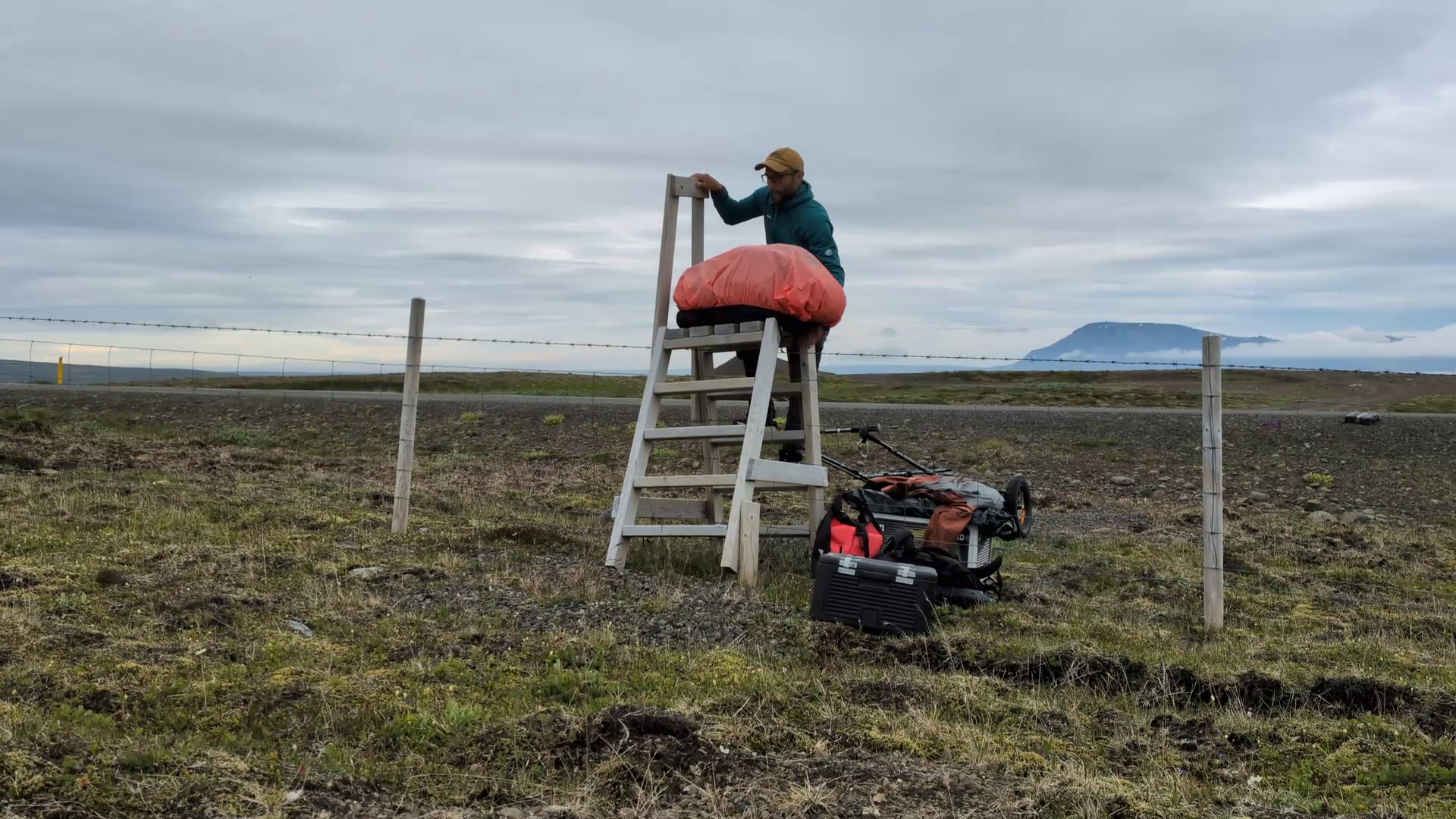
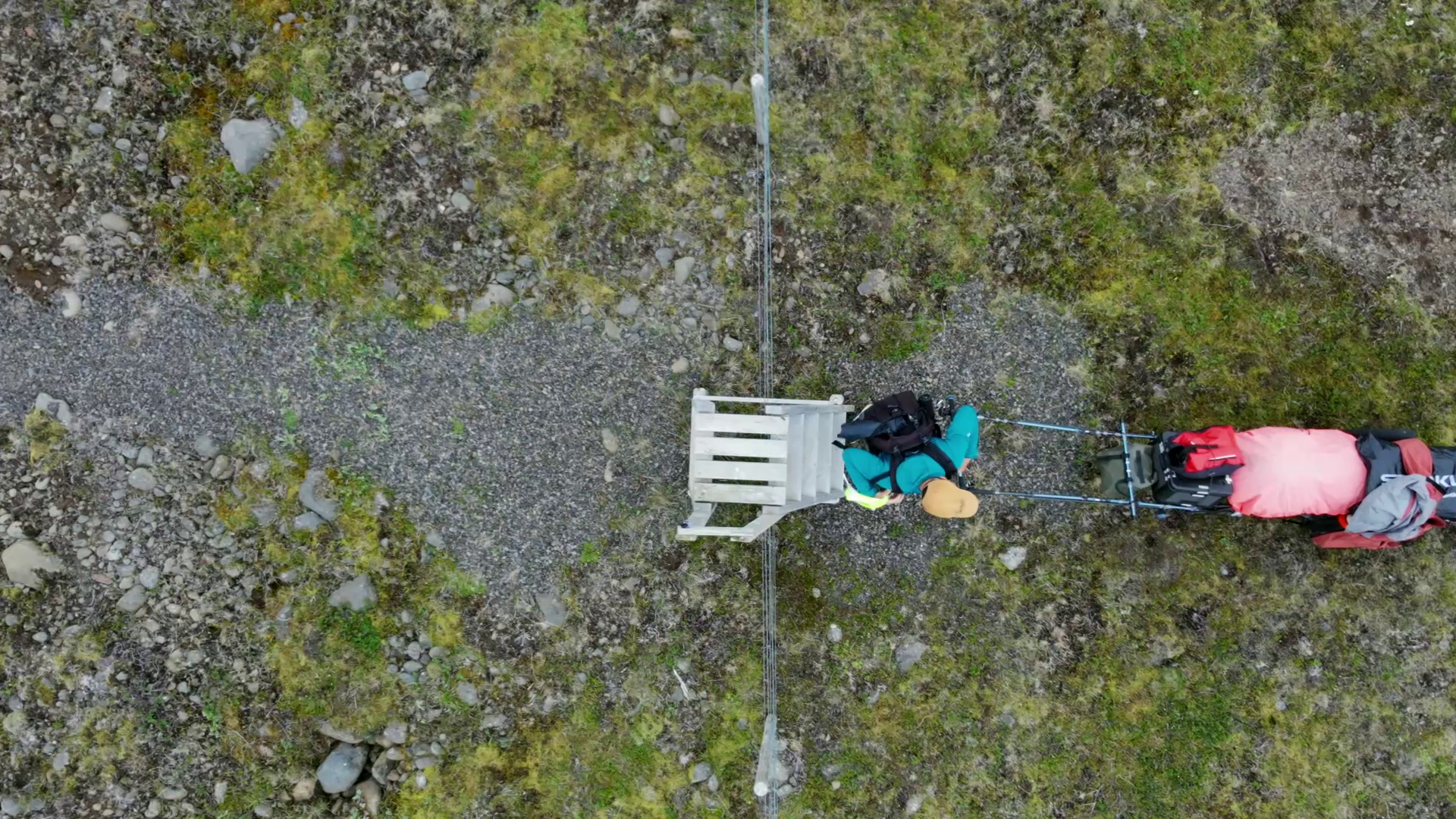
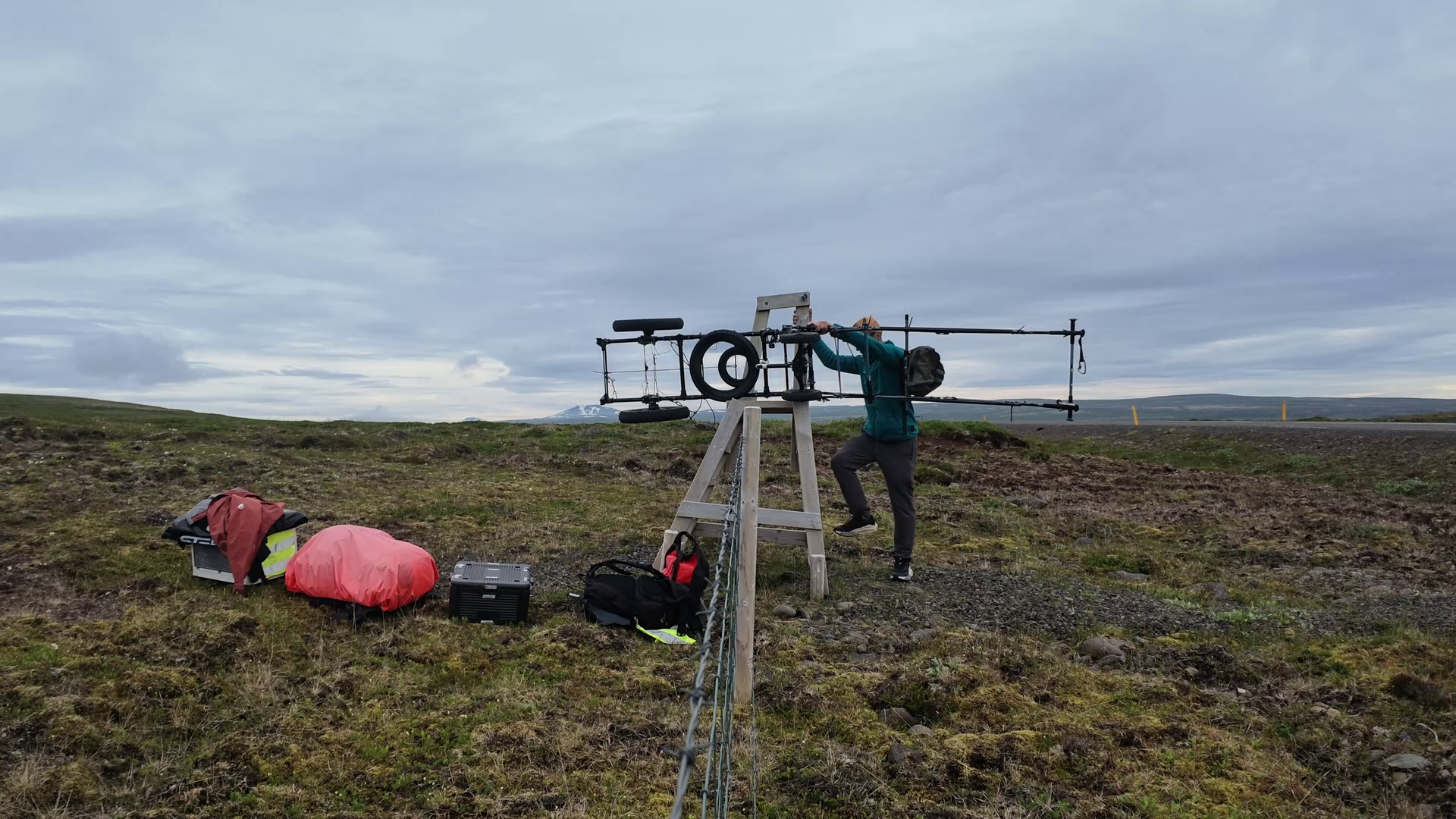
Video performance, single-channel video, 4 min 7 sec, 4K UHD, 16:9, colour, stereo sound, recorded on the 7th July 2026 at Bakkafjörður, Iceland
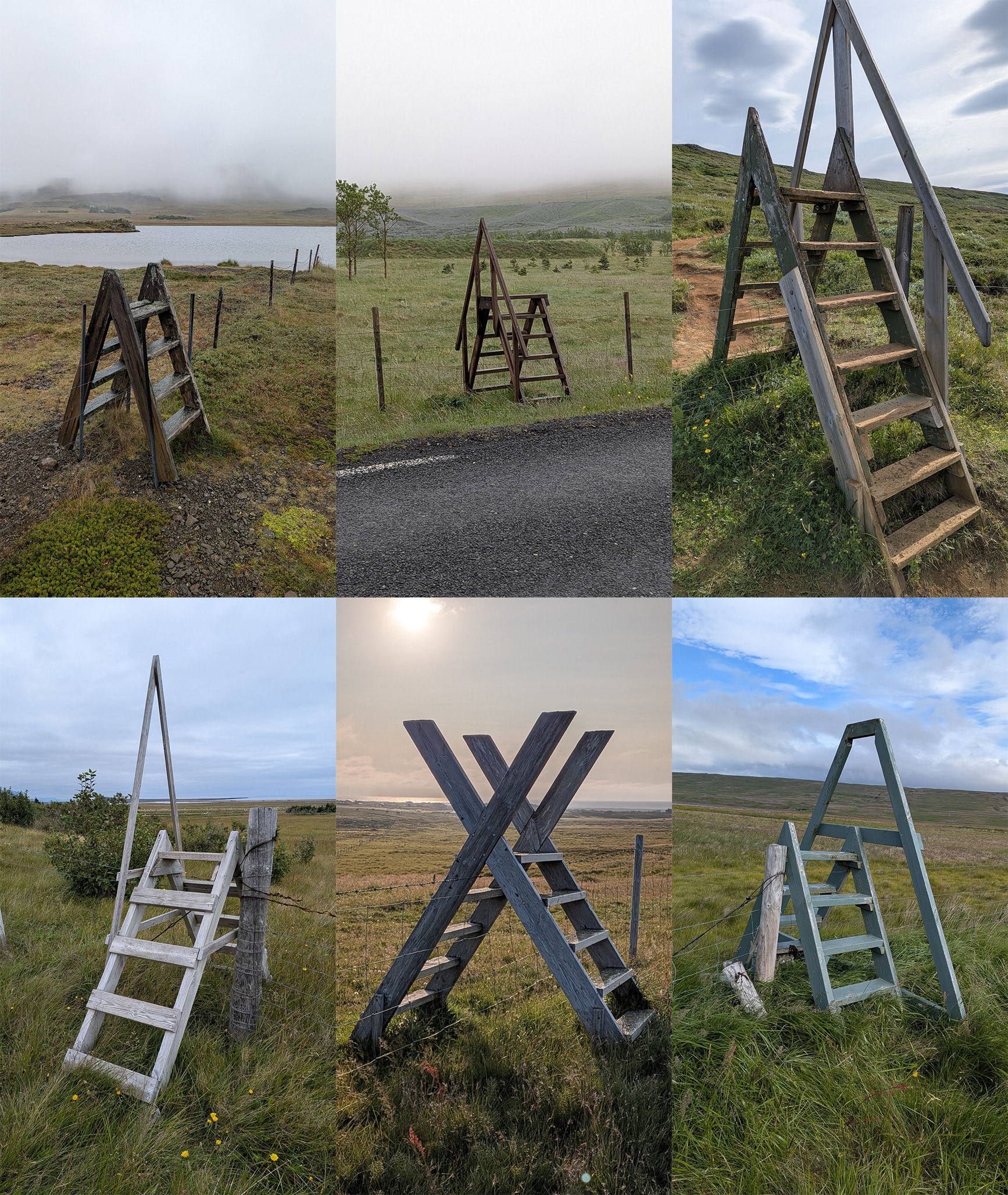
A stile is a strange kind of border: a small ladder built into a fence, allowing people to climb over and pass from one field to another while keeping animals enclosed. It divides one piece of land from the next, marking a boundary, but at the very same time, it creates a passage through it.
It is an invitation to pass, a welcoming gesture built into the border. It seems to say: you can go through here. Go and see what is on the other side. Satisfy your curiosity.
It is an invitation to pass, a welcoming gesture built into the border. It seems to say: you can go through here. Go and see what is on the other side. Satisfy your curiosity.
In Iceland, as in Norway and Scotland, the principle of the "right to roam" allows people to move through the landscape, including across privately owned land, within certain limits. I have always been fascinated by these small structures because they physically embody this idea. They separate, but they also connect.What interests me is that the stile does not simply exclude. It offers a way through. Crossing it with the trolley became a kind of absurd adventure, but also an attempt to take that invitation seriously. For me, the stile is a gesture of openness inside a divided landscape. It is a reminder that borders can exist without necessarily becoming walls, and that access, movement, and curiosity can remain part of our relationship with the land.
During my walk around Iceland, I questioned several times whether I should cross these stiles with my trolley. Because the trolley was too wide and complicated, I usually avoided them. But eventually, I realized that the challenge itself could become an opportunity to explore the symbolic meaning of the crossing. What would normally be a simple passage became a long and cumbersome negotiation with the boundary.
I recorded the action as a performance because the physical difficulty of crossing made visible something that is usually invisible: the relationship between movement and ownership, between access and territory.
I recorded the action as a performance because the physical difficulty of crossing made visible something that is usually invisible: the relationship between movement and ownership, between access and territory.
Who can own a mountain? Can private property become more important than our collective access to the landscape?
And who can own a river? A river does not recognize the borders we draw around it, yet we can control its flow, build dams, restrict access, and use natural resources to exercise power over people living downstream, even across national borders.
Who can own Nature?
And who can own a river? A river does not recognize the borders we draw around it, yet we can control its flow, build dams, restrict access, and use natural resources to exercise power over people living downstream, even across national borders.
Who can own Nature?
Echoes of Erosion
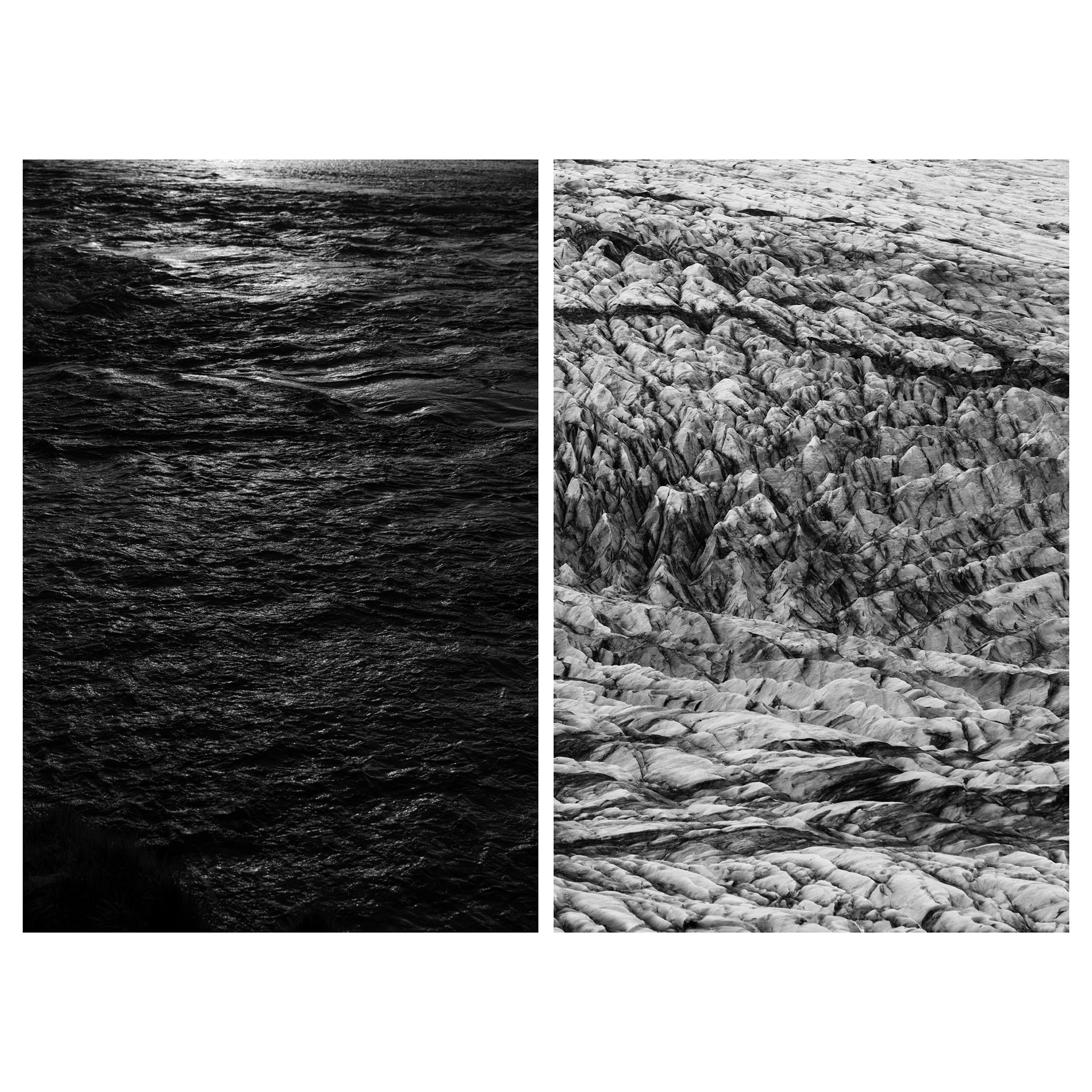
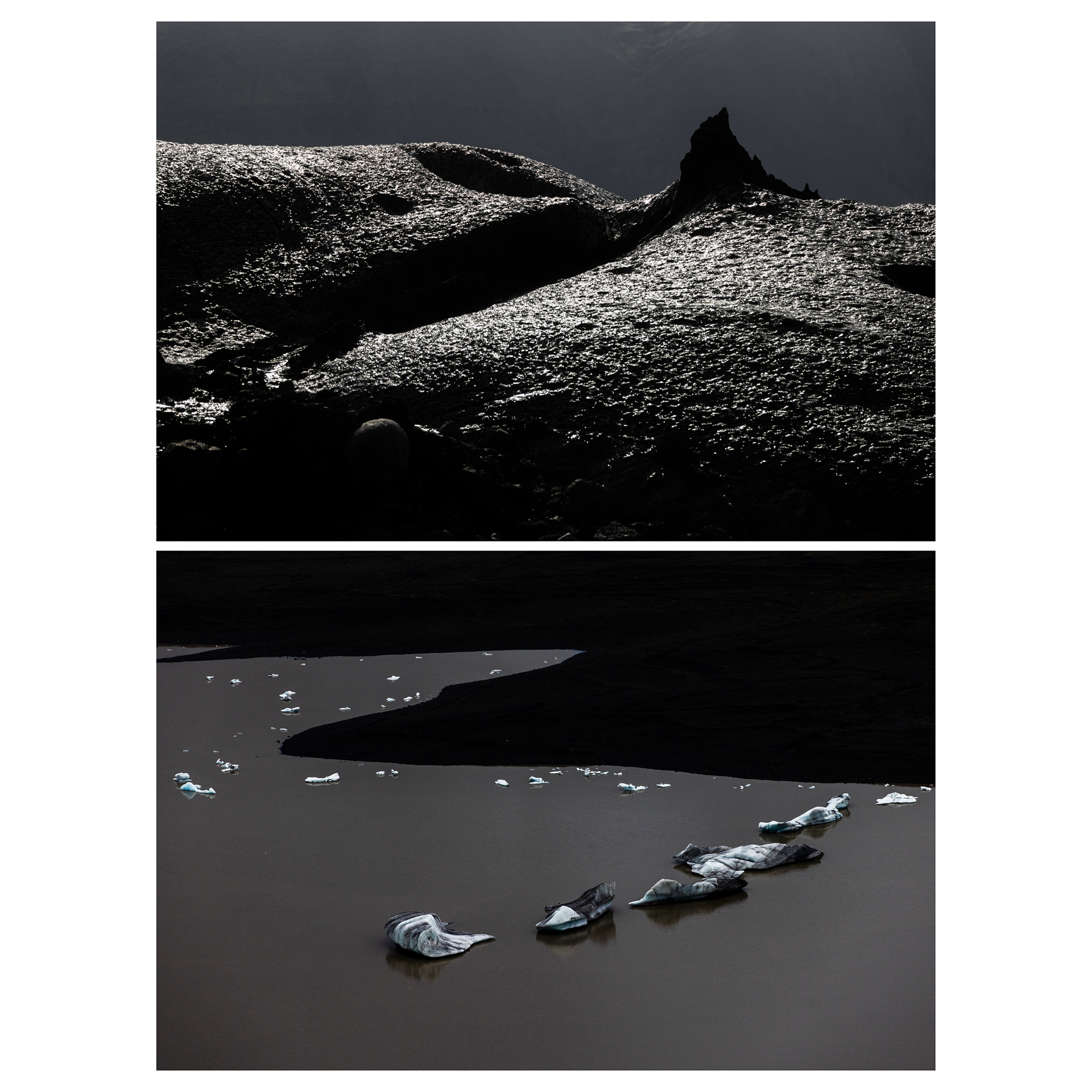
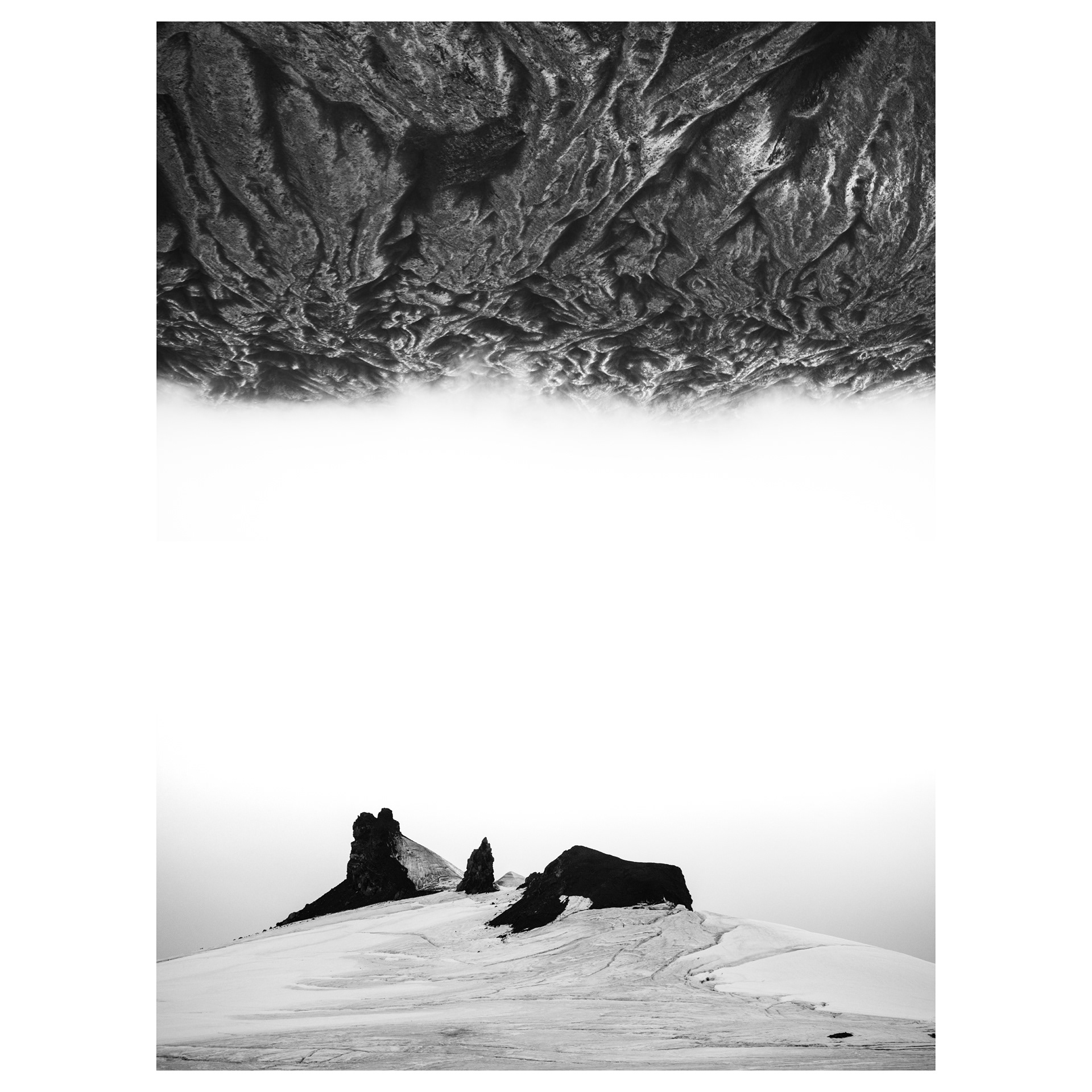
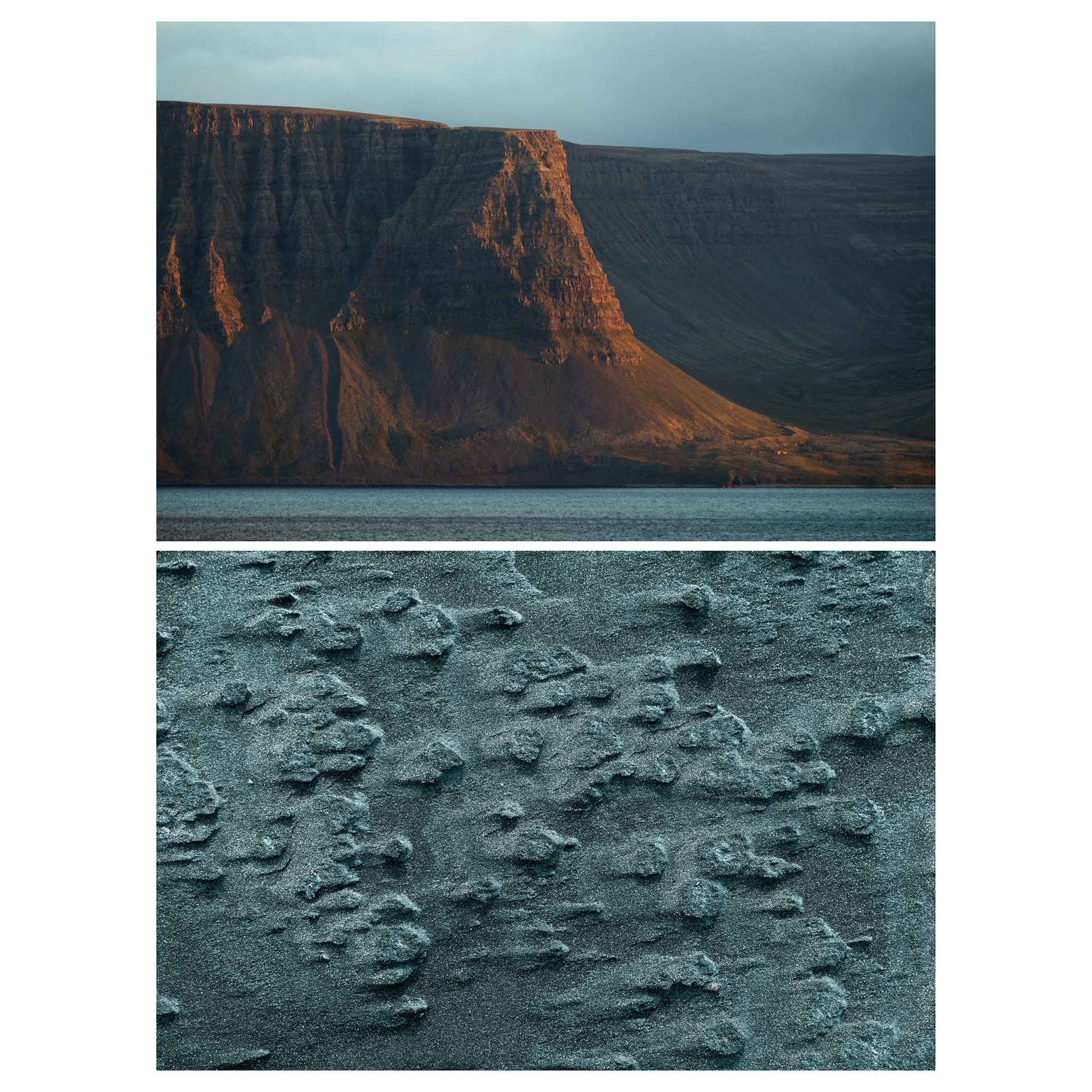
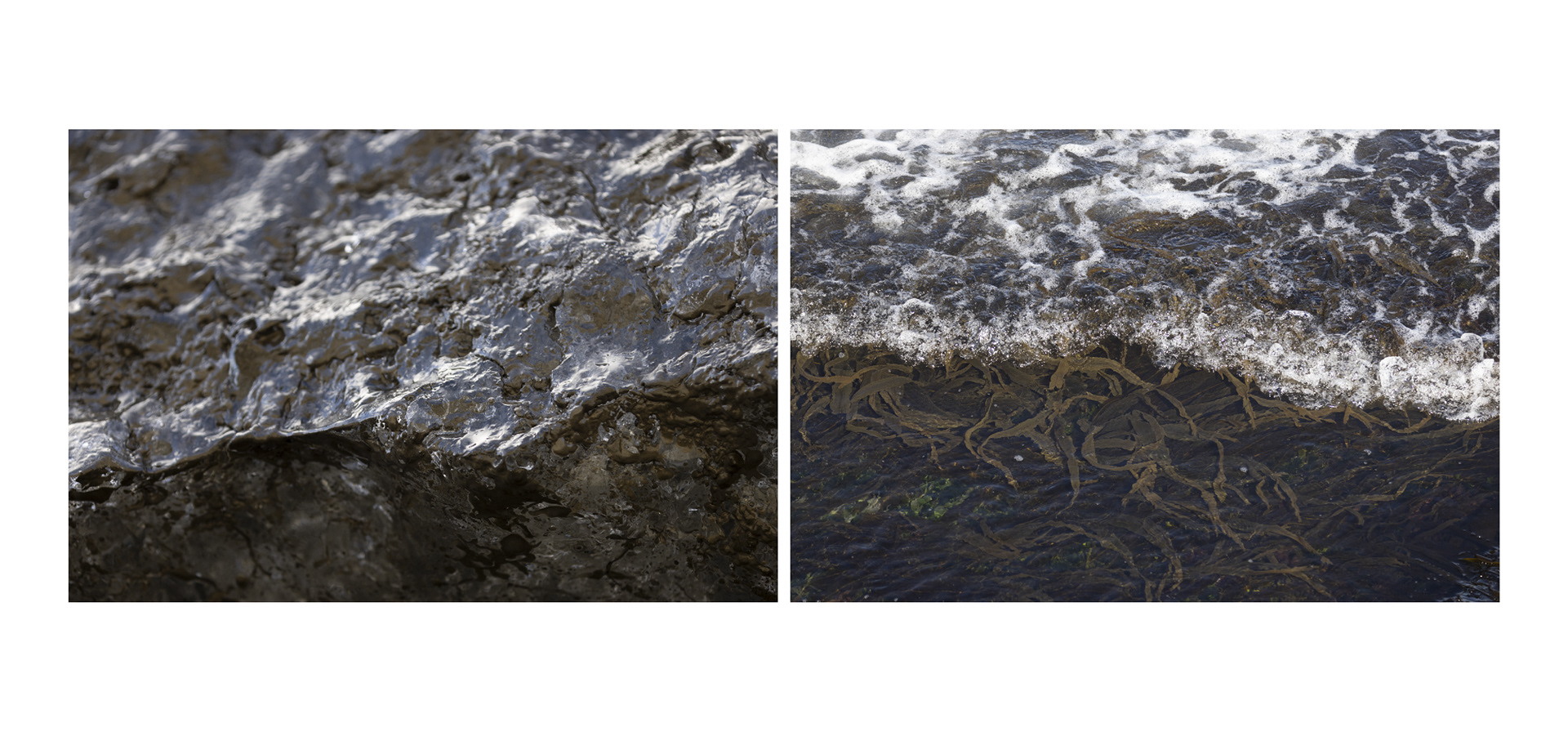
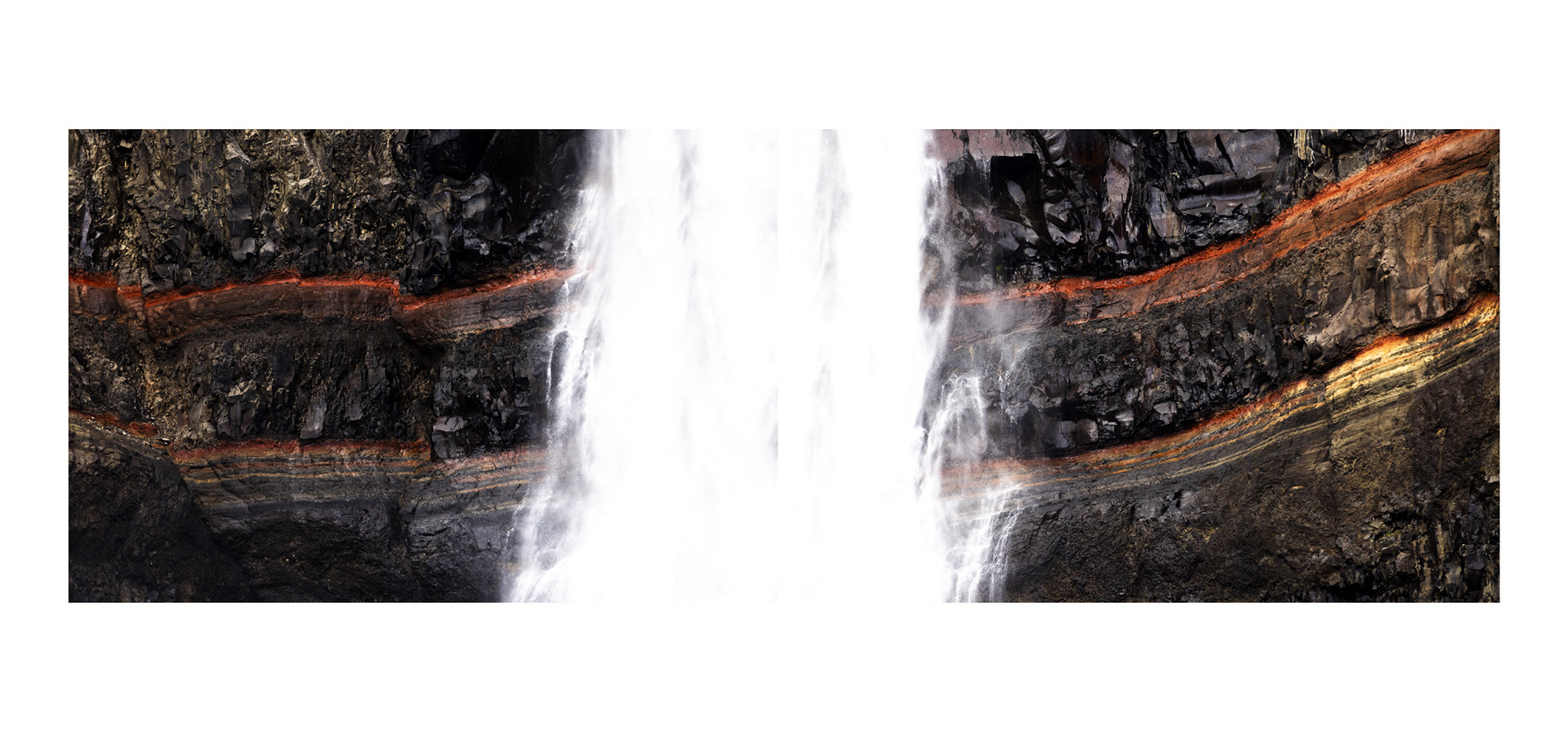
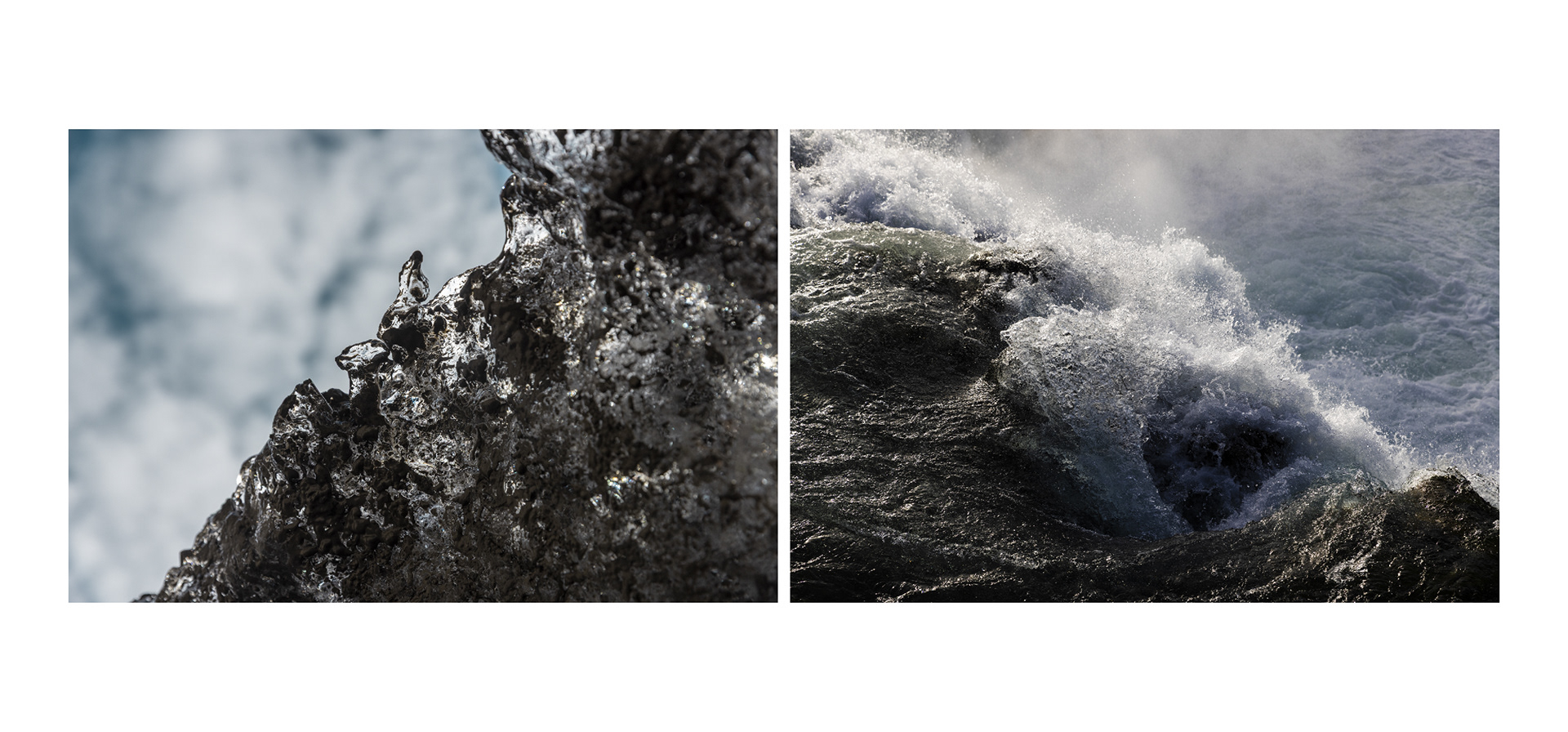
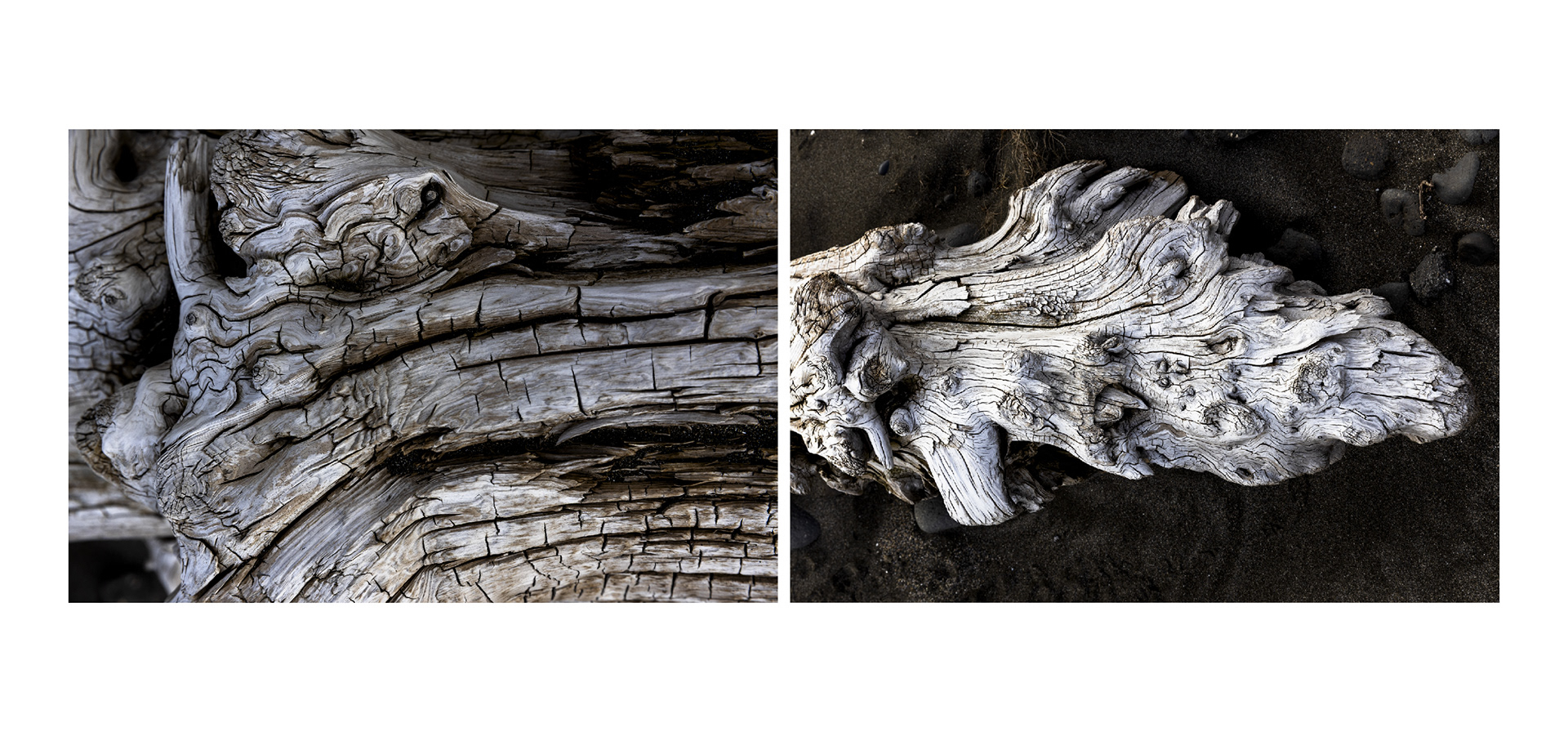
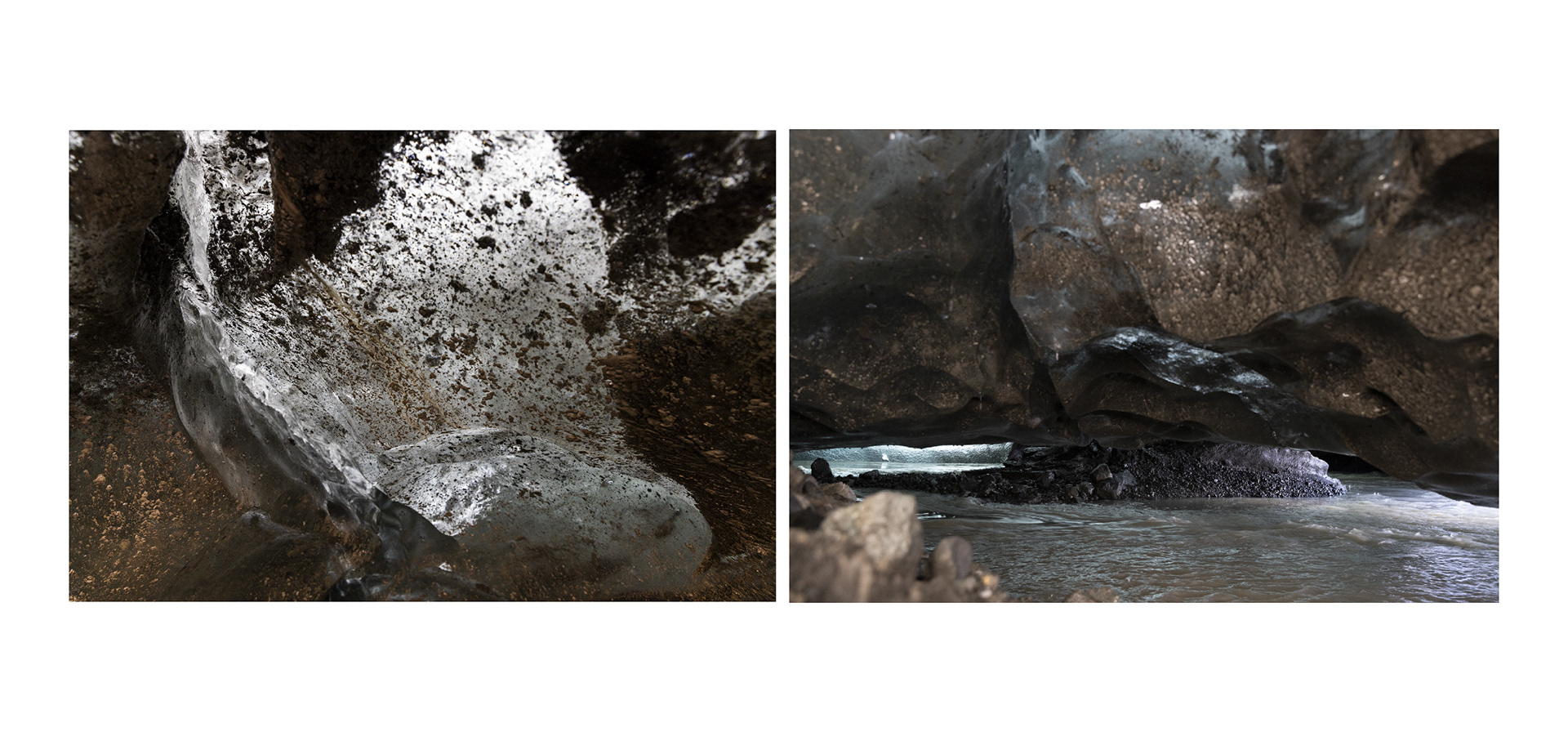
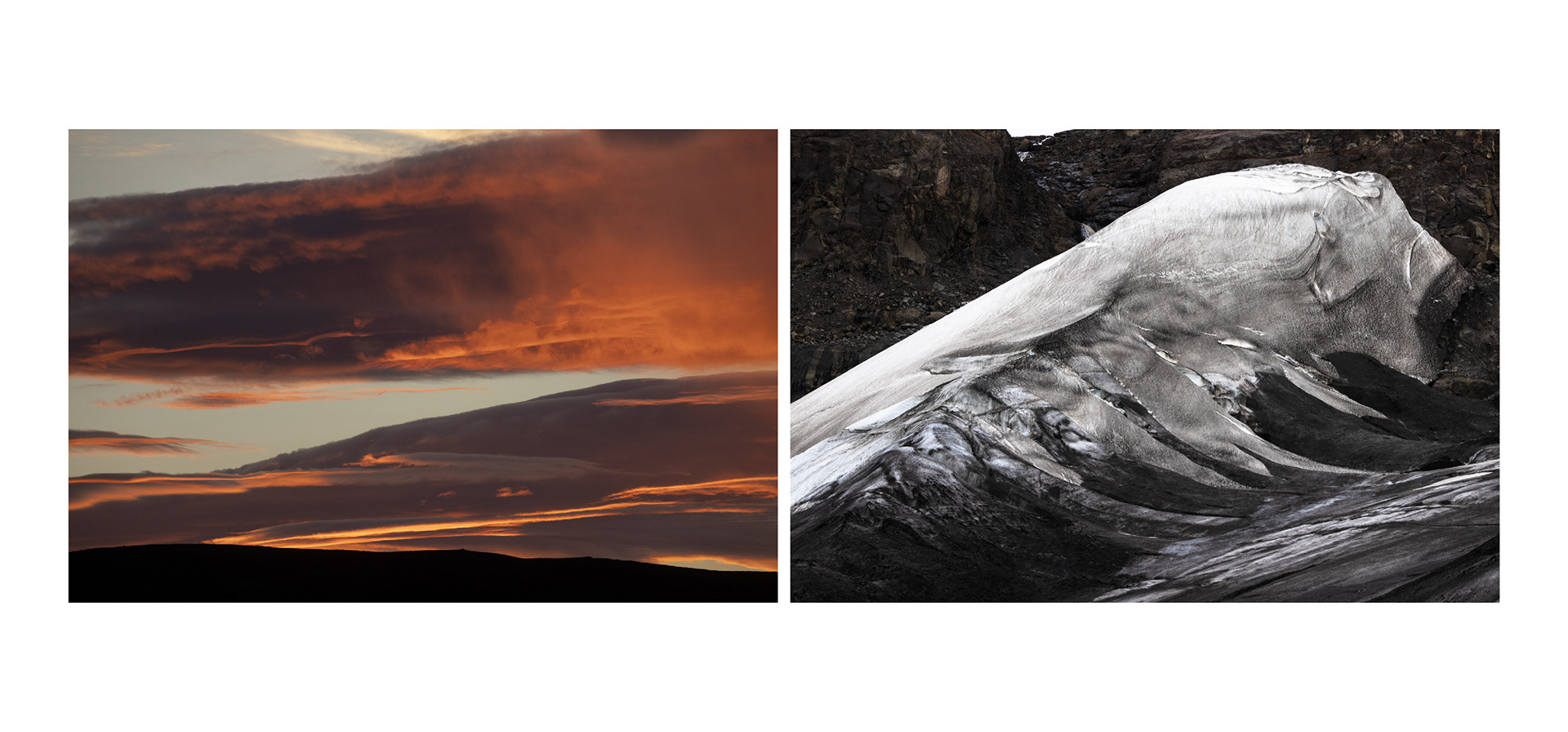
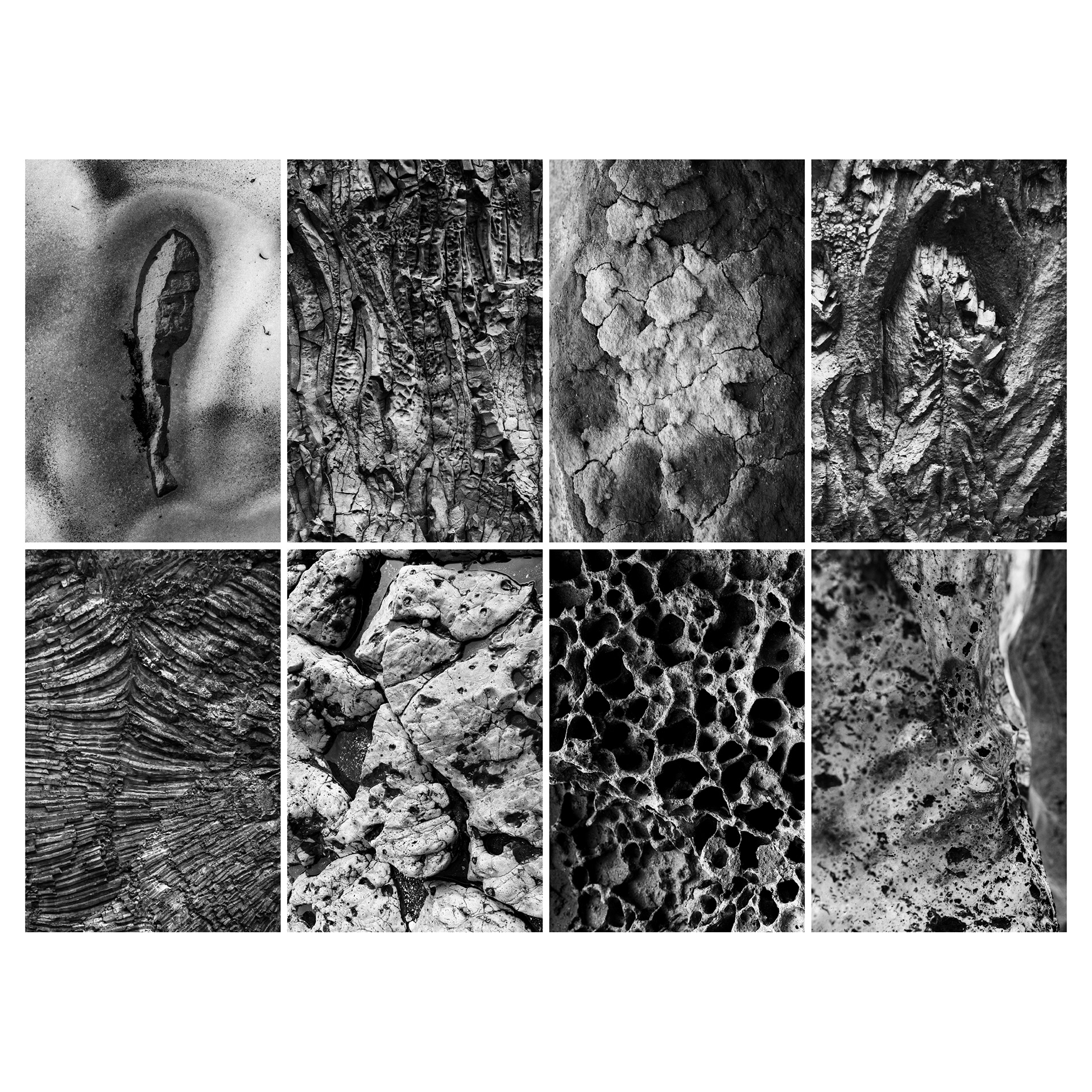
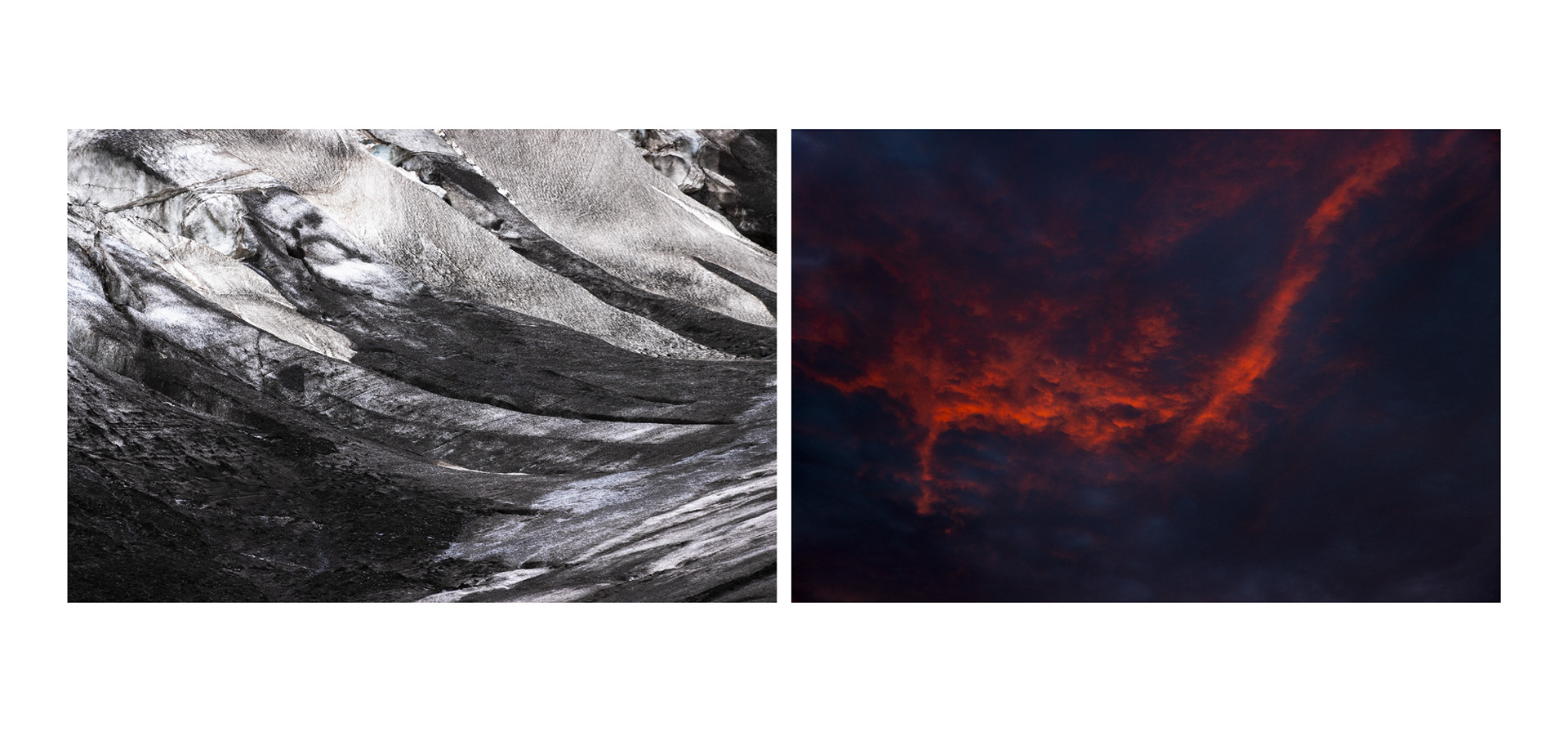
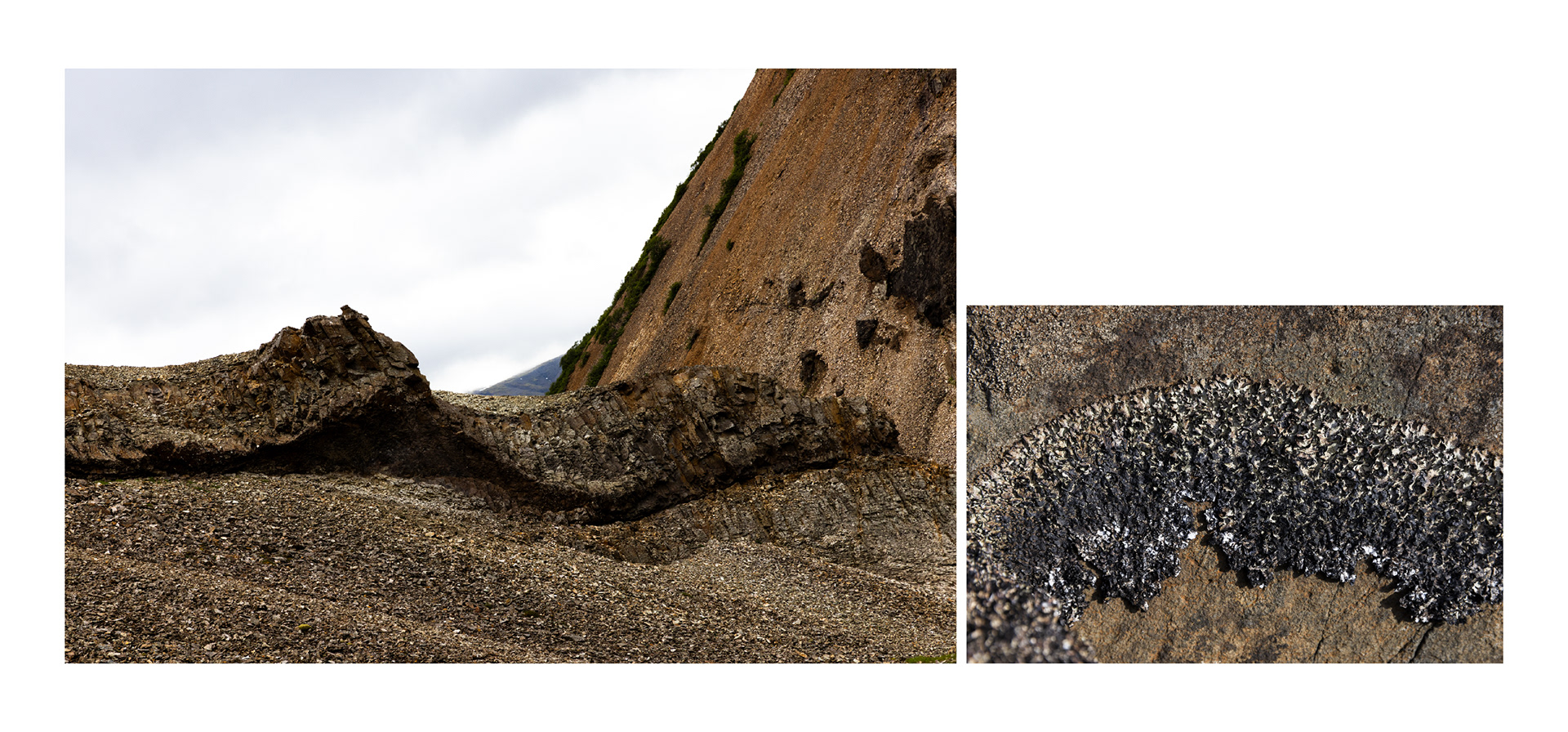
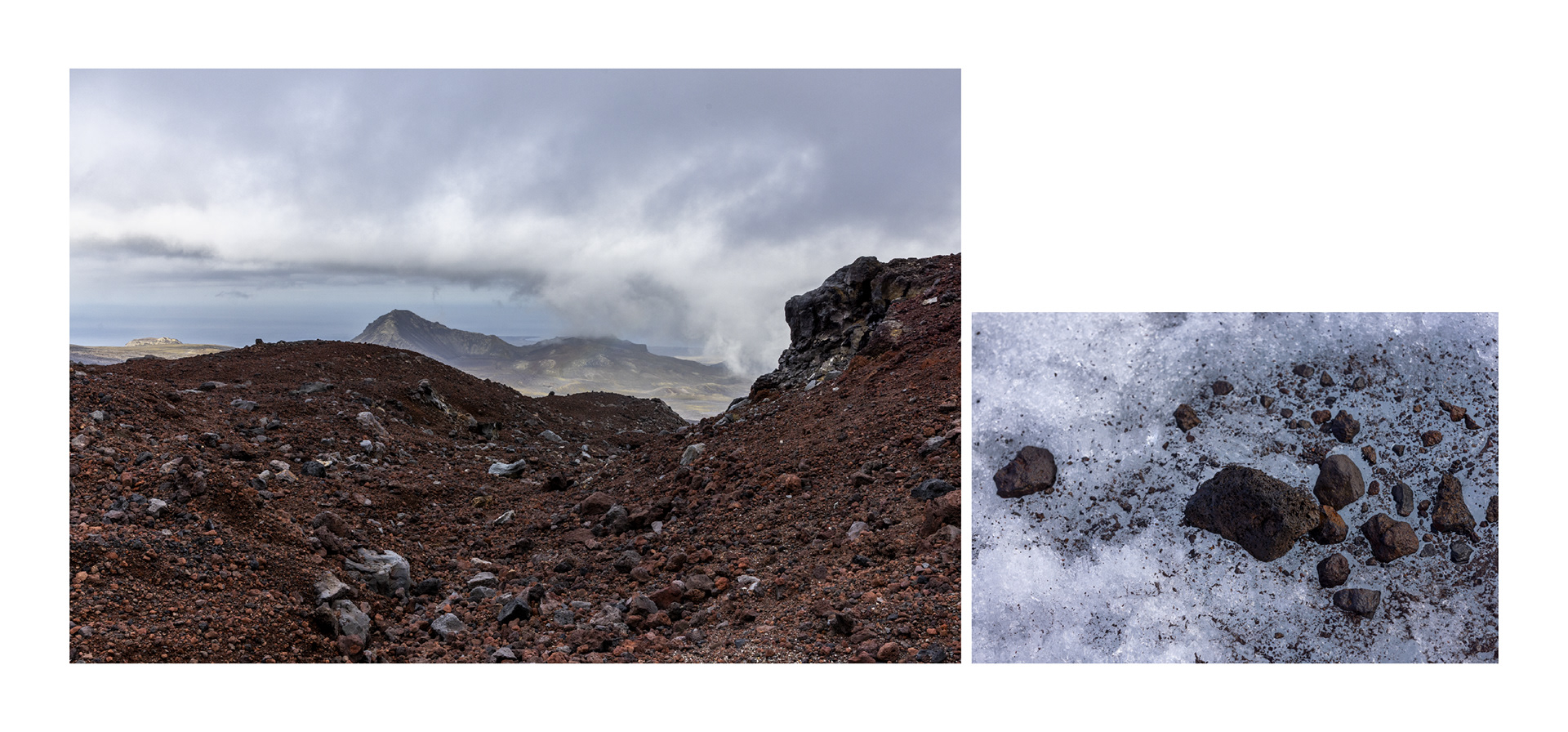
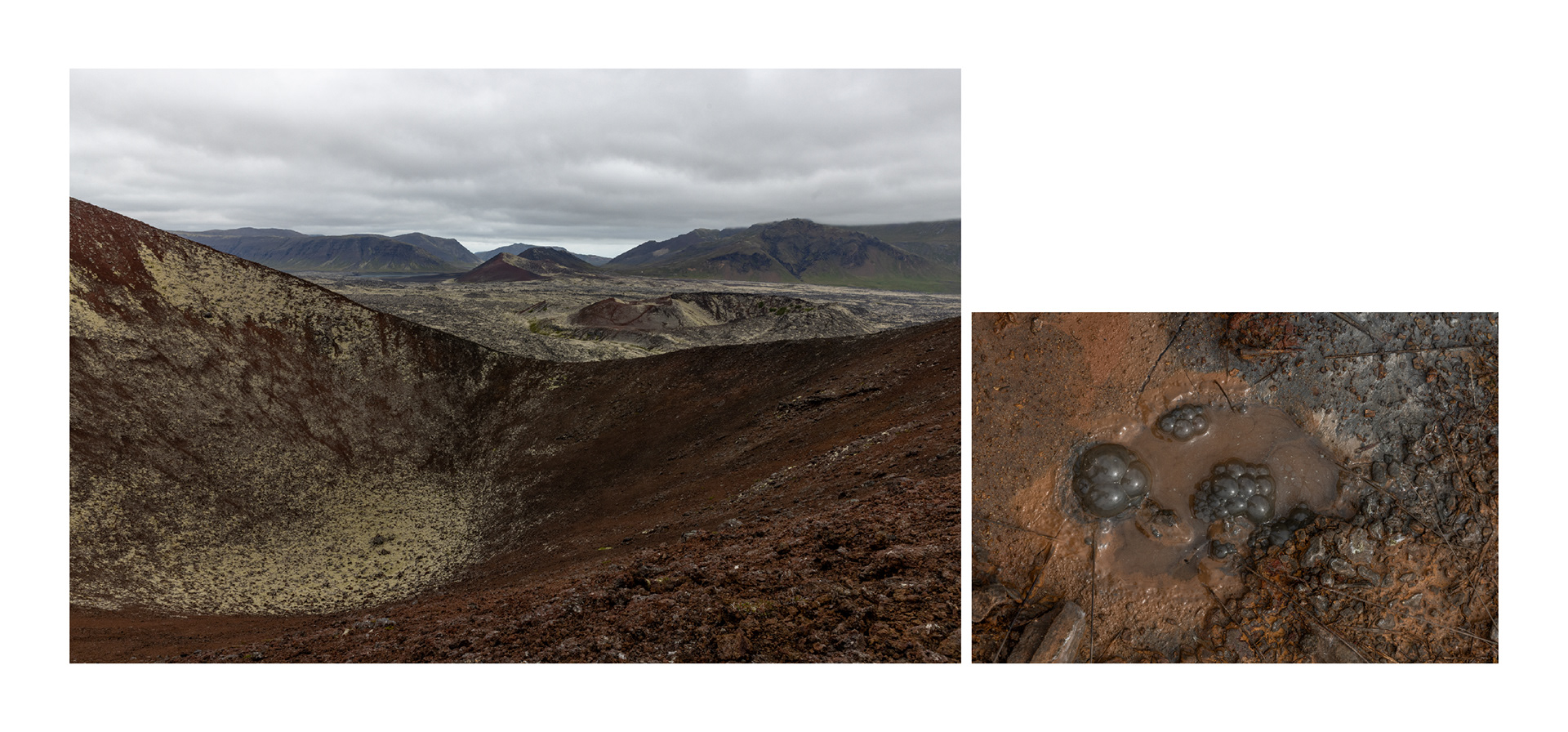
Photographic collection
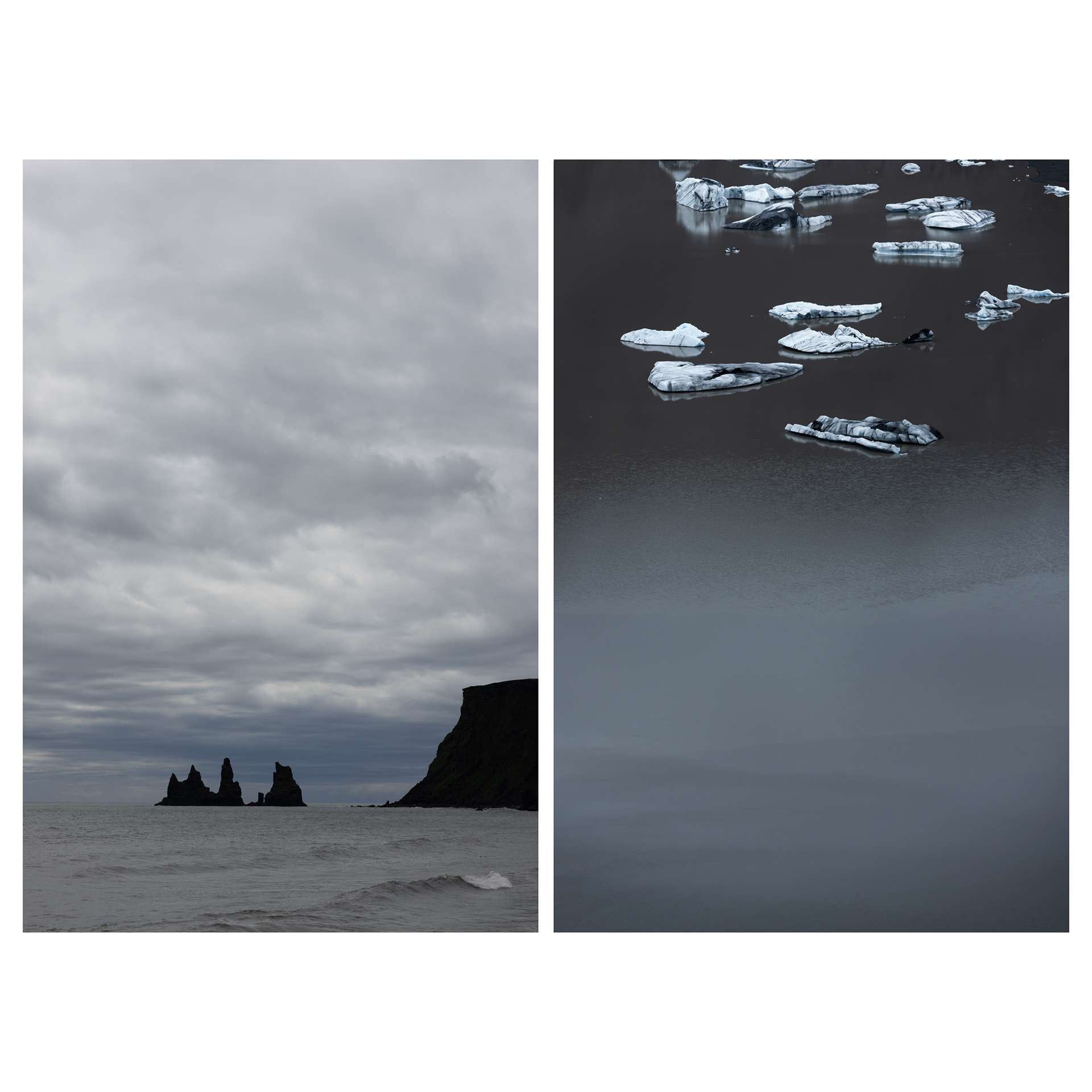
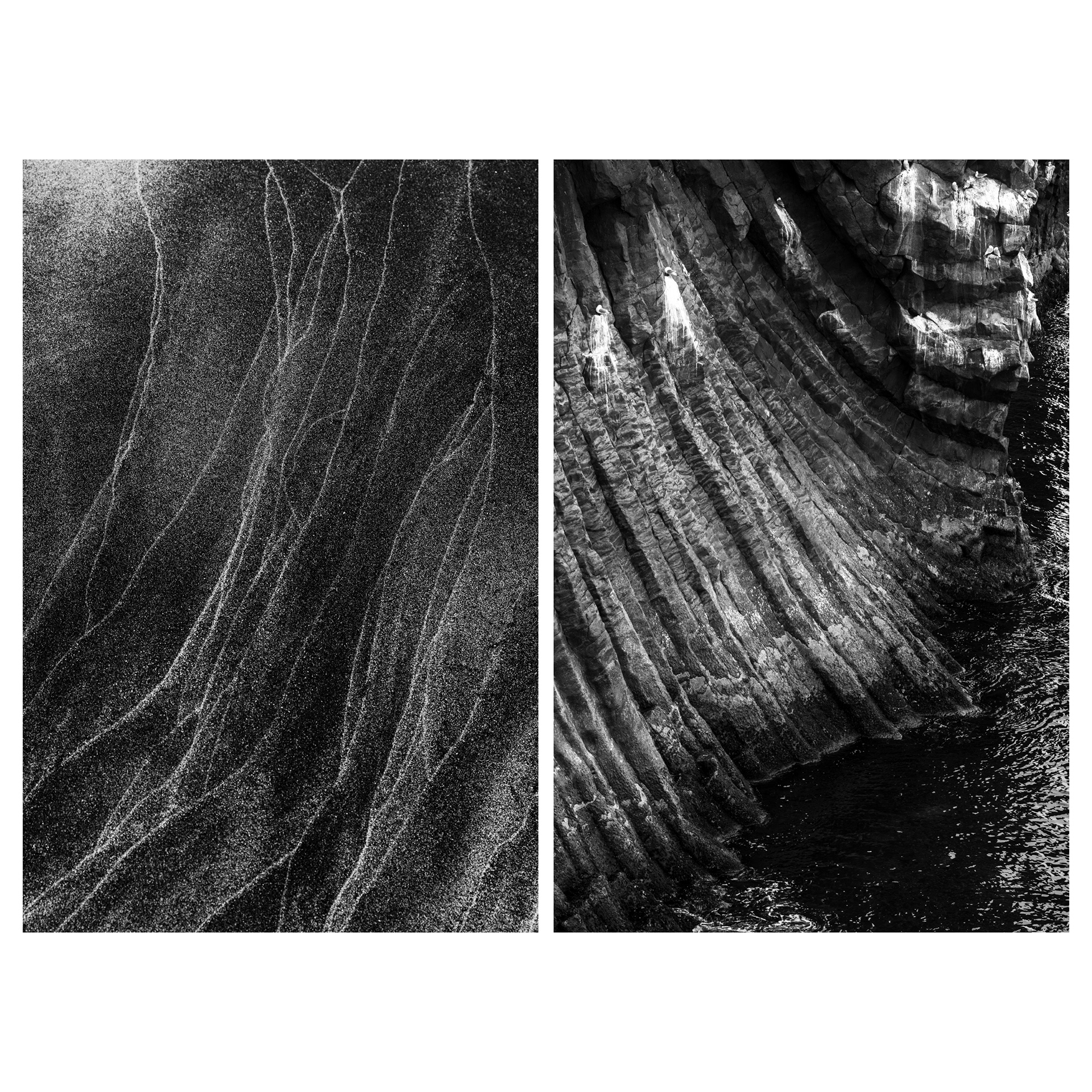
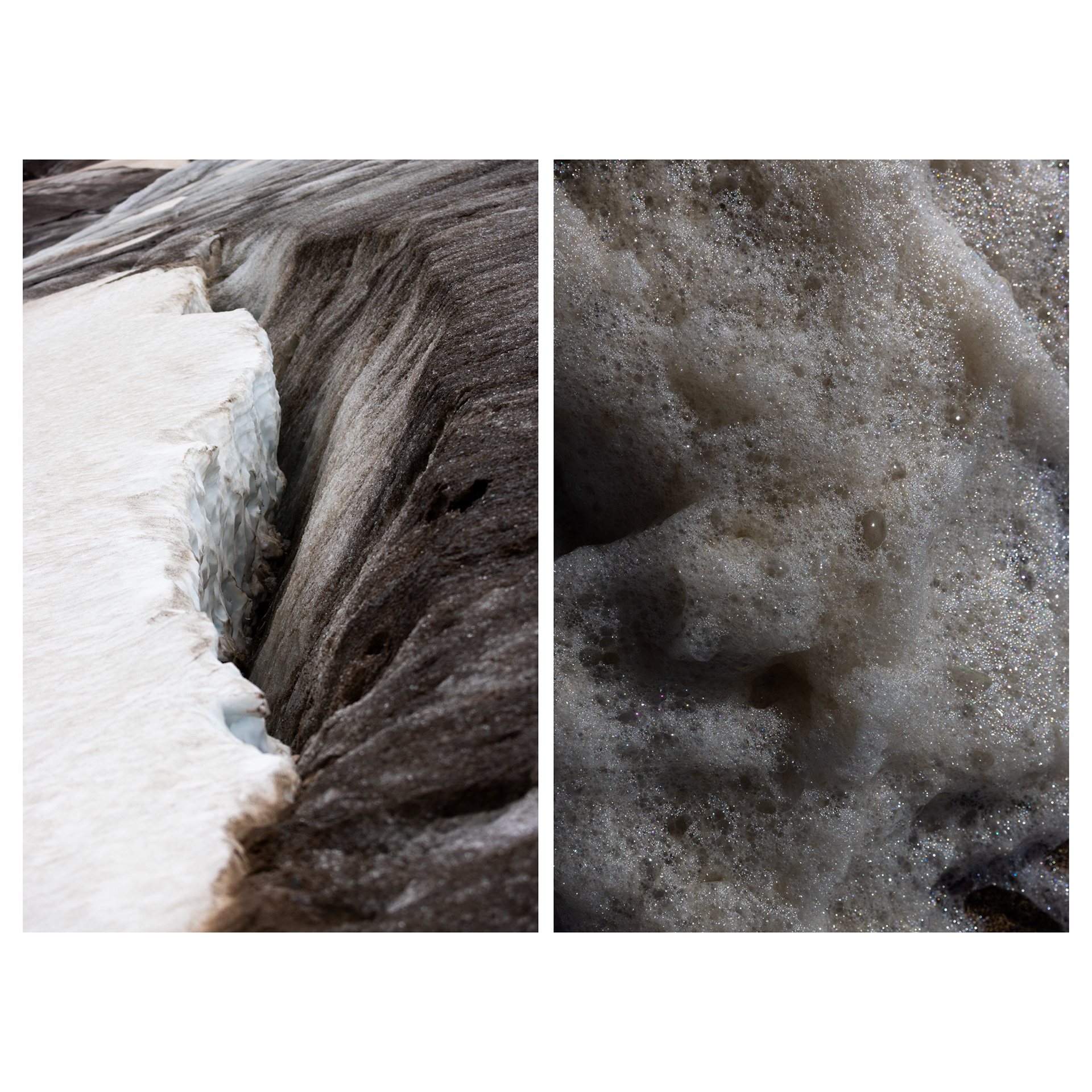
This collection explores collisions between different states of the same material world. Ice against sky. Wave against rock. Moss against basalt. Wood grain against glacier flow. Nothing here is asked to represent a specific location. Instead, each pairing isolates a single formal event, a threshold where something solid gives way to something that erodes, floods, or dissolves it, and repeats that event in a different register until the pattern itself becomes the subject.
The sequence resists arrival. A ridge dissolving into fog sits beside sea stacks doing the same. Wood, once alive, cracks along lines a glacier traces in ice. Lichen threads a rock seam with the same gesture that lava once carved through it. What repeats is not a place but a verb, the world caught in the act of becoming something else. It is never finished, never still.
Held together, these pairs propose that geological time is not abstract. It is legible in a fingernail sized patch of vesicular rock as much as in a coastline. It exists in three months of walking as much as in ten thousand years of erosion. The body that walked this route moves at the same order of magnitude as the tide, the frost, and the crumbling cliff. It is not the master of the landscape, nor is it separate from it. It is simply one more thing being slowly and patiently reshaped.
Tiny Stories of Resilience
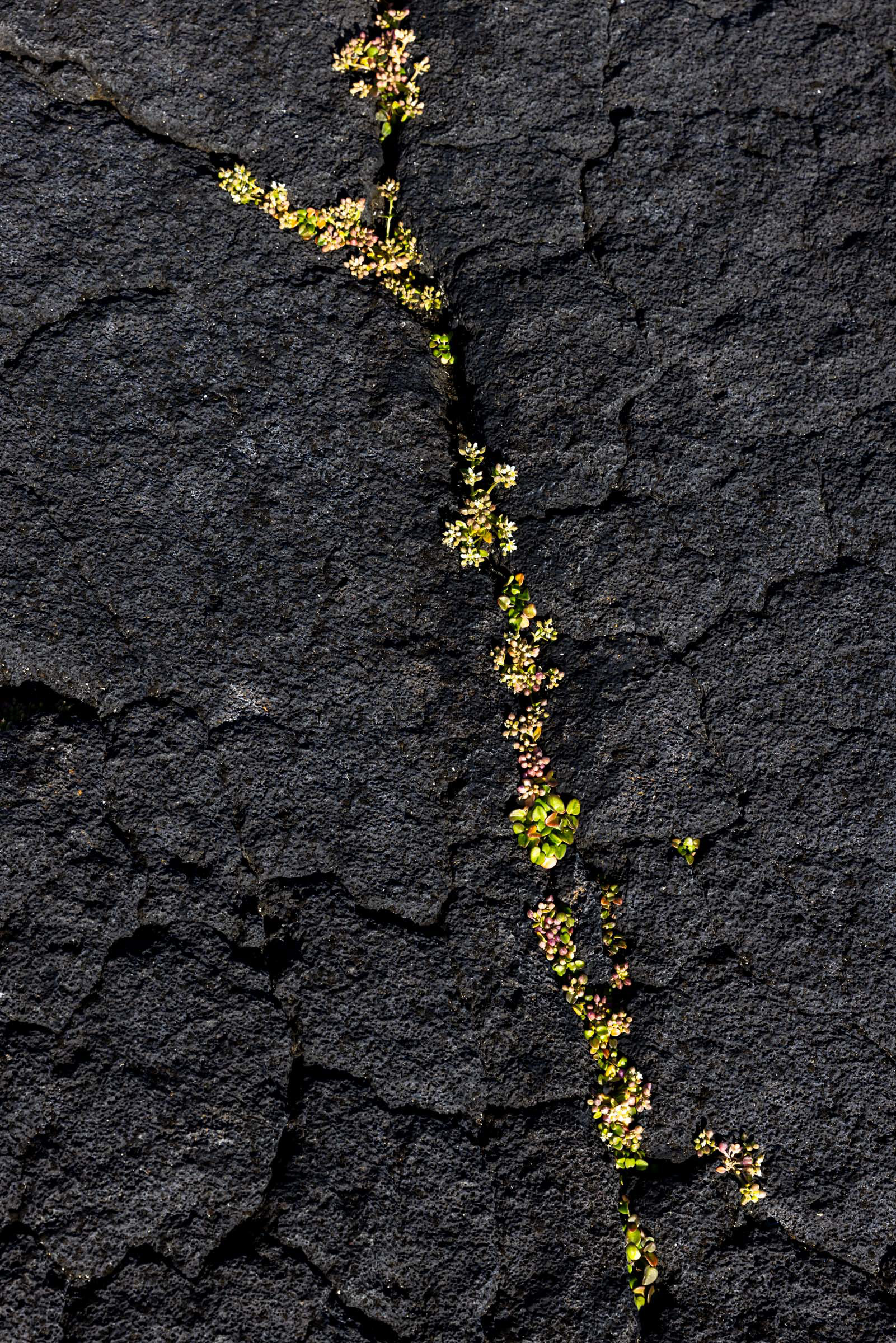
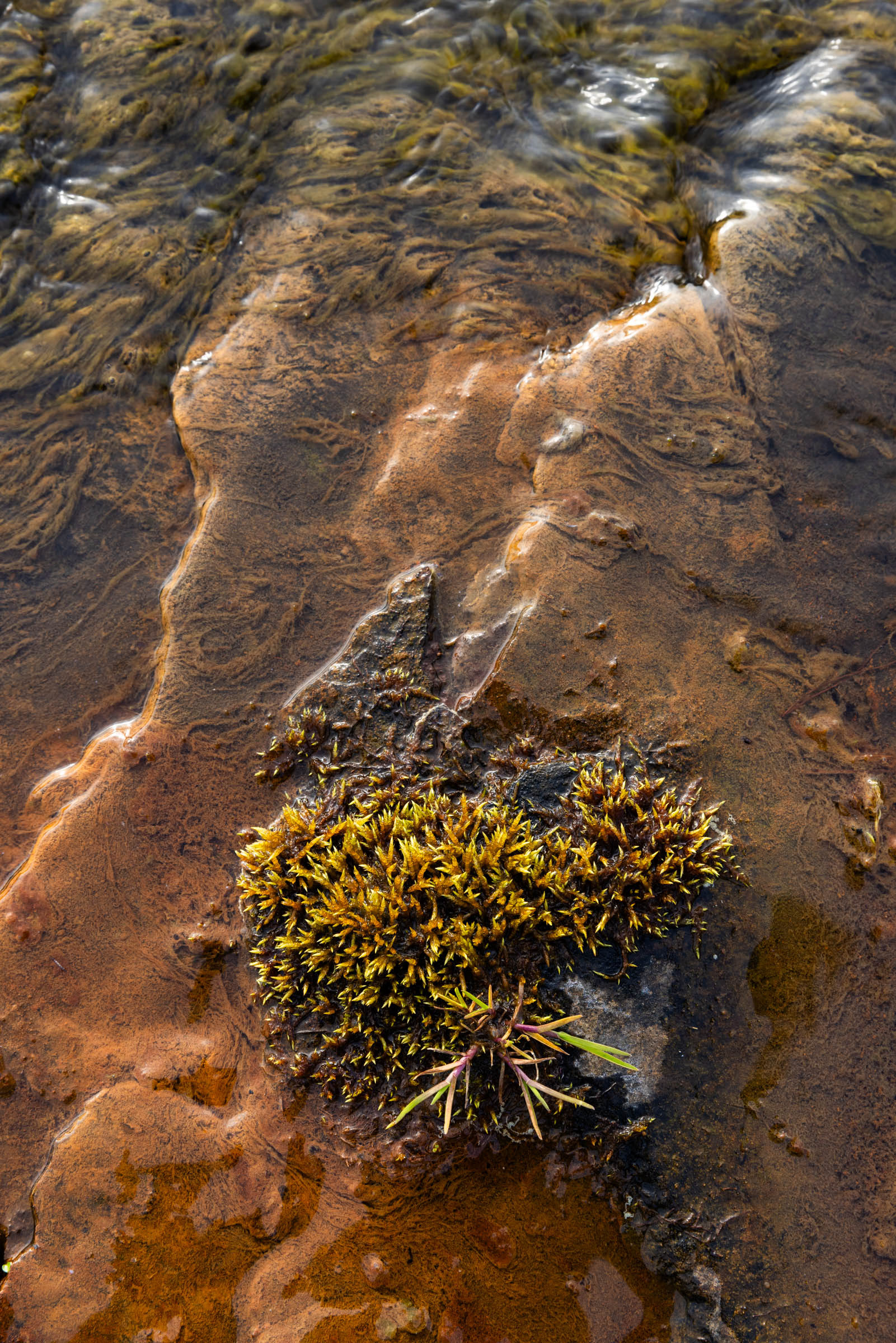
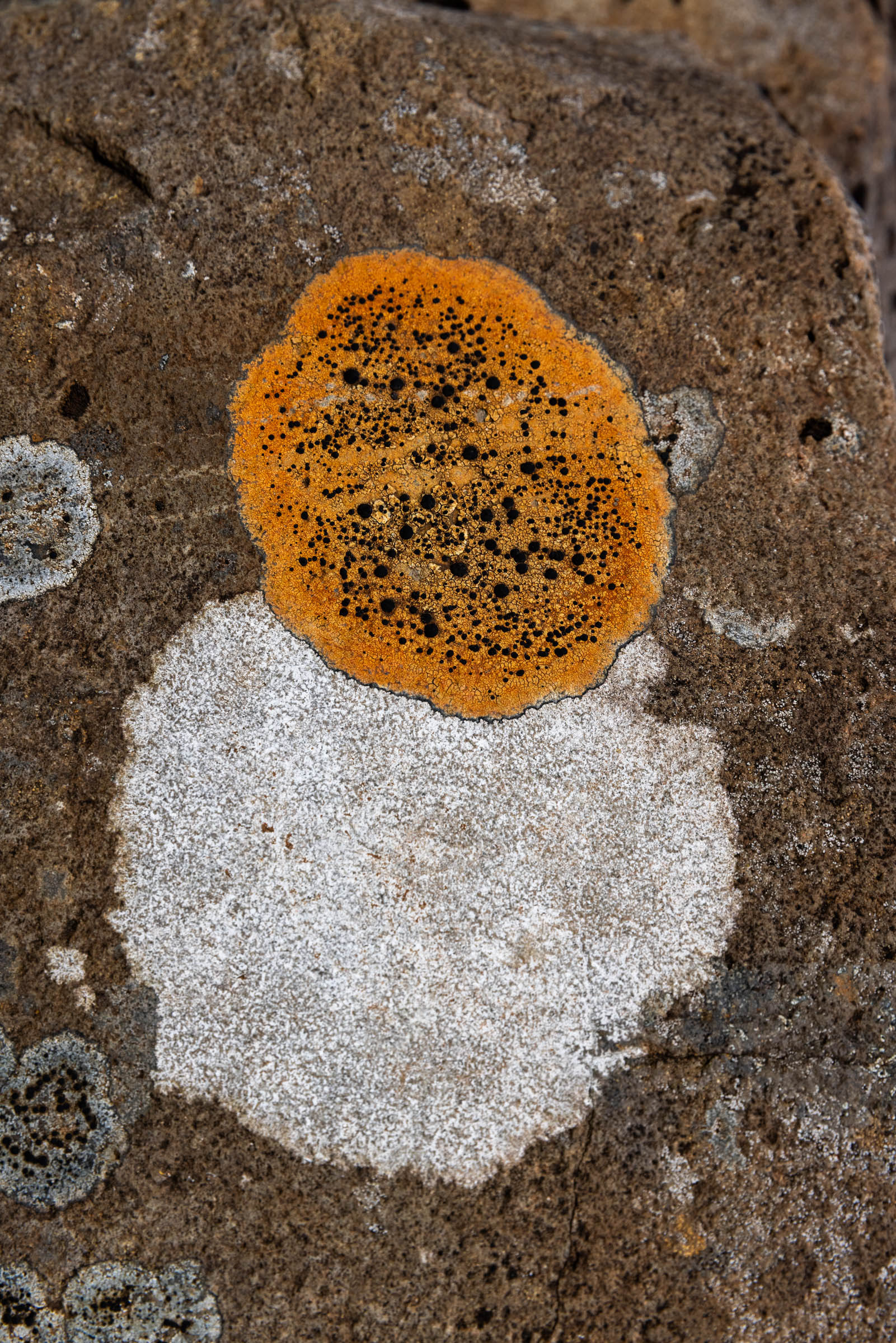
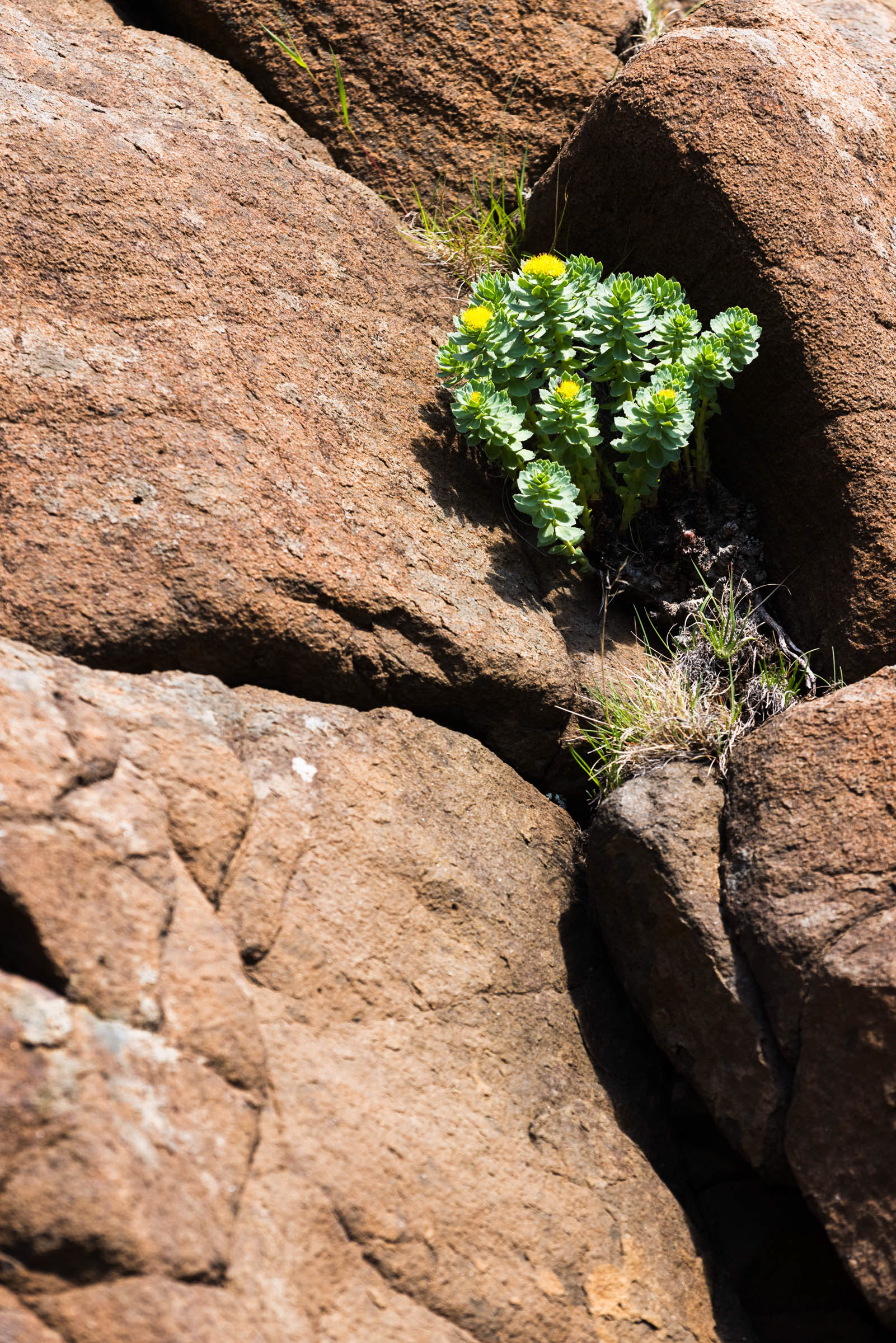
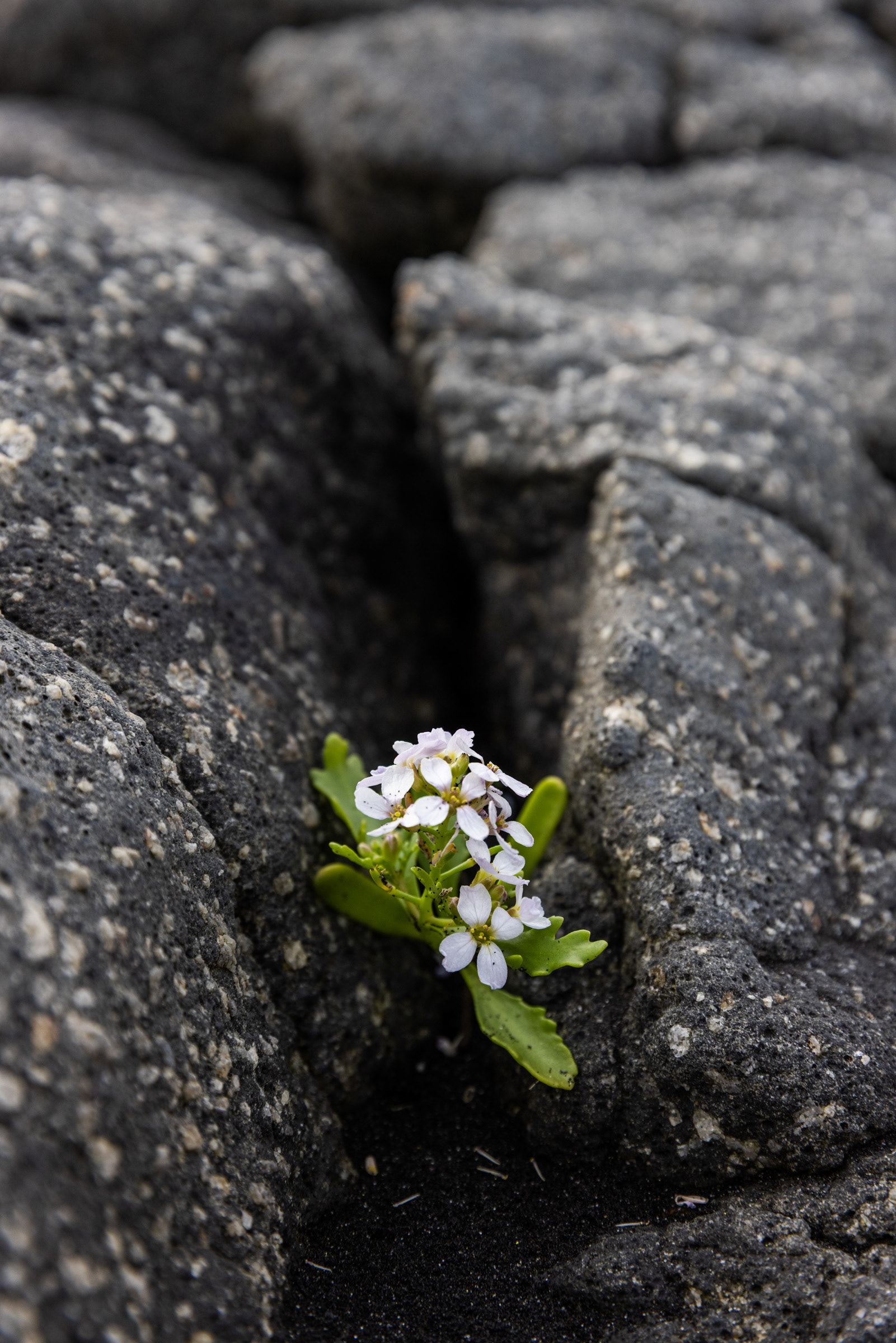
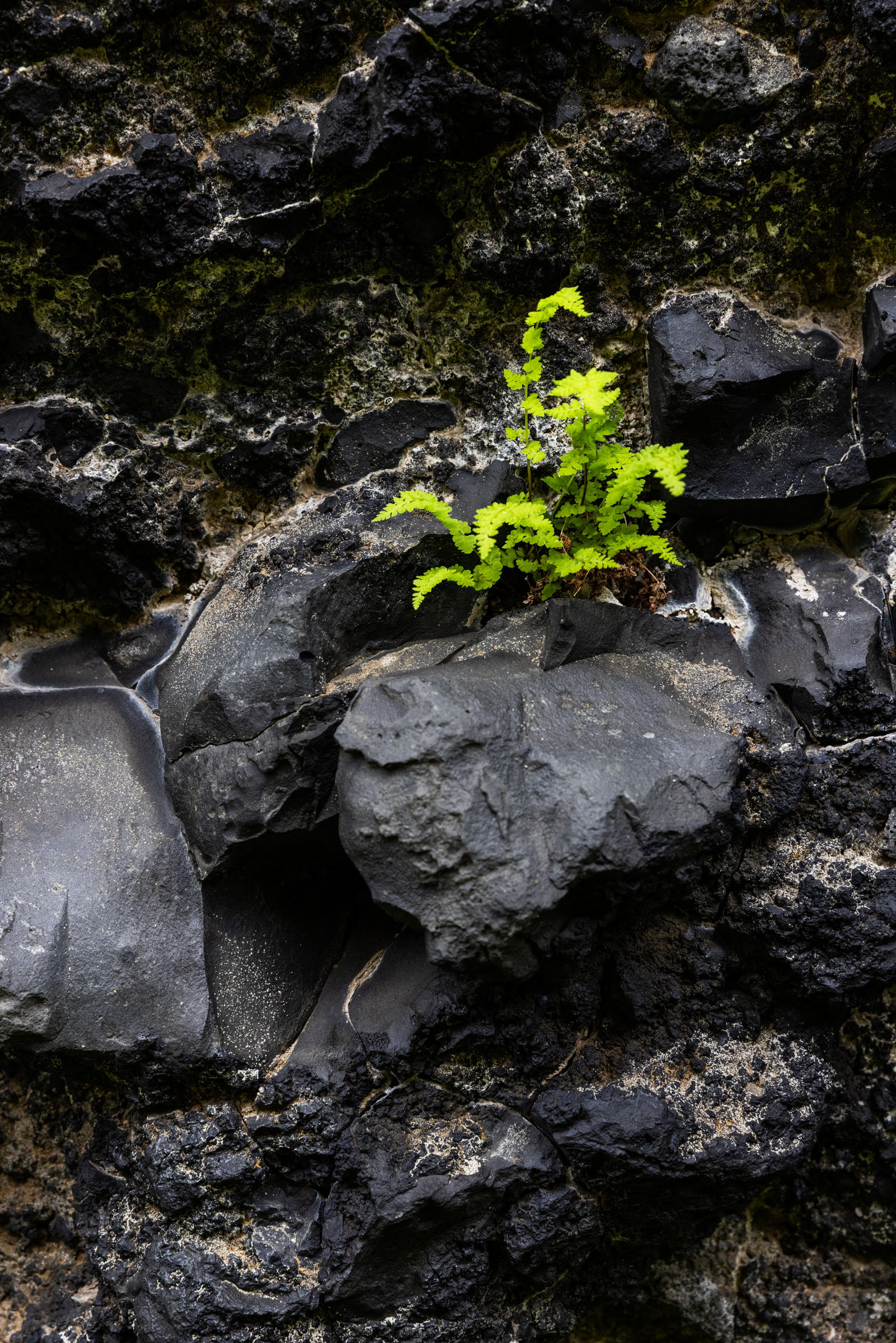
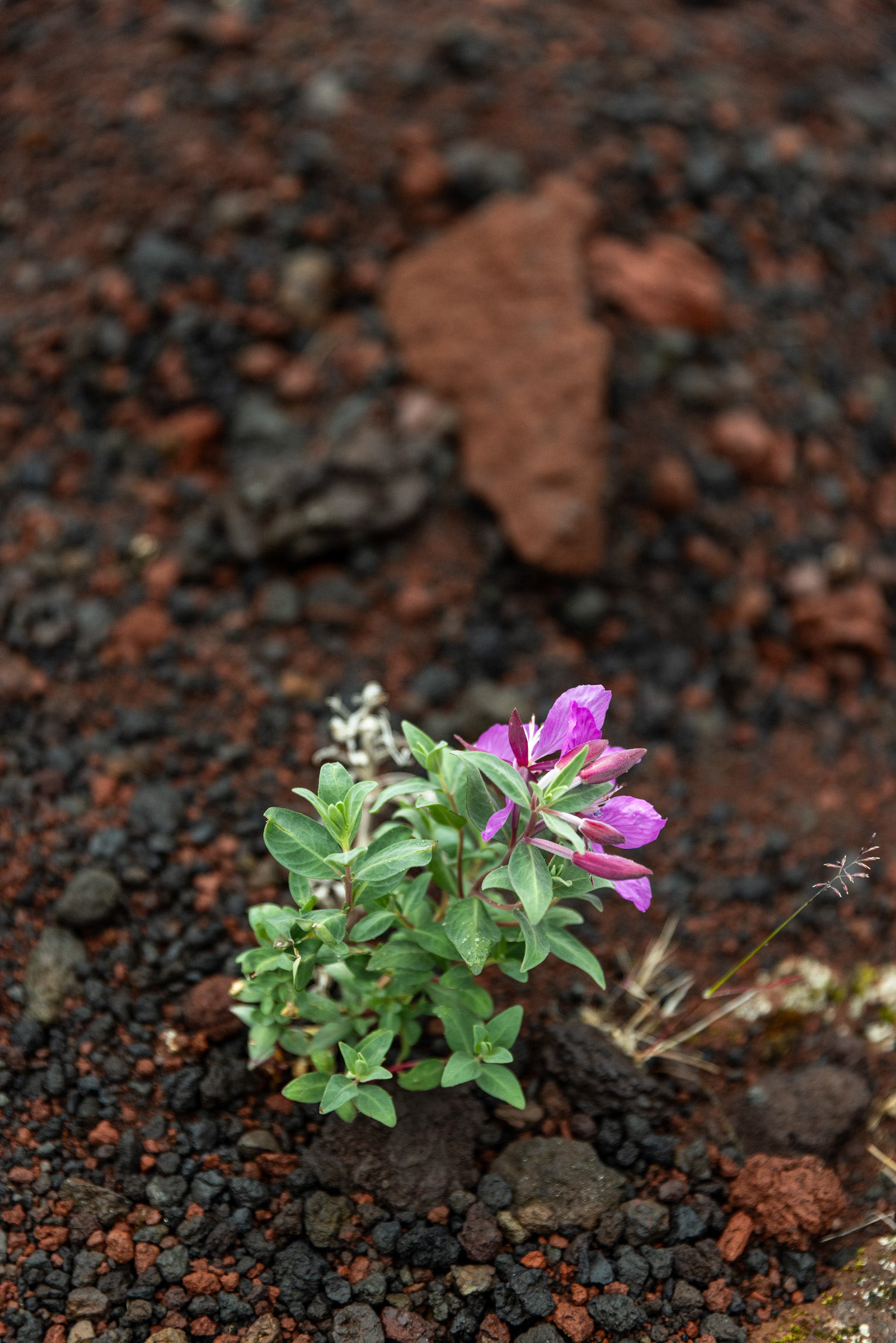
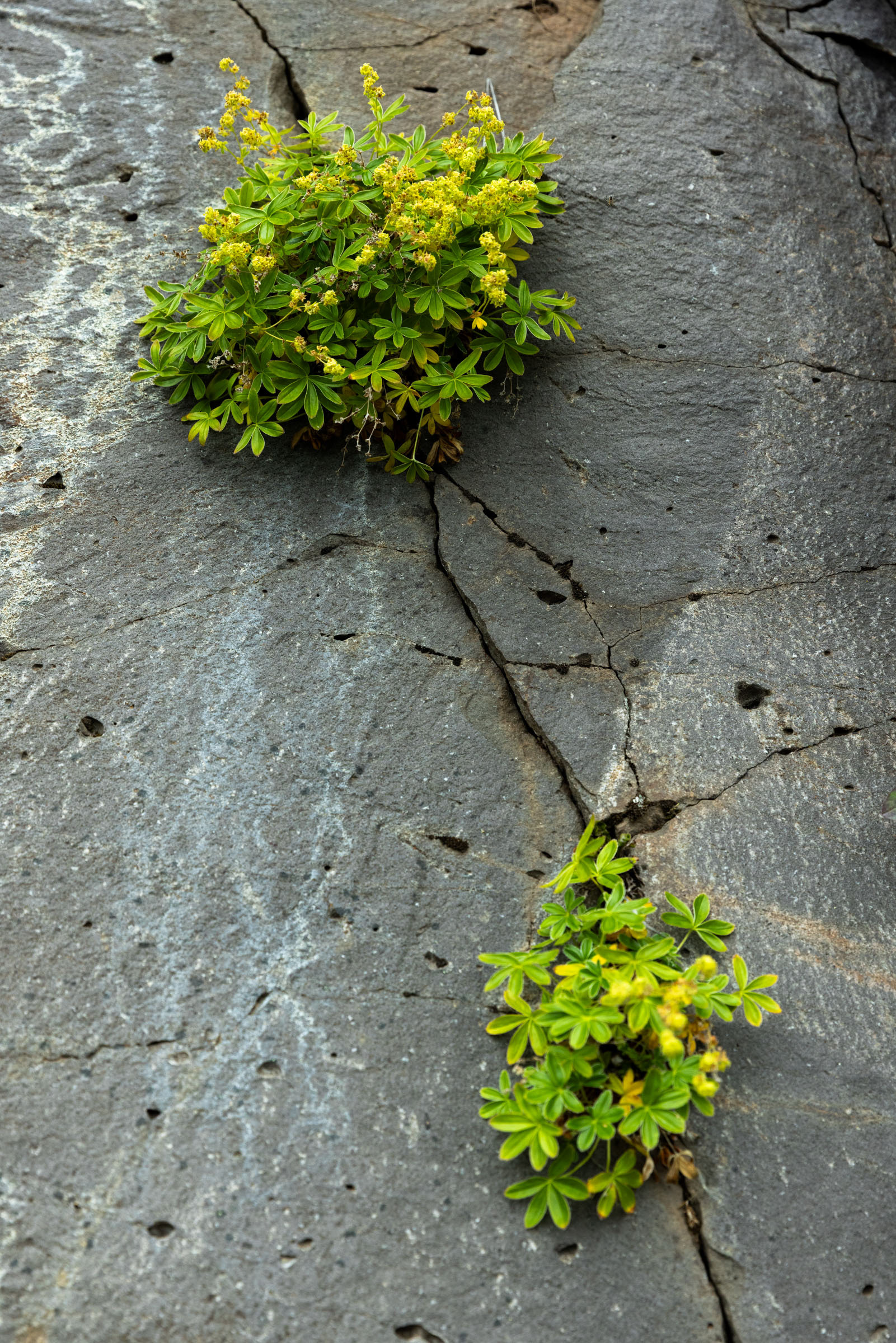
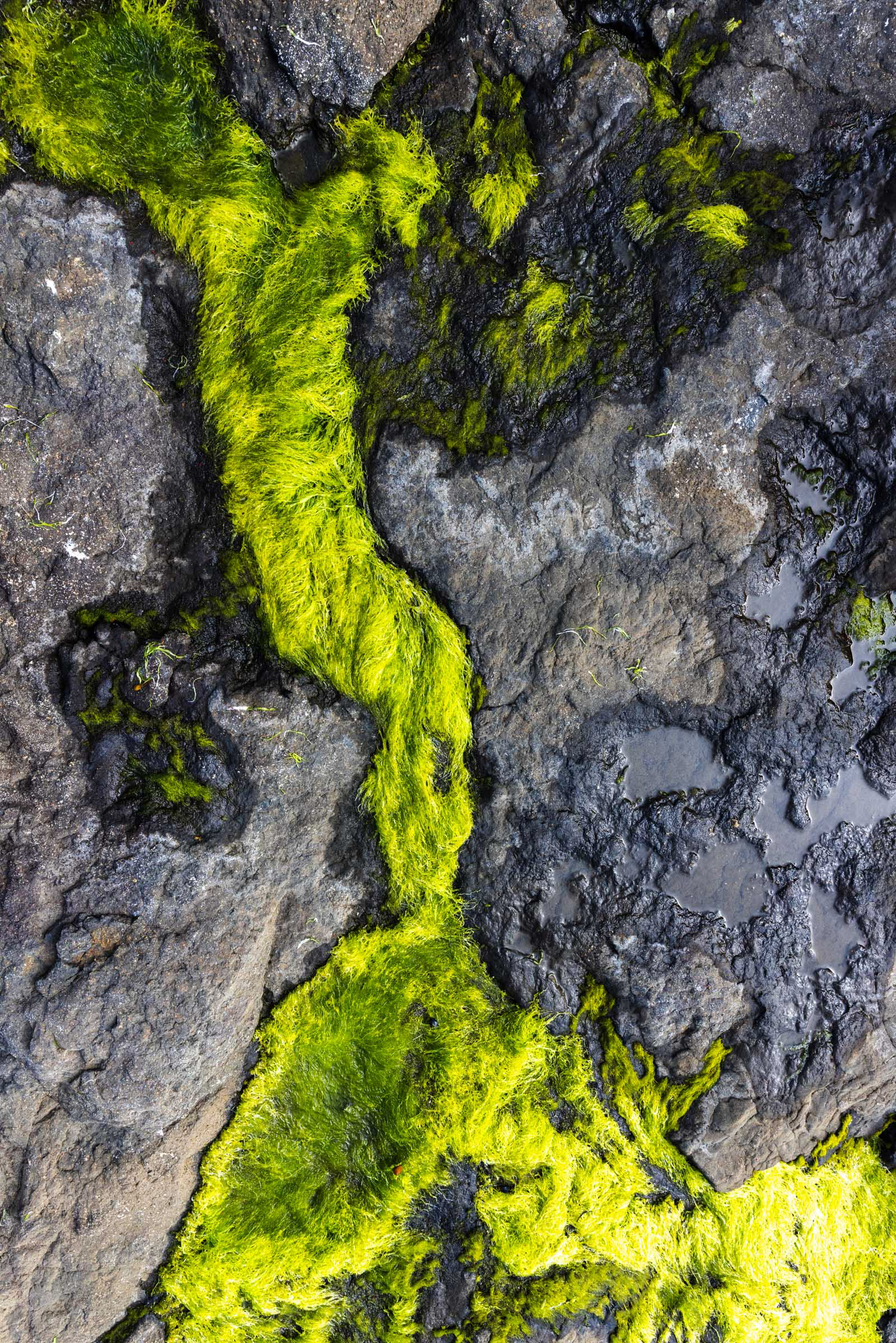
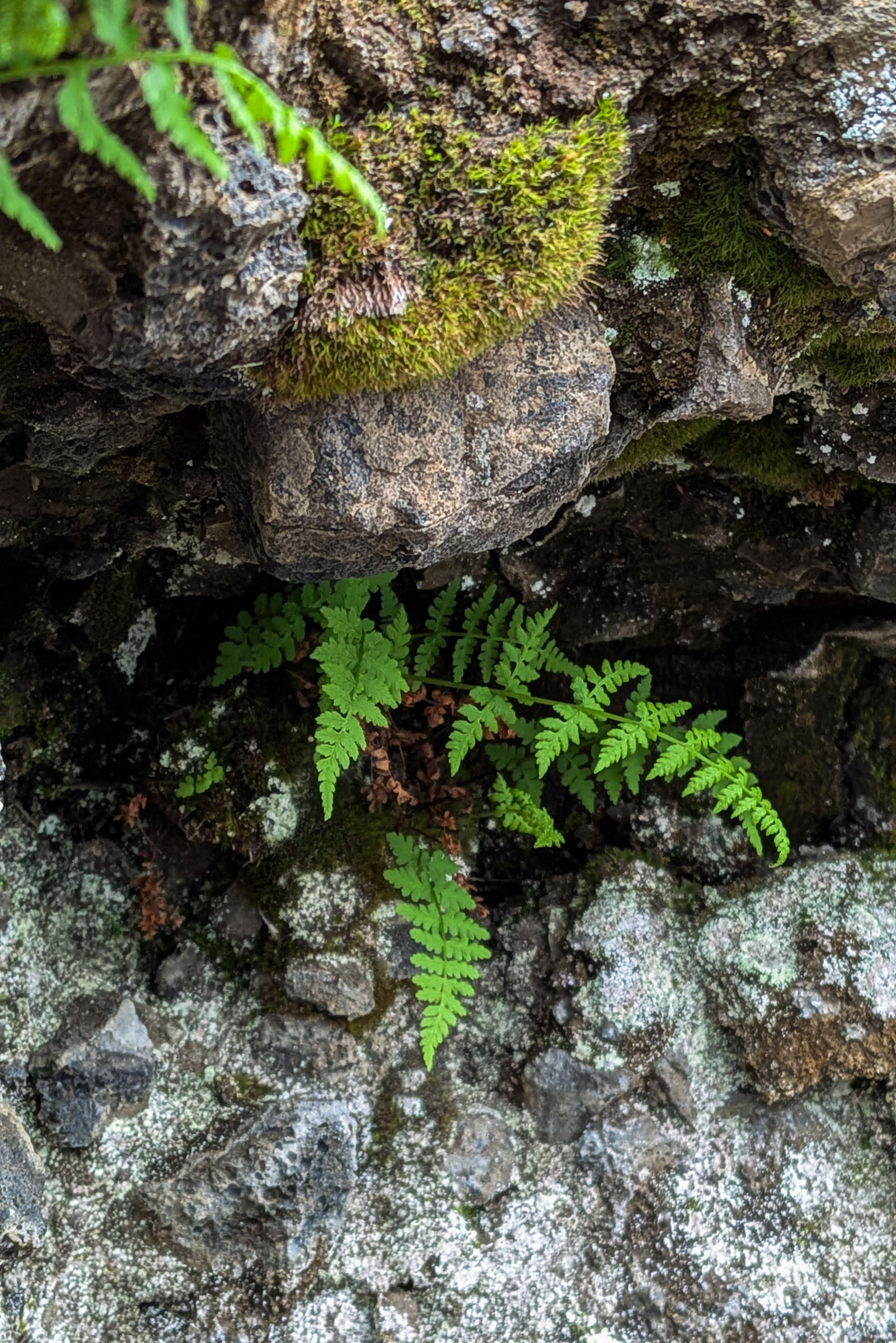
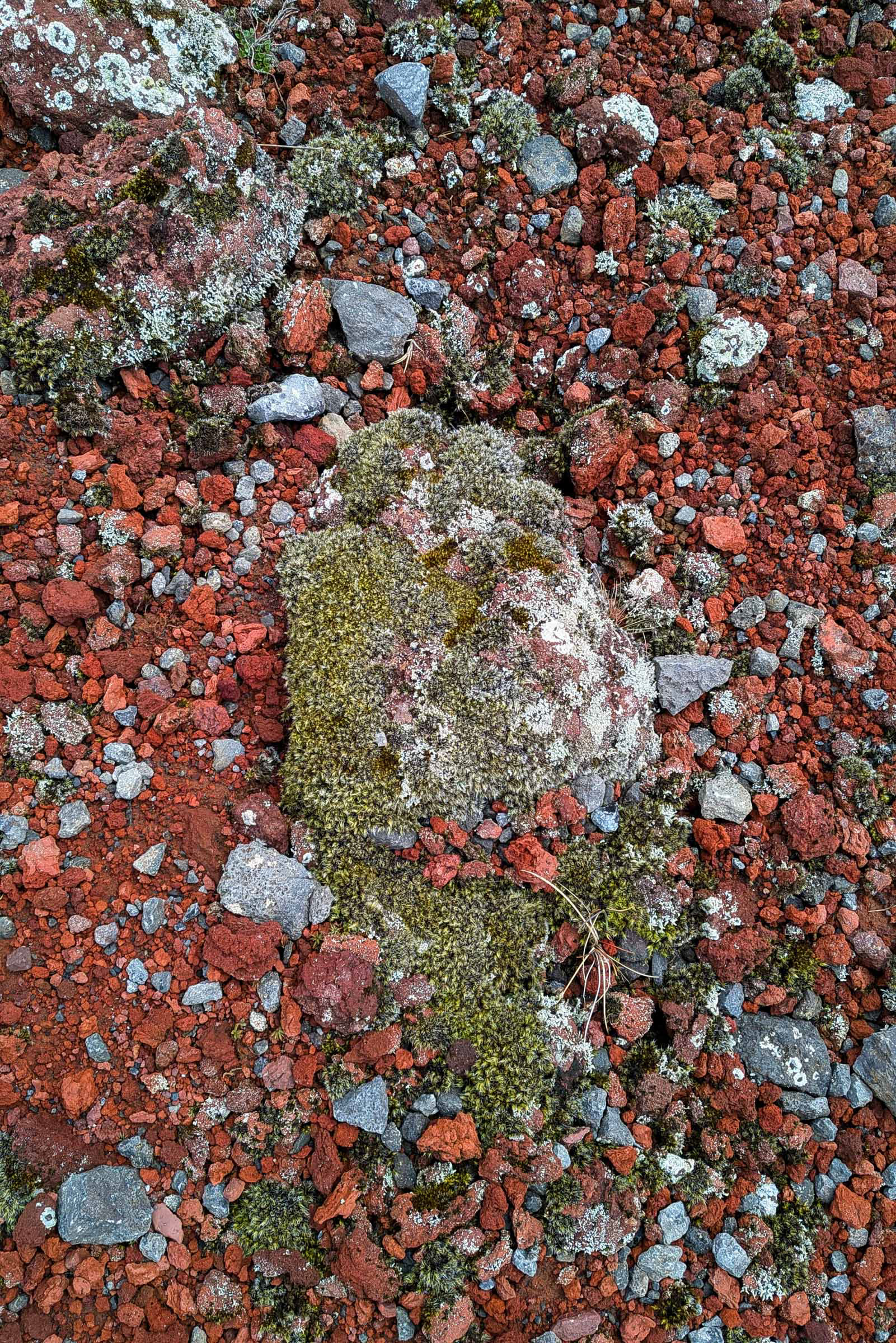
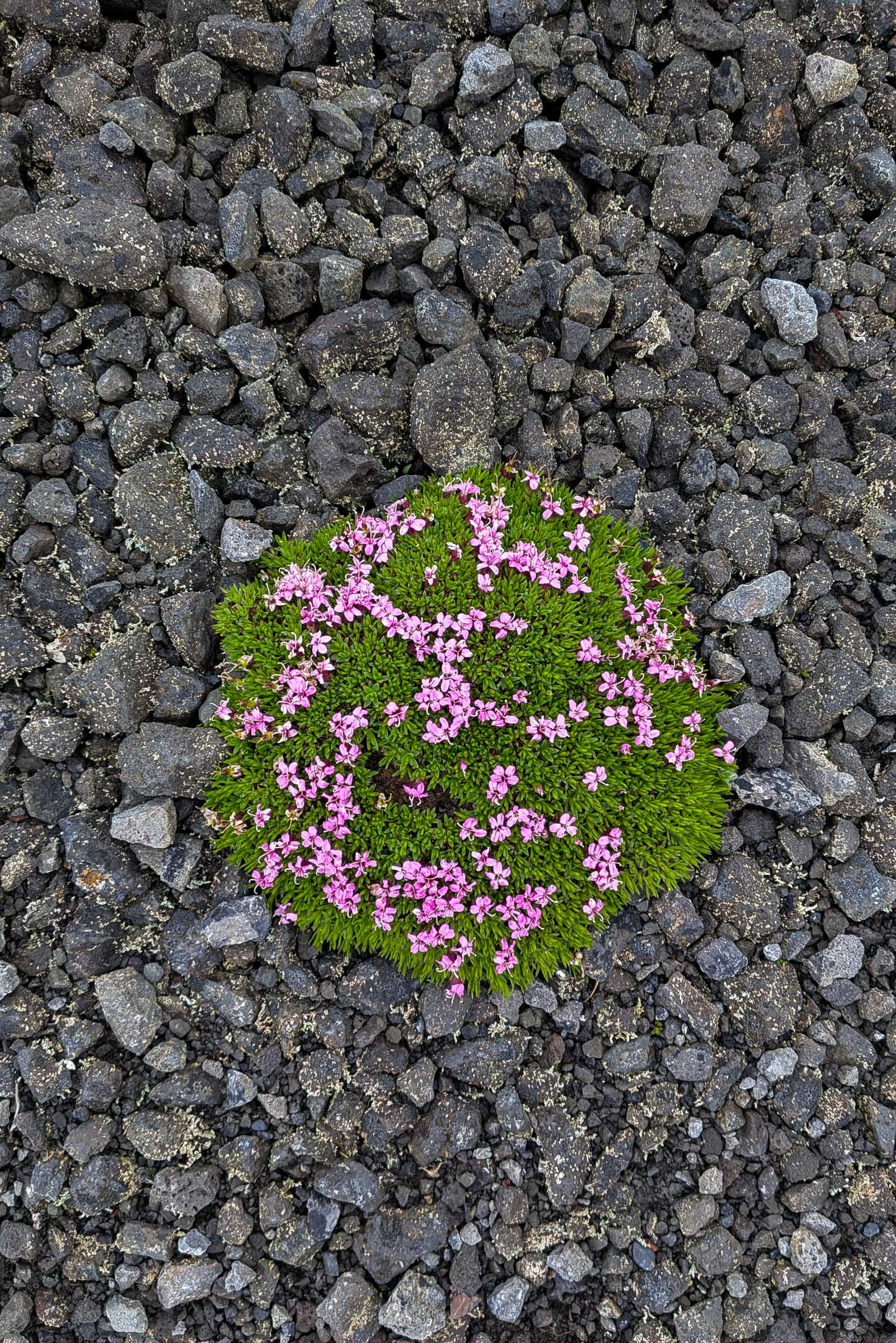
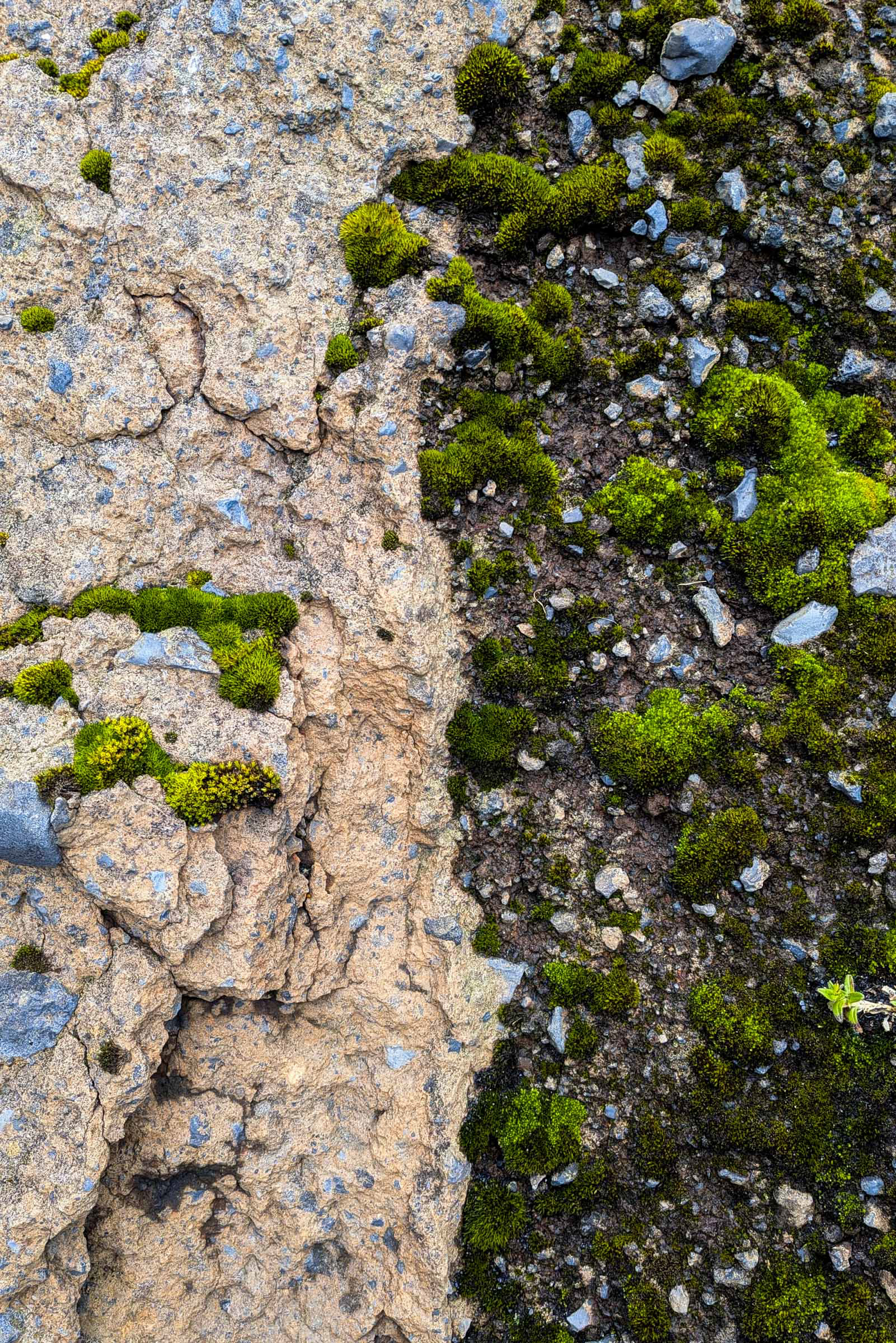
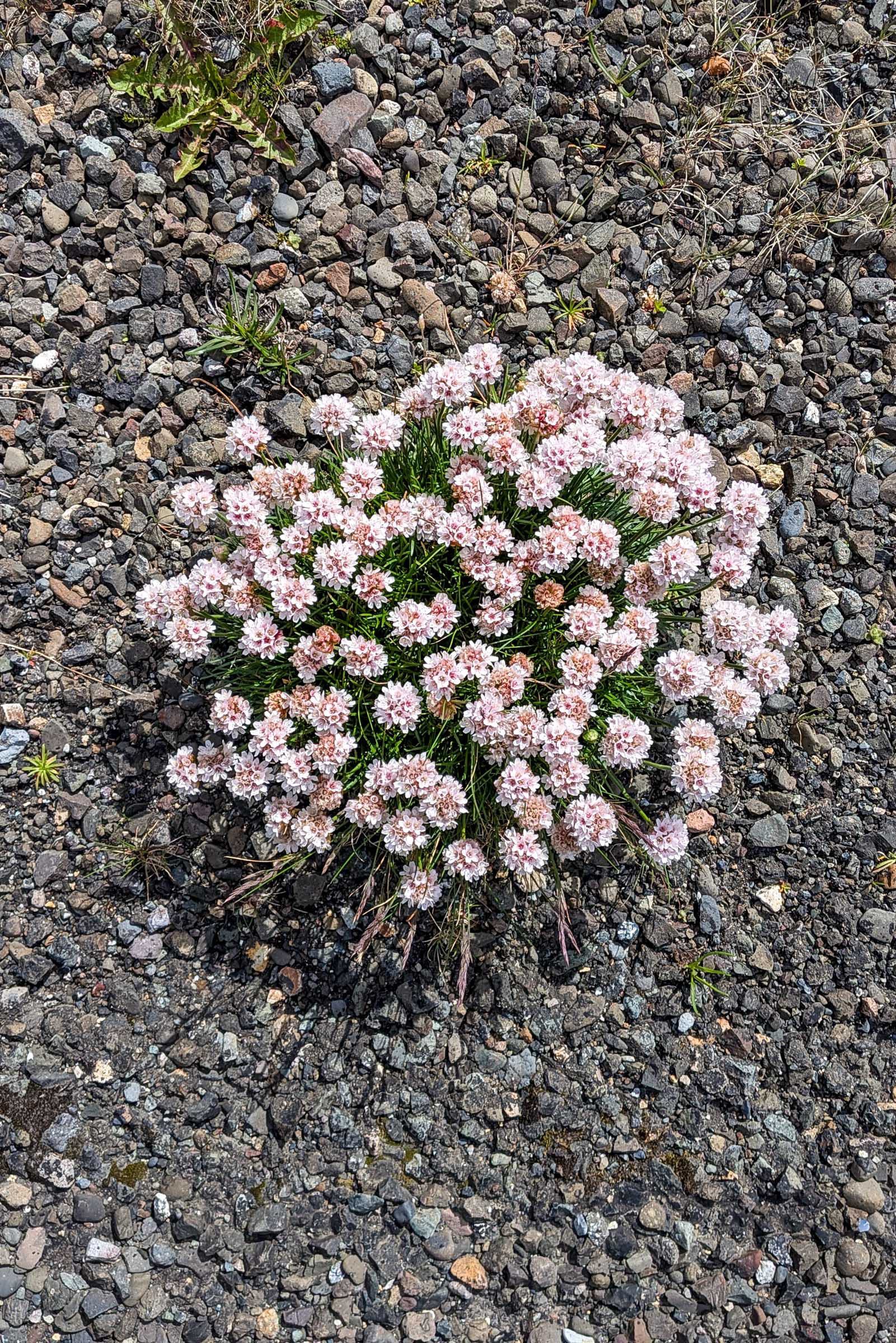
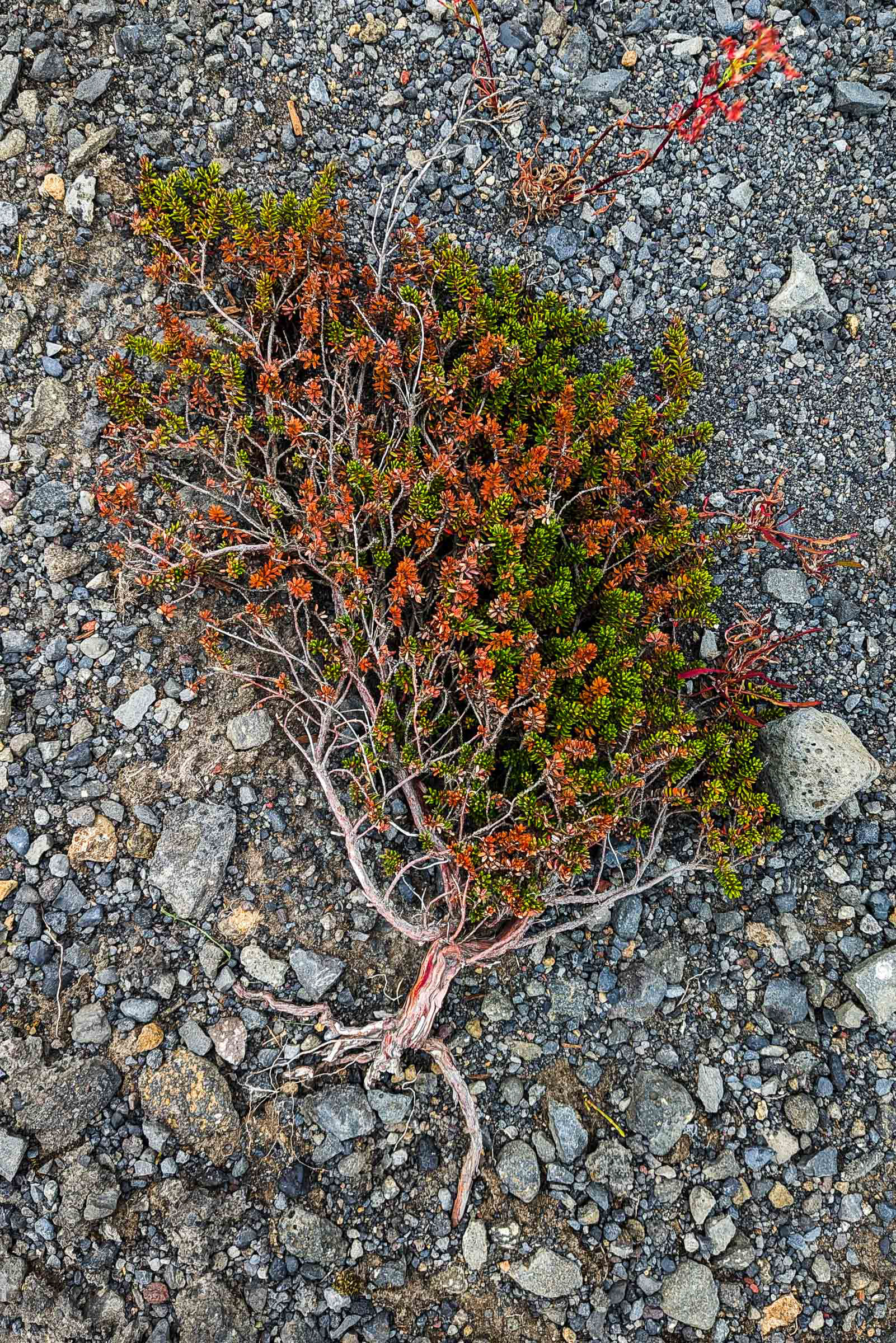
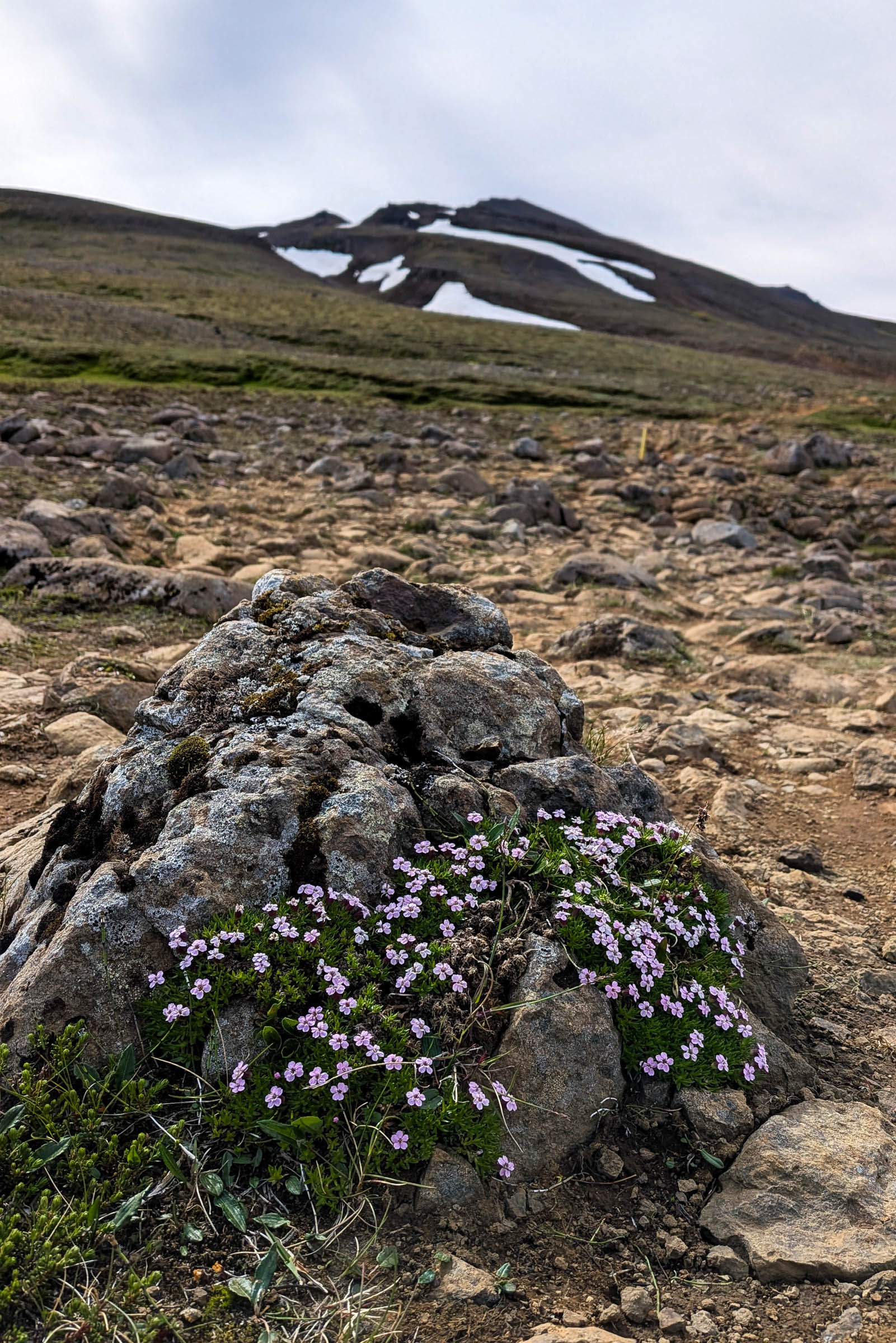
Photographic and GPS coordinates collection
Can resilience also be a cage?
The project began in Norway, in the walk called A Fern Between Rocks. The name marked a recognition: a fern pressing into the narrow seams between mountains, flourishing where there is almost no room to be, small against stone that dwarfs it, and still finding a way through.
To read that as a strength is one way of seeing it. But is it the only one. Prompted by a dialogue with a woman in Berlin, originally from Palestine, another reading surfaced: if you are believed to be resilient, you can be made to endure anything. Survival becomes an expectation placed on you rather than a choice, and the cage closes exactly where the strength is assumed.
Two years later, on the first black lava beach outside Reykjavík, arctic plants offered the same lesson again, thriving in landscapes that seem to allow for nothing. Each seed carries its own quiet clock, a chemical memory of when to open, and is carried onward by wind, by birds, by chance, sent far from where it began.
Unlike mammals, who watch their young take shape, grow, become separate, plants release their seeds into a distance they will never see. They hope, without ever knowing whether the hope was answered. Isn't this close to migration, to a village once sending someone offshore for a better life, a departure with no way back to confirm if it worked.
The work gathered photographs and GPS positions of these plants across Iceland, over three months, a map of small survivals scattered across the island. Ferns elsewhere grow tall as trees, given easier conditions. What does that difference say about the limits of resilience, and about how much of it is choice, and how much is simply the shape endurance takes when there is no other option.
The Distance Between Us
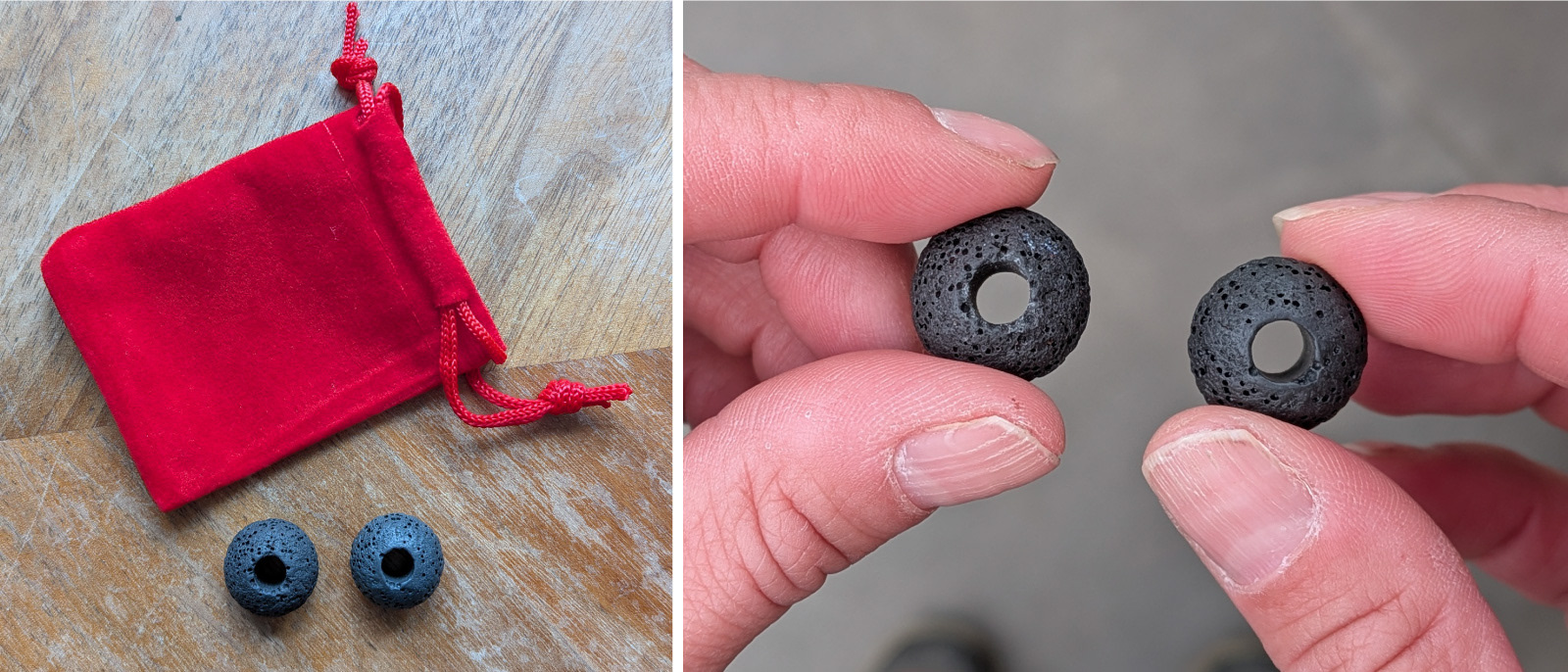
Installation of paired objects
Two identical lava beads were purchased at a market in Reykjavík just before the journey began.
One was left behind. The other was carried on a 3,200-kilometre journey around Iceland, always travelling with me.
At the end of the journey, the two beads are together again. They are still identical. They are made from the same volcanic stone, sourced from the same place. Nothing visible distinguishes one from the other.
And yet, between them, 84 days have passed.
The journey returned to its geographical beginning, but not to its temporal beginning. We imagine a journey as a circle, as a closure, as a loop. But when time is added as a third dimension, what appears as a circle in space becomes a spiral.
The two beads mark two points in time. Like Sköll and Hati, they were set on different paths, they can be identical, while no longer being the same.
LETTERS TO MYSELF IN THE FUTURE
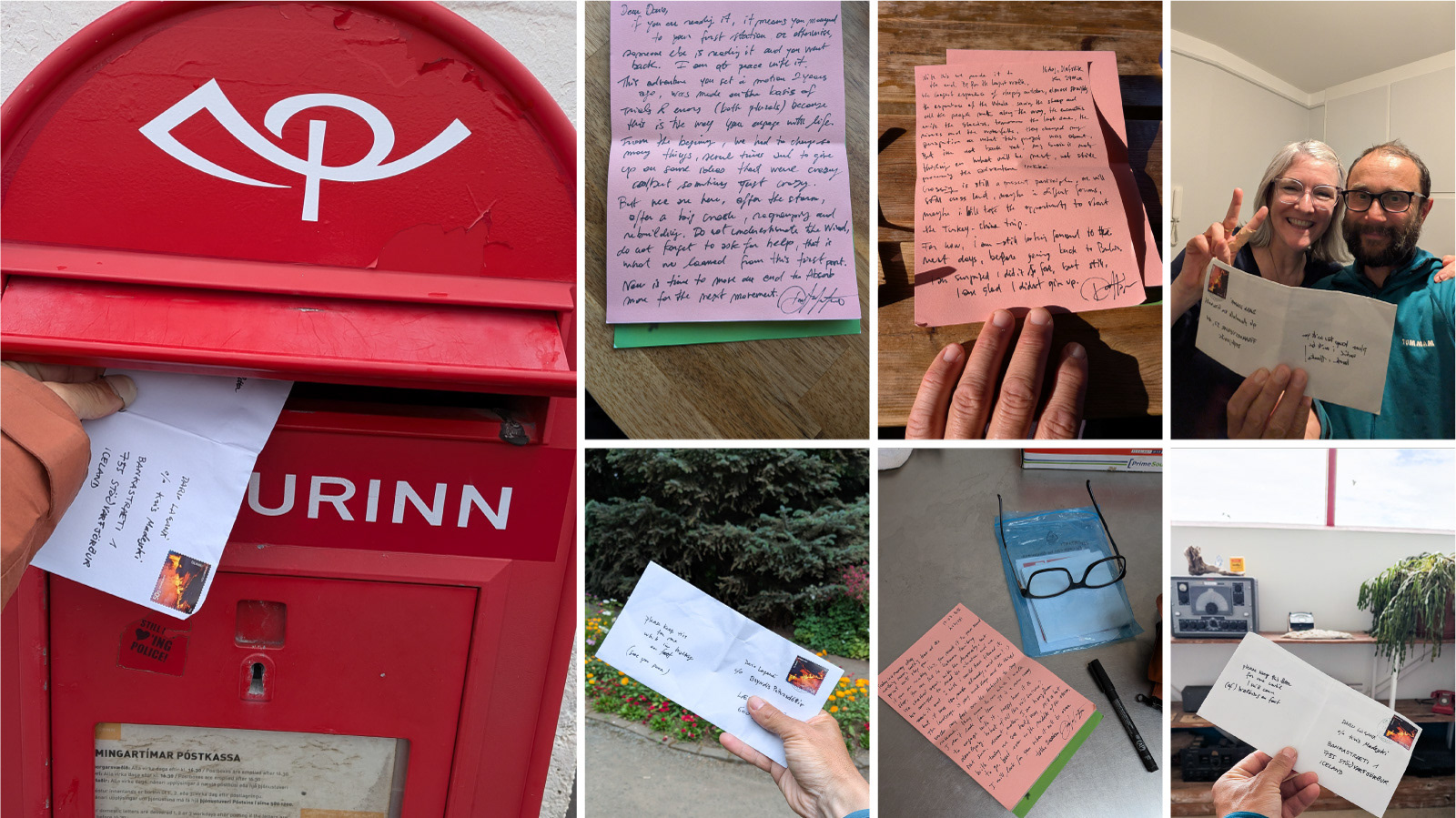
Installation
Being alone for three months in a row is not to be taken for granted. The balance between solitude and loneliness is hard to master when it comes to long trips. So, what would you like to say to yourself in the future, if you could? What advice and what stories would you tell yourself? Which experiences are shaping your journey?
With these questions in mind, I decided to send myself letters into the future, which I could collect and eventually read: stories from the past that I could share with myself, expectations, worries, and the full story of my project, with encounters, failures, and expectations.
Souvenirs Are for You, I Took Nothing
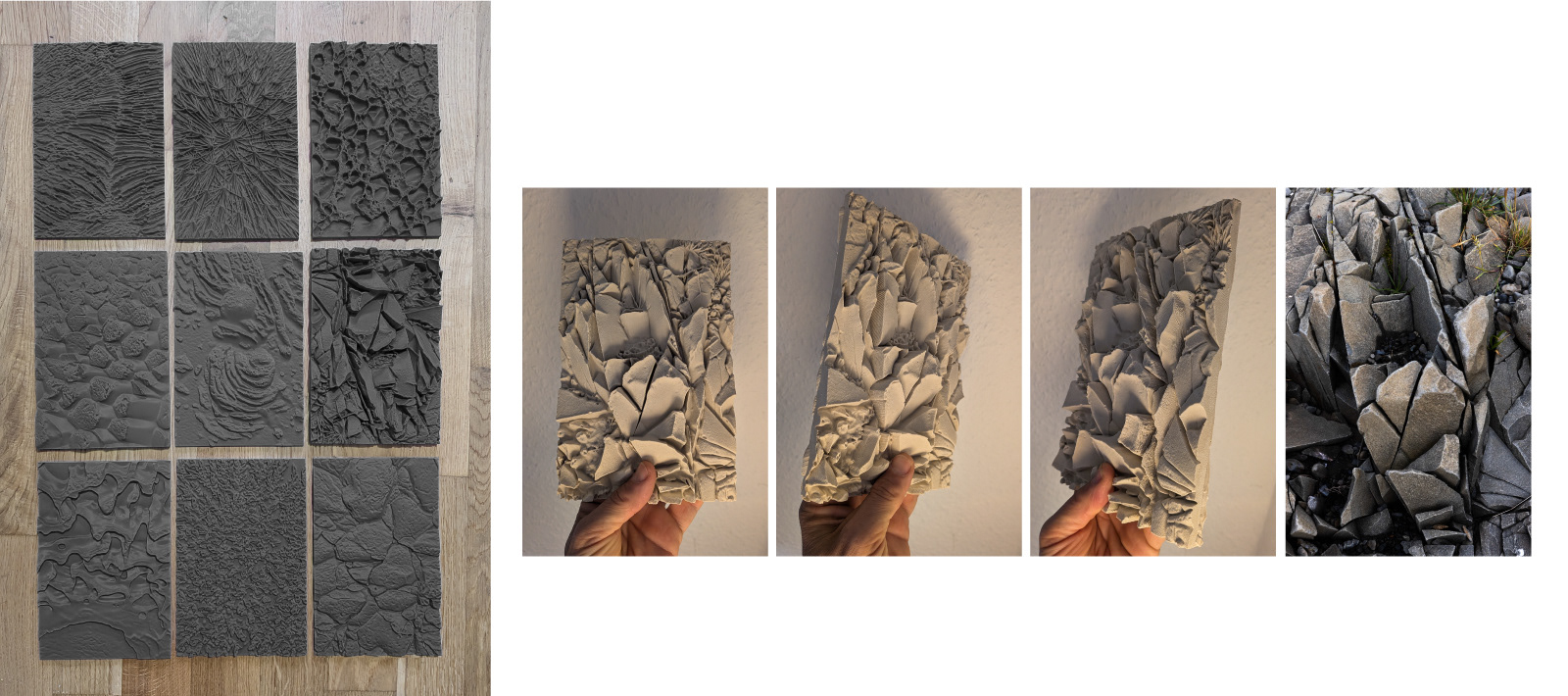
Plaster bas-reliefs made from moulds derived from 3D scans and prints
Souvenirs are placebo replicas of our memories. They are triggers to the past, but somehow they also shift through serialization, commercialization, and the production of manufactured emotions. The further they move from the experience they are supposed to represent, the more distance they create from it. This becomes especially evident when it comes to places we have experienced in a strong, personalized and embodied way.
Souvenirs are also connected to an older habit: taking something from a place in order to remember it. Sand, stones, shells, fragments of nature. They allow us to carry a piece of an experience home, but they also belong to a morbid habit of extracting and collecting. Eventually, these objects often end up on a shelf, covered by dust, becoming an unequivocal reminder that perhaps we did not need them in the first place. Beyond regulations and laws, the idea of bringing a piece of somewhere back home has increasingly entered a different moral territory. We have started asking ourselves whether it is really necessary to take something in order to remember it. I have asked myself the same question.
For an exhibition that aims to bring people closer to places, to nature, and to the experience of long-term walking, while also considering how our minds can benefit from prolonged exposure to wilderness, I understood a long time ago that photography is not the only possible medium. Perhaps it is not even always the best one. Even though my brain works photographically, making time visible through images, over the last few years I have been exploring other, parallel ways of transposing that photographic experience, using photography as a base while trying to adapt it to a world that does not necessarily have to remain two-dimensional and hanging on a wall. With these experimental works, I want to add another layer to the same research, contributing to a body of work in which images, moving images, sound and other forms of material translation exist alongside each other.
The result of this ongoing research is a technique that starts from my photographs and allows me to extrude details from them, transforming photographic information into three-dimensional forms. The process is still developing, and I do not yet know where it will ultimately lead.
During my walk through Iceland, however, I began collecting a different kind of material: not physical fragments, but images and scans of textures, surfaces and details from different biotopes. Back in the studio, I transformed these details into 3D prints and used them to create silicone moulds, from which I can now reproduce the forms in clay, and eventually in other materials. The intention is not to reproduce nature, but to give these details another physical condition. I want people to be able to explore them closely, notice differences that might otherwise remain invisible, become intrigued by their forms, and look at them from different angles. The shift from image to object also makes it possible to encounter something that began as a photograph through touch, scale and materiality.
This is still a preliminary series of works. The pieces will be reproduced, but not as souvenirs of Iceland. They are souvenirs of the exhibition itself: objects that emerge from an experience of a place without pretending to contain the place.
With the firm intention of leaving as little trace as possible and taking nothing with me, I have somehow created a loop in which I am now presenting my souvenirs to you, reinforcing the contradiction we live in.
On the Uncompromising Balance of Nature
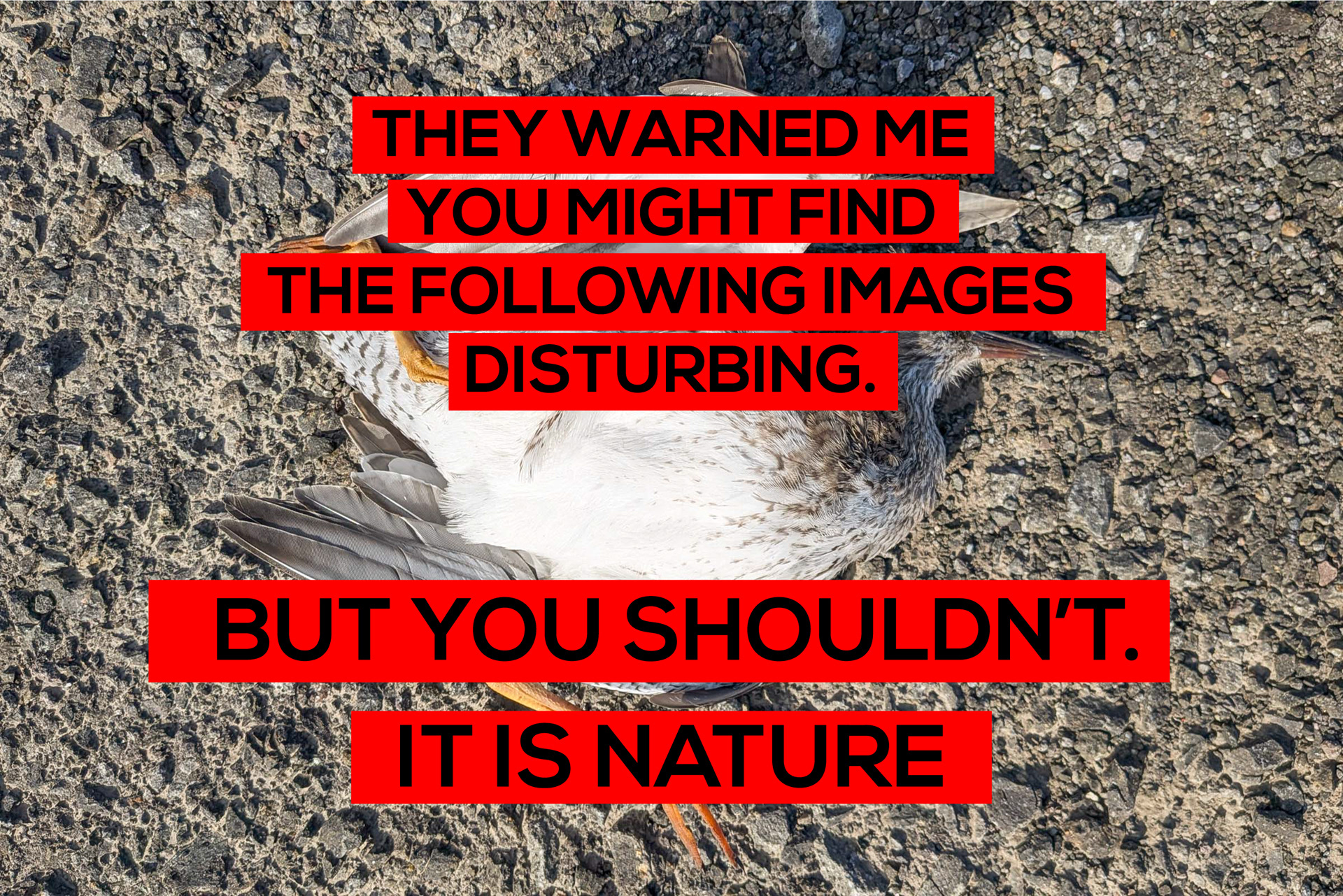
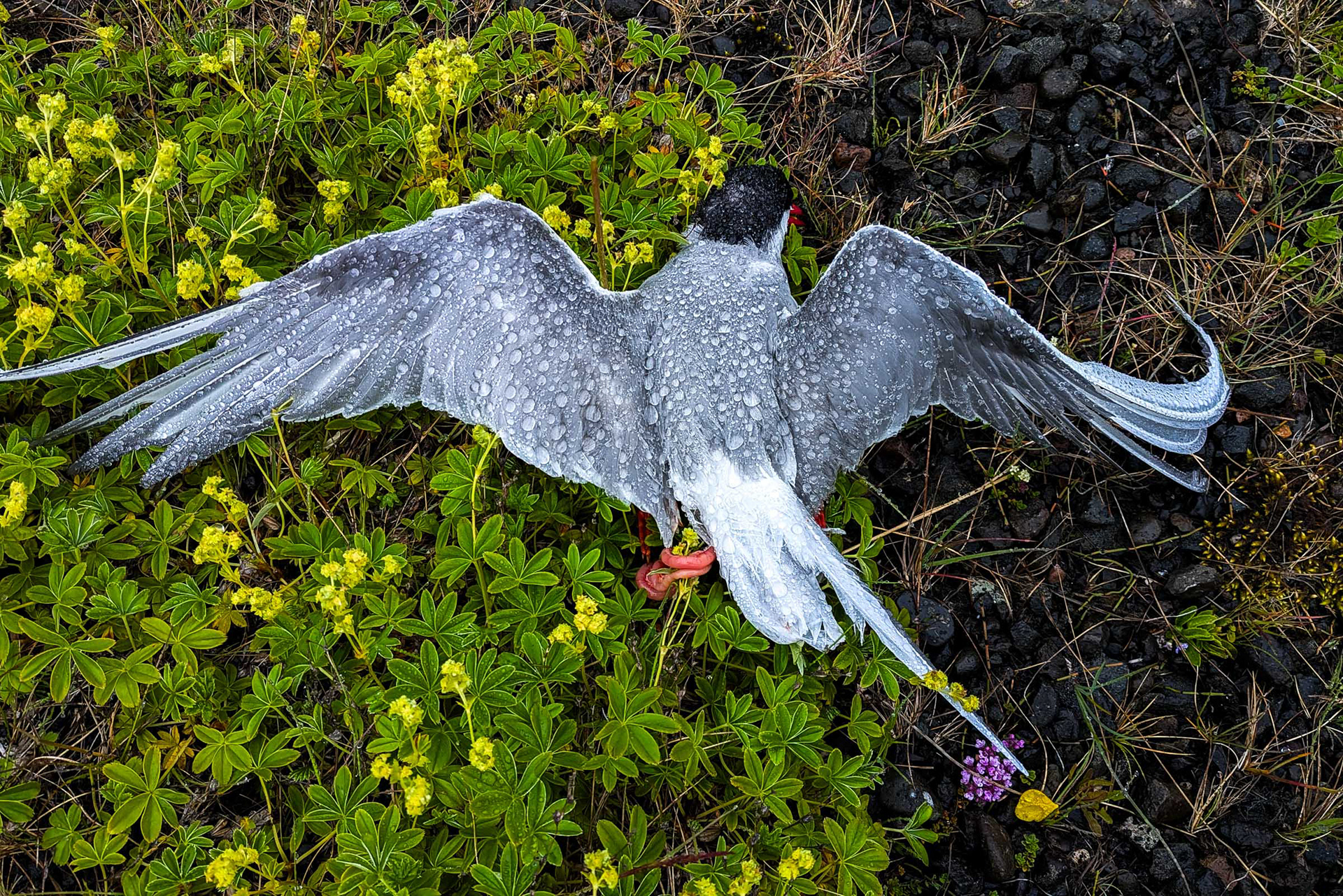
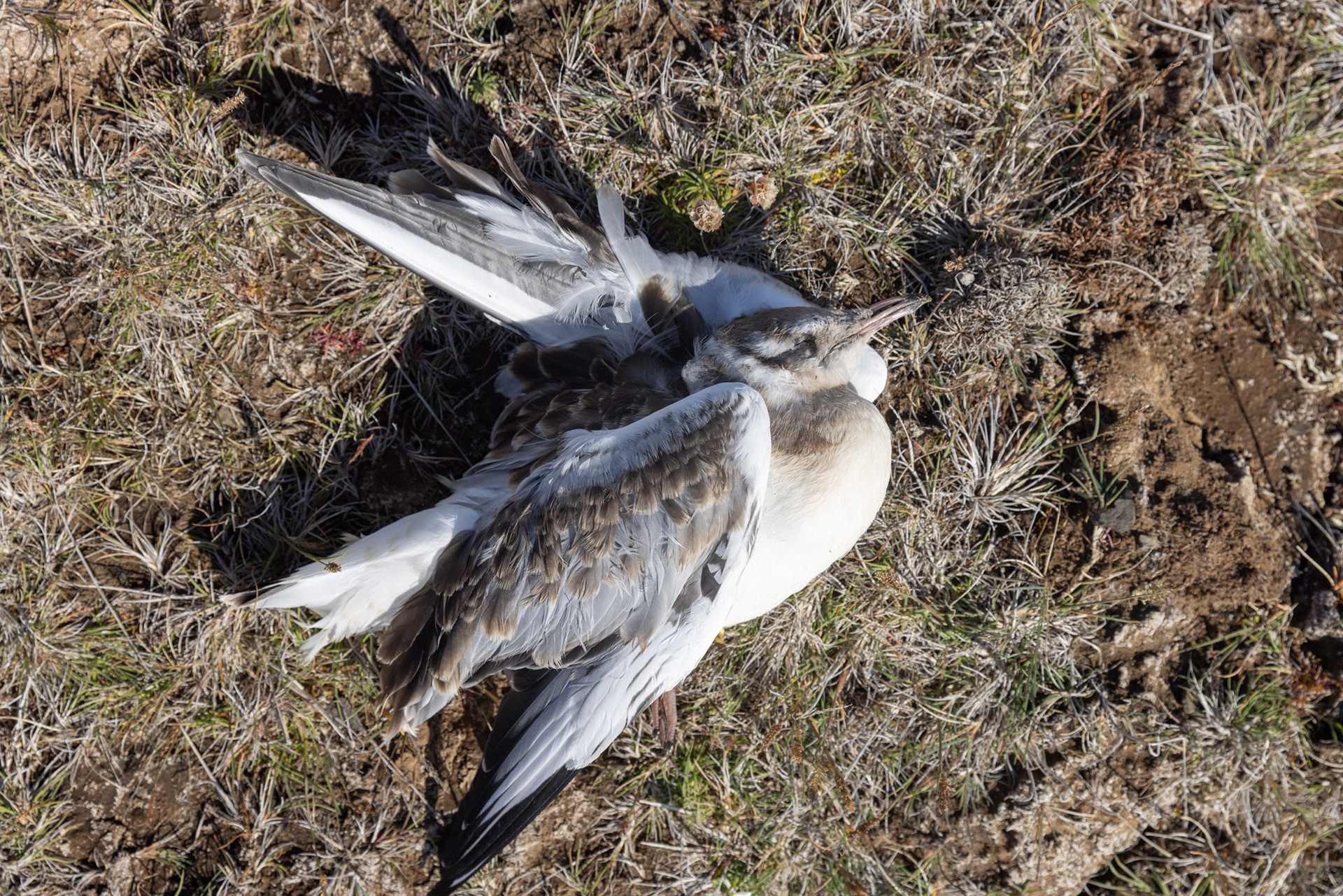
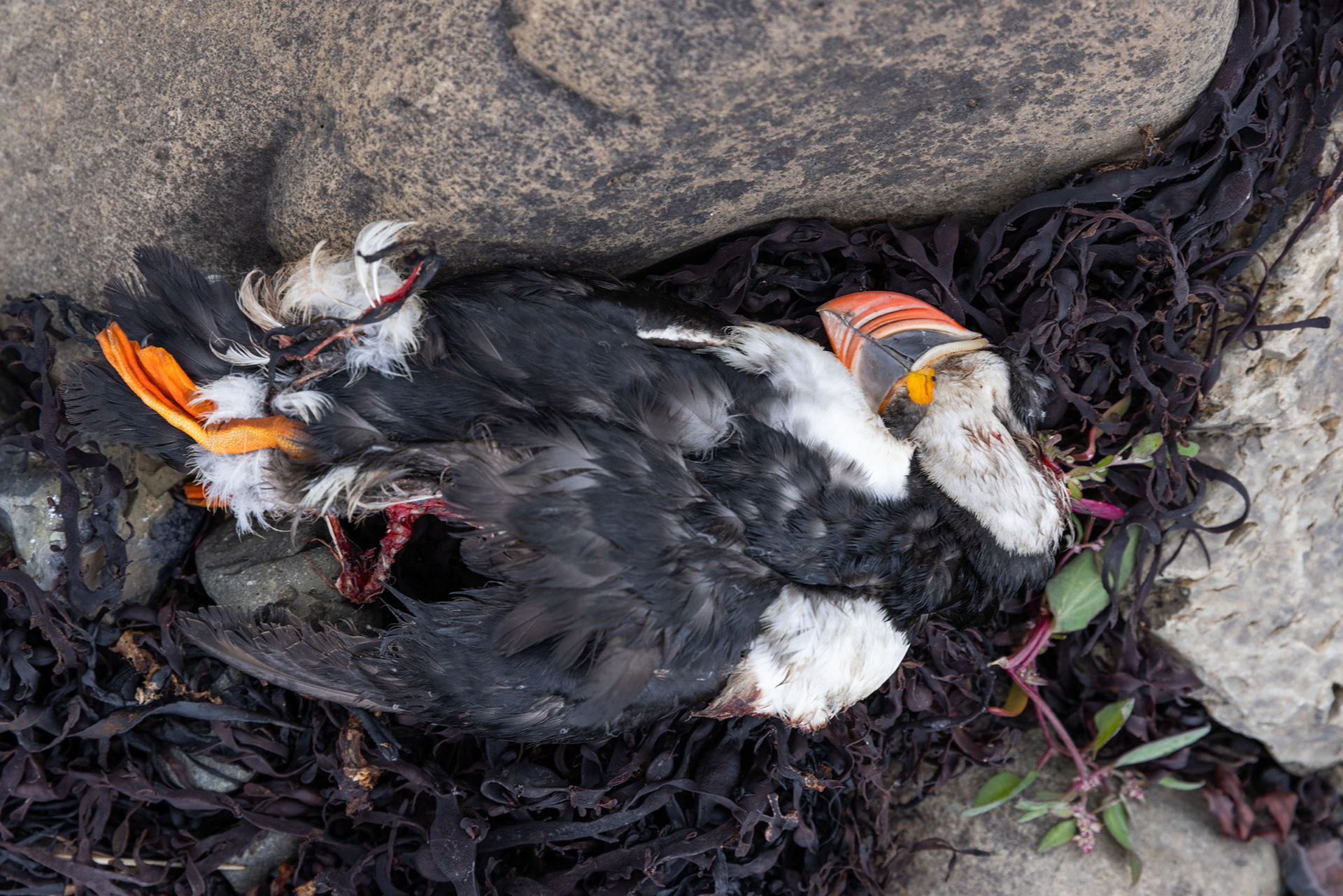
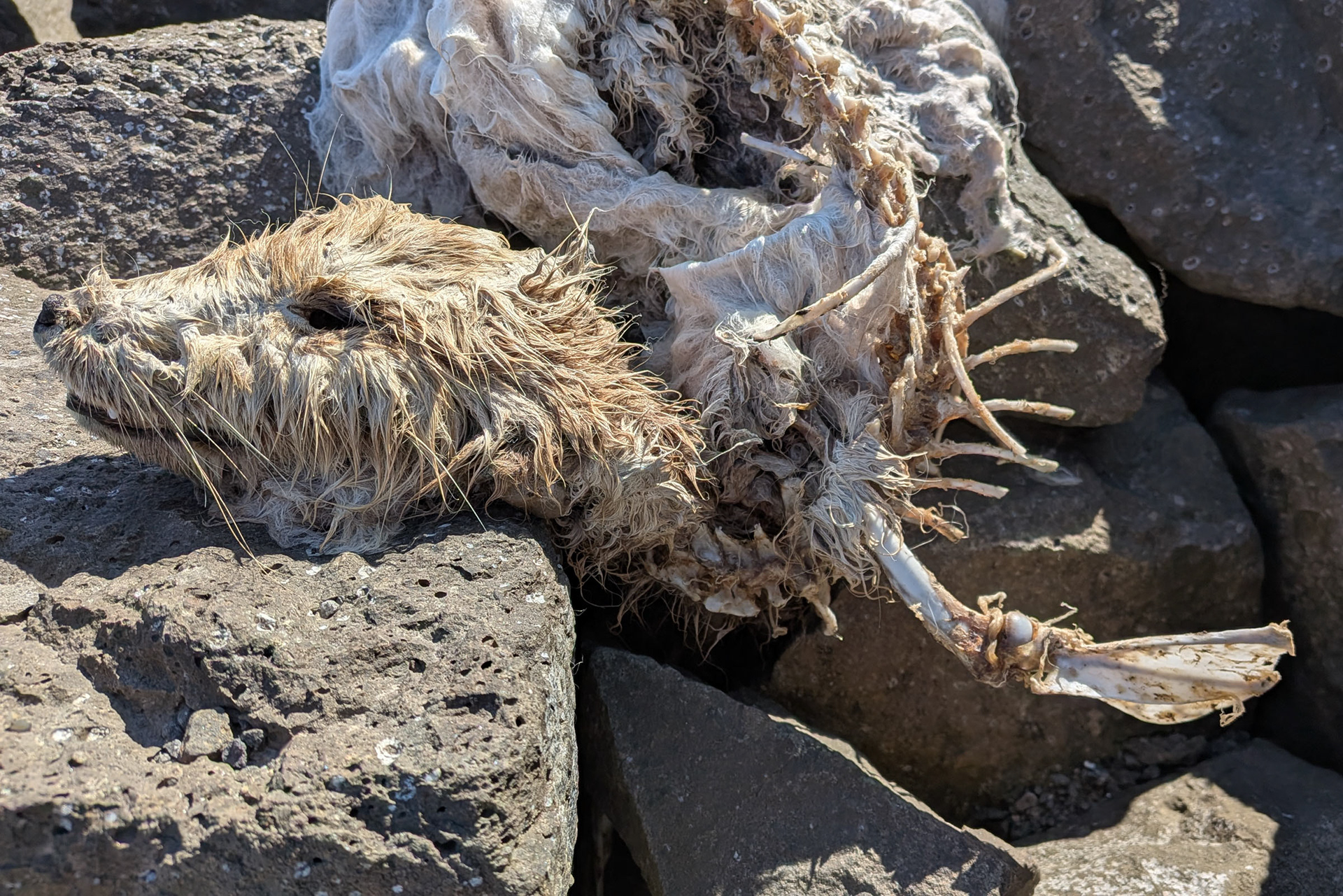
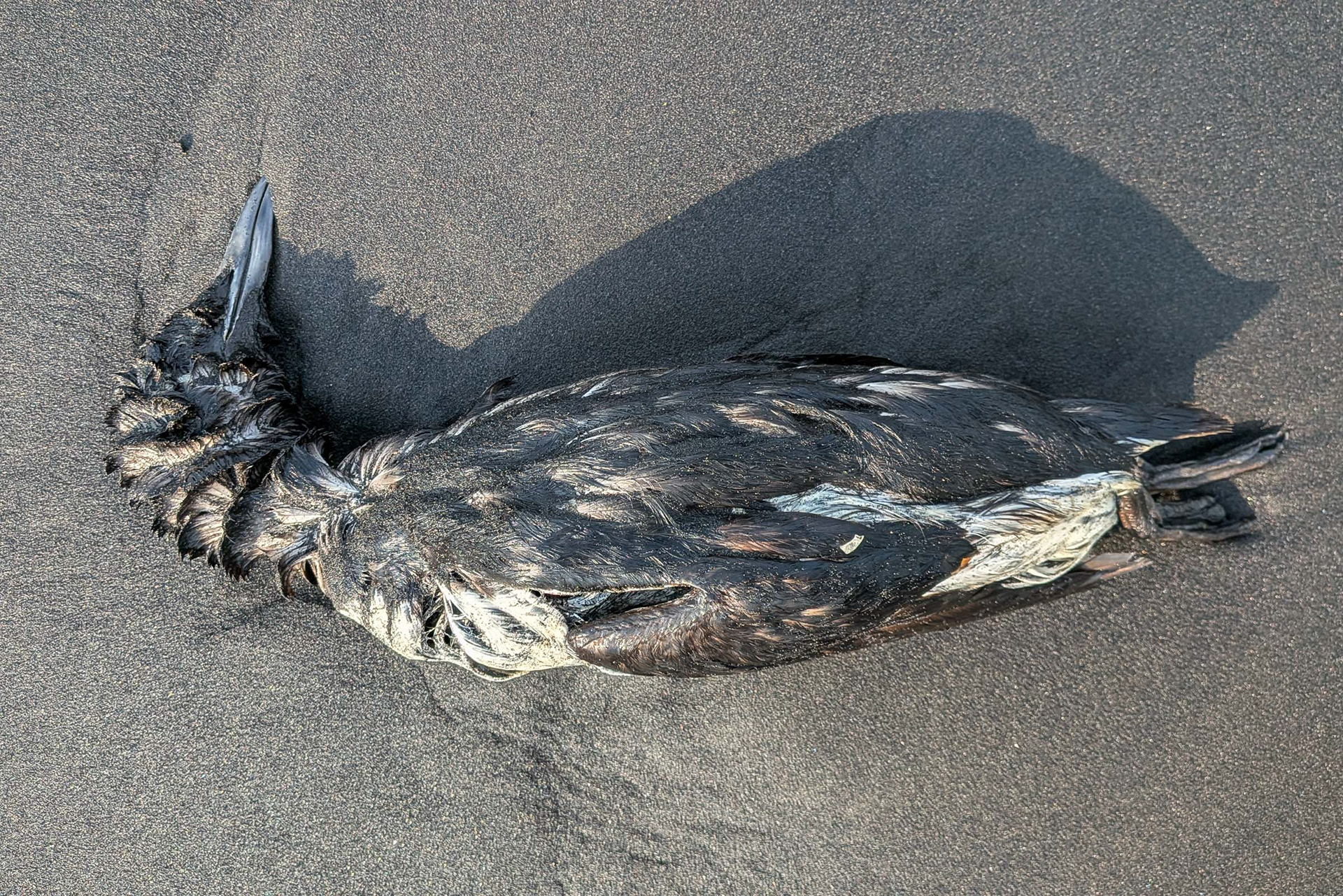
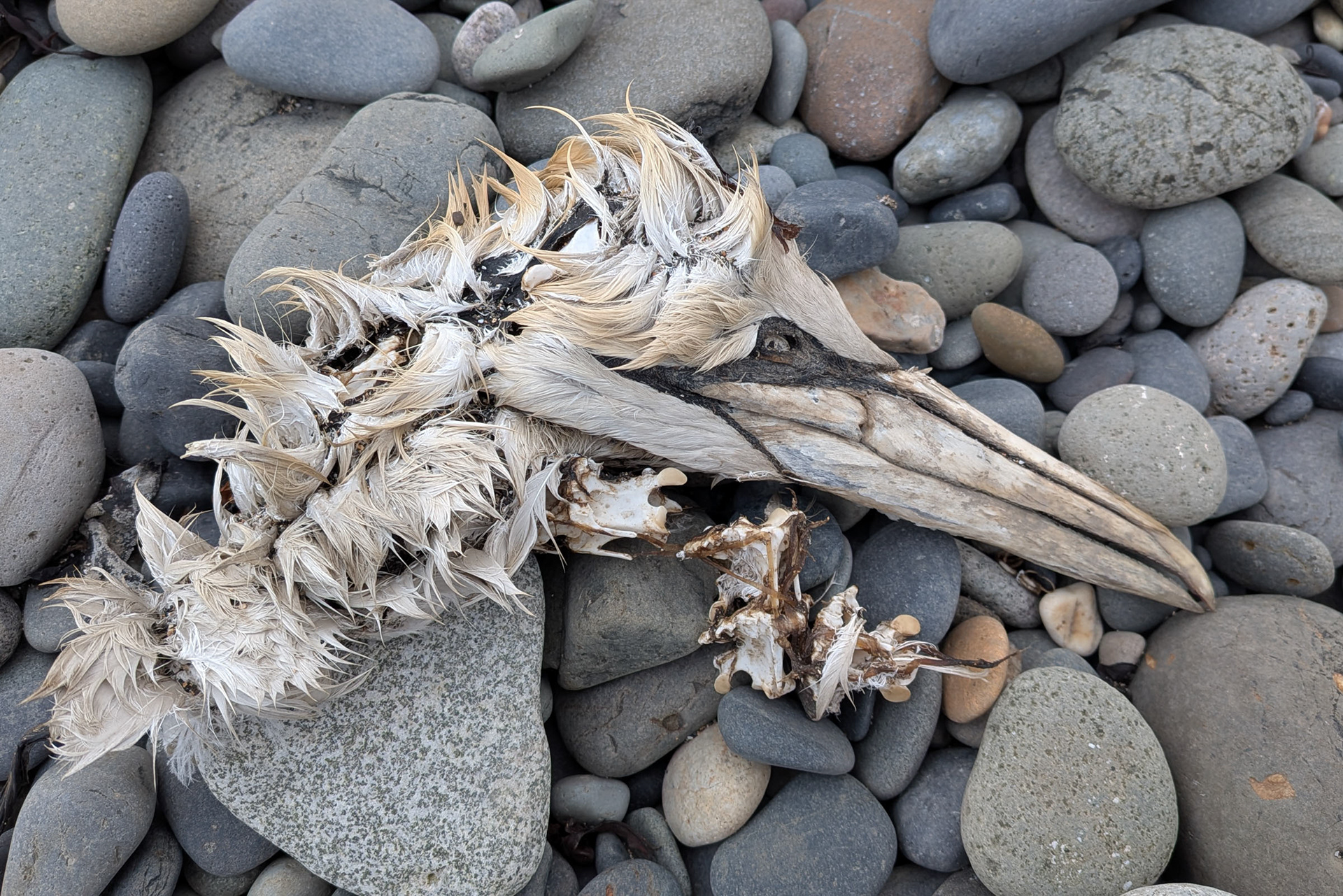
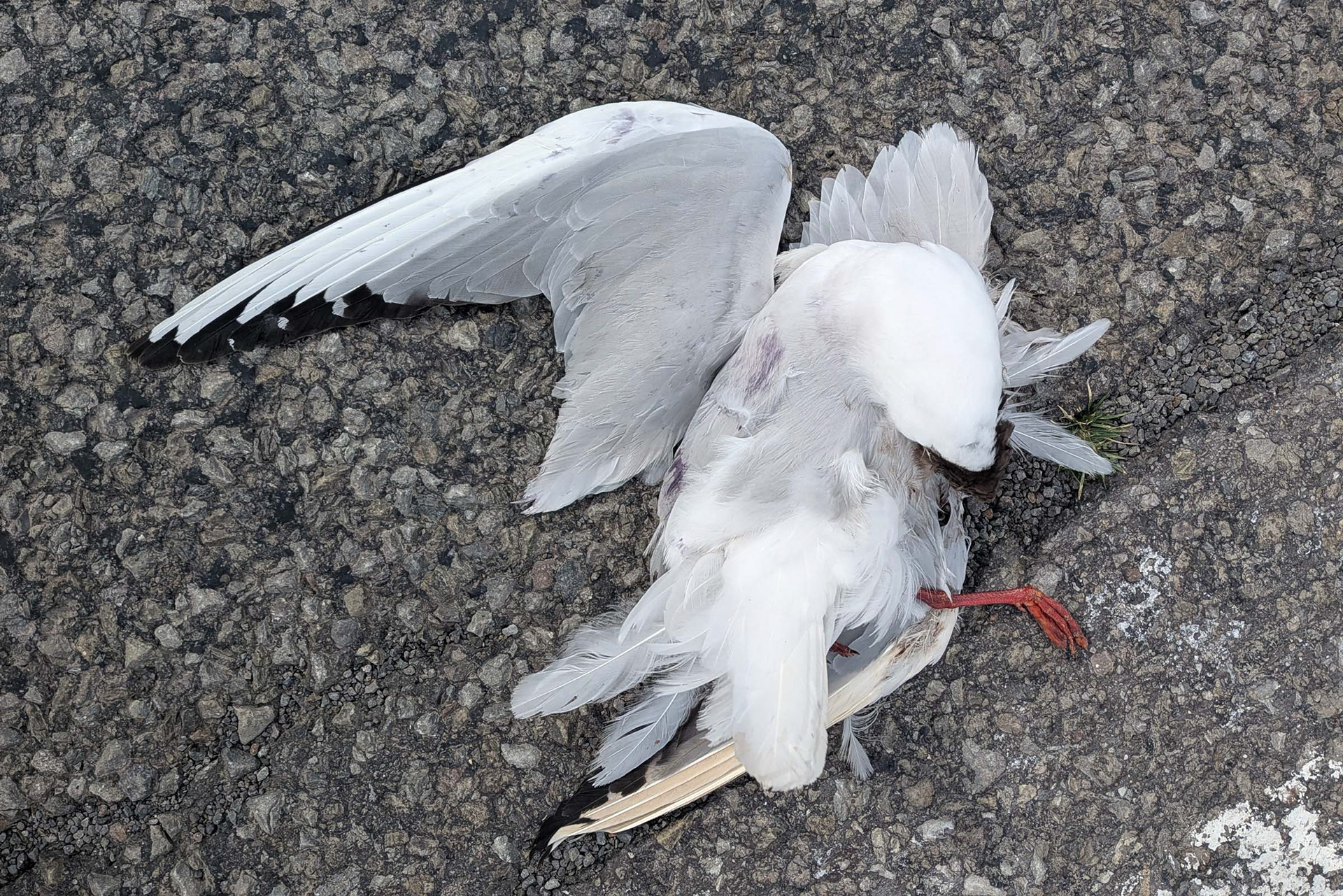
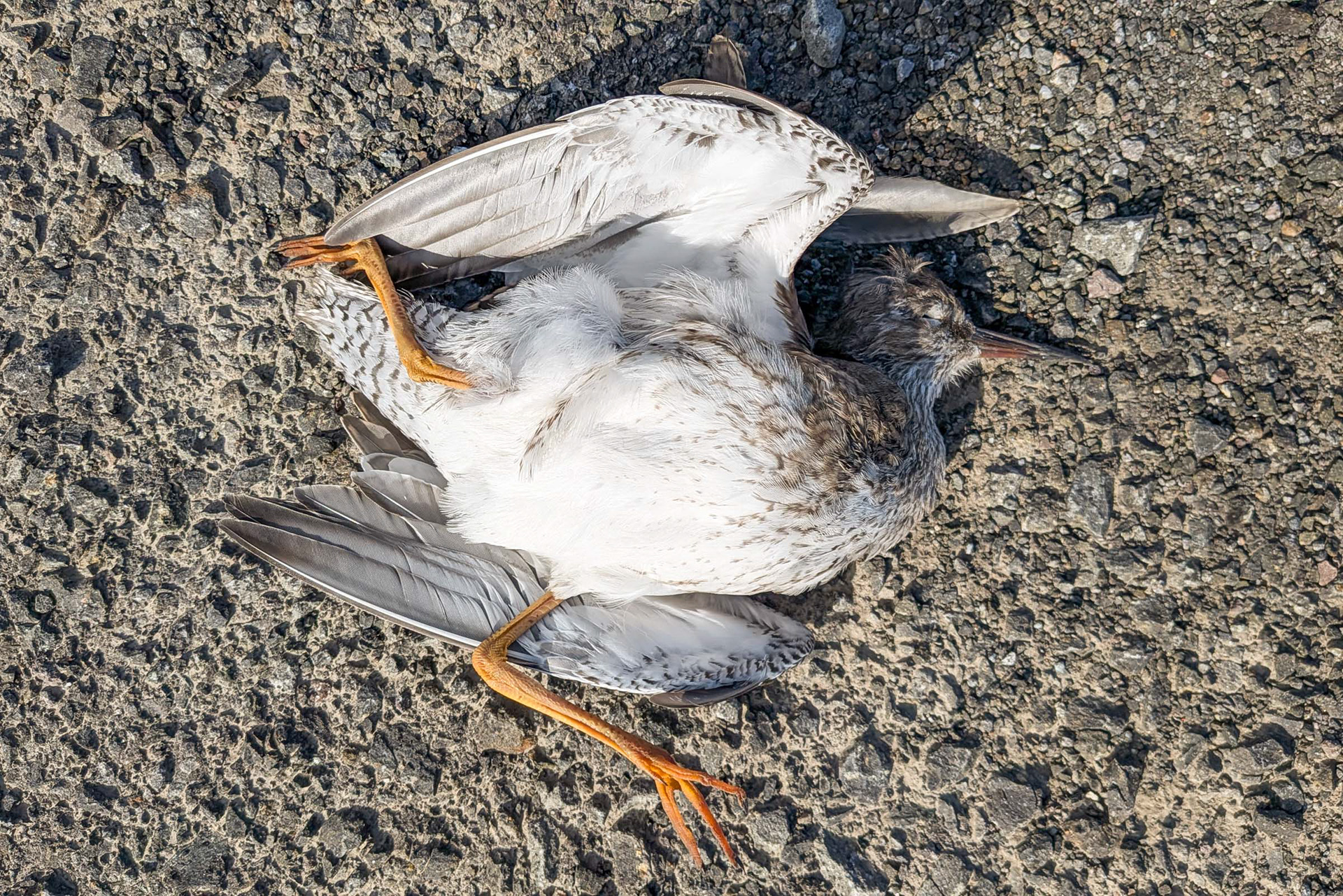
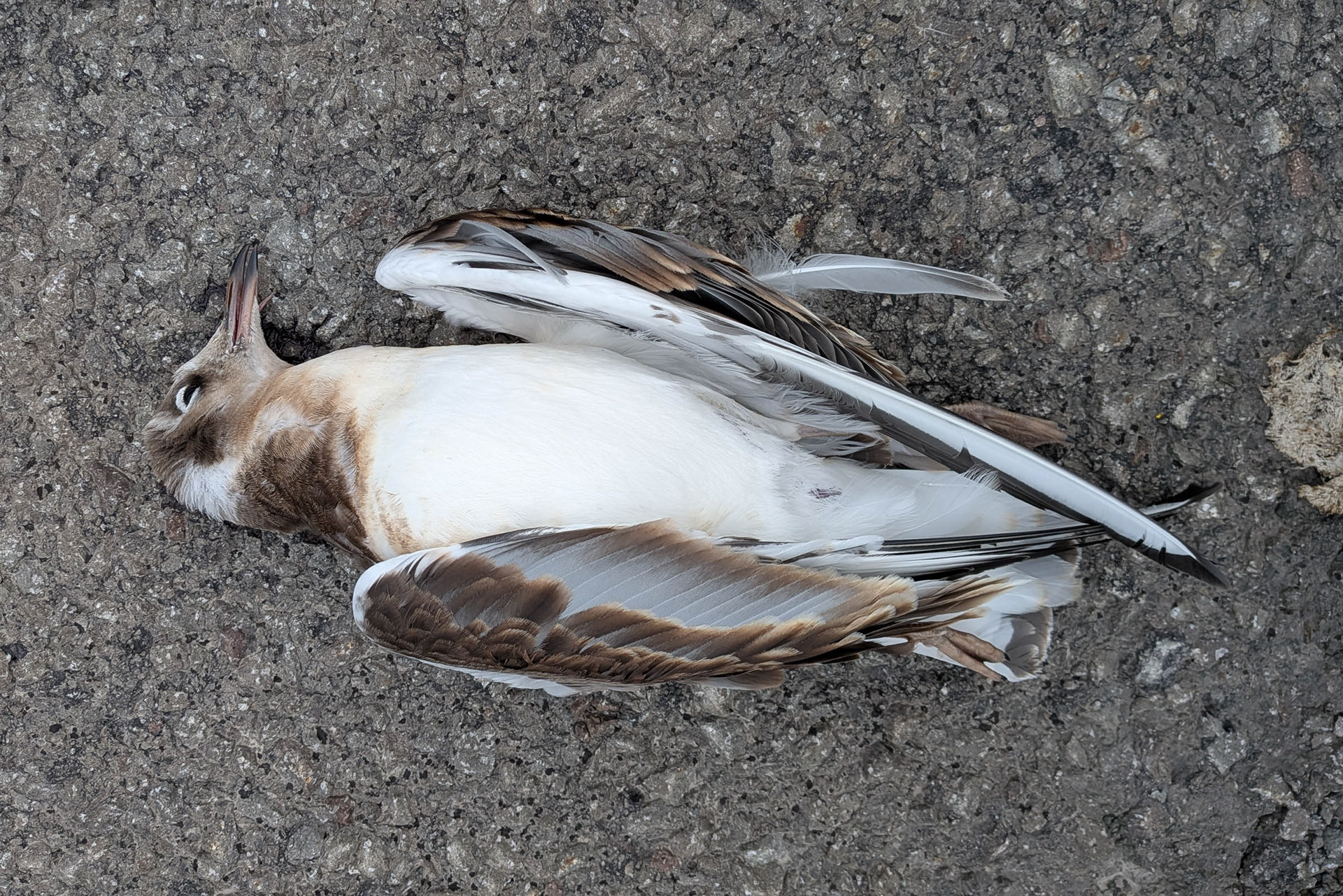
Photographic collection
I have always been fascinated by how nature does not take us into consideration. It exists without us, following its own course.
There is a balance in nature that we seem to have lost the ability to observe without judging: the dead and the living existing at the same time, the highest and the lowest points standing next to each other, without one cancelling the other out.
We have become accustomed to looking at nature through our own perspective, deciding what is beautiful, what is acceptable, what should be shown and what should remain hidden.
During my stay in Iceland, I had the opportunity to experience both sides of this reality. I feel there is a need to rebalance the narrative, to show also those parts of nature that we might instinctively consider inappropriate.
The need to show you this small collection comes from observing nature in its inevitability, its inescapability, its ineluctability: from the Latin ineluctabilis, that which cannot be overcome.
There is a balance in nature that we seem to have lost the ability to observe without judging: the dead and the living existing at the same time, the highest and the lowest points standing next to each other, without one cancelling the other out.
We have become accustomed to looking at nature through our own perspective, deciding what is beautiful, what is acceptable, what should be shown and what should remain hidden.
During my stay in Iceland, I had the opportunity to experience both sides of this reality. I feel there is a need to rebalance the narrative, to show also those parts of nature that we might instinctively consider inappropriate.
The need to show you this small collection comes from observing nature in its inevitability, its inescapability, its ineluctability: from the Latin ineluctabilis, that which cannot be overcome.
THE FIELD DIARY
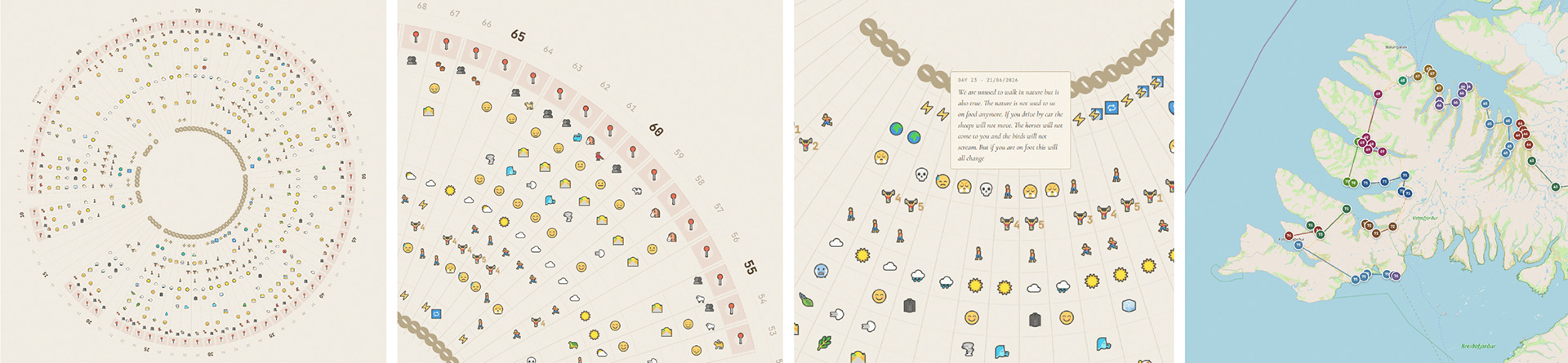
website: diary.ofwalkingonfoot.com
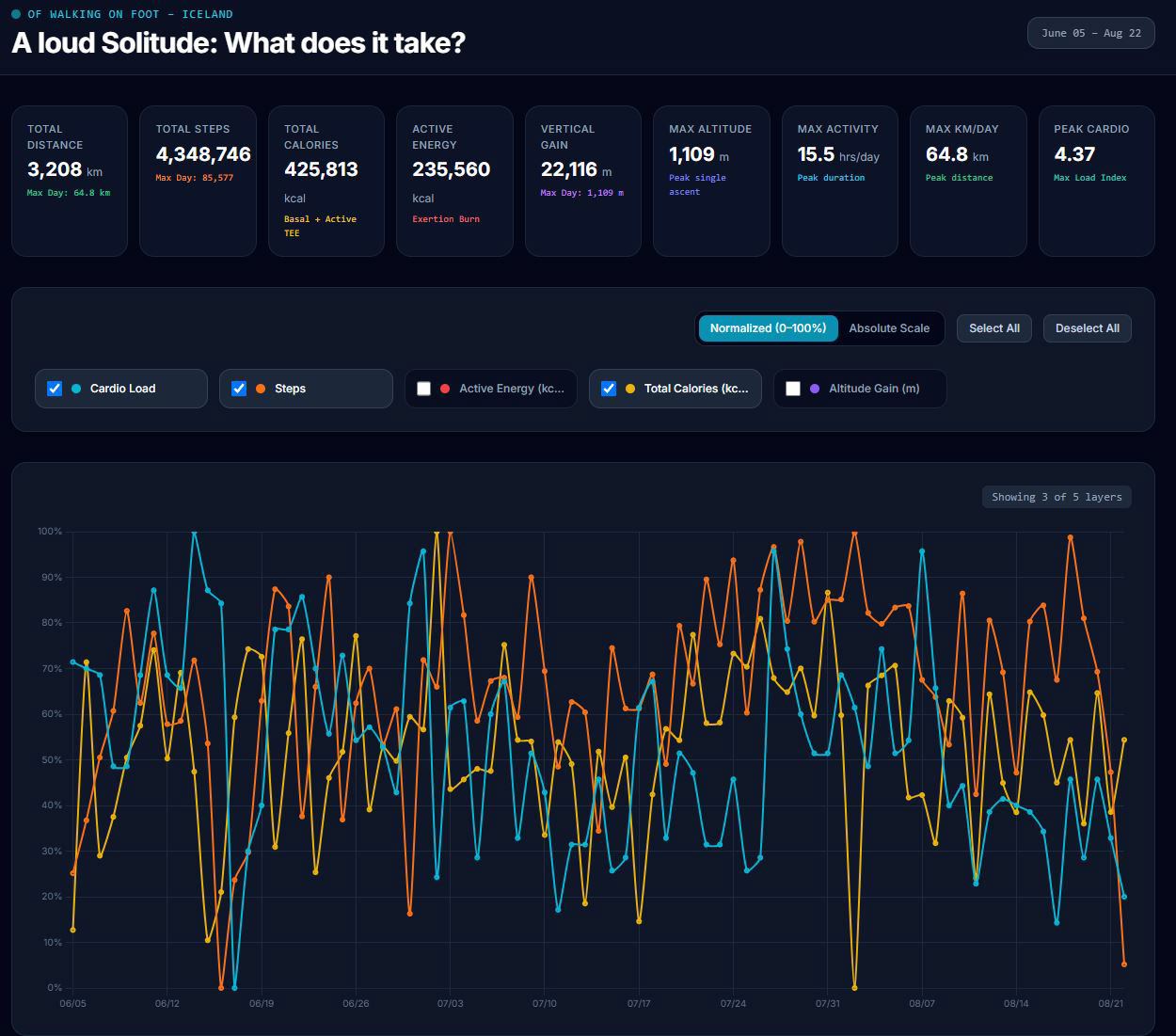
Before leaving, I wanted to prepare a series of tools to capture as much hard data as possible, tracking coordinates, temperature, altitude, and kilometers per day. But I quickly realized that objective data does not tell a story. It is not able to transmit what the project is actually about.
Because of that, I designed the field diary. It is a simple instrument where I added the information I thought was important for how I approach the project: sleep quality, cold, skin condition, pain, tiredness, terrain, where I was camping, whether I was in a trance during the day, the balance between solitude and loneliness, my pace, and the encounters I had along the way. I also used emojis as a precise way to build a quick reference language, and as a way to not take myself too seriously.
It is hard to decide categories and structures before a trip like this, but I needed a strong base, and naturally I used some of those categories much more than others once I was out there. I also had to expand how I categorized encounters. Deciding to include rivers, waterfalls, and glaciers alongside human and animal encounters was a crucial step. That shift ultimately led directly to the "Ask the Water" and "Ask the Water, again" video installations.
It is not just a companion to the photographs. It is a complete tool in its own right, something you can use to actually follow and trace the journey day by day.
In this archive, hard data meets direct physical experience on the same plane. Statistics from the GPS watch, like daily kilometers and altitude gaps, sit right alongside lived details like the level of pain or how the wind was perceived. This text and data are paired with phone photos that share the exact timestamp, matching up with the exact moment the data and notes were taken.
Compressed into a radial visualization across 84 days and 3,200 kilometers, the circle mimics the circularity of the trip. Every day is a performance that needs the same focus, rather than just a step in a progressive timeline. The circle becomes a way to look at the journey where you can start reading from any point, whether that is Day 4, Day 40, or Day 83.
WHAT DOES IT TAKE? BIOMETRICS
MY Déjà Vu Days
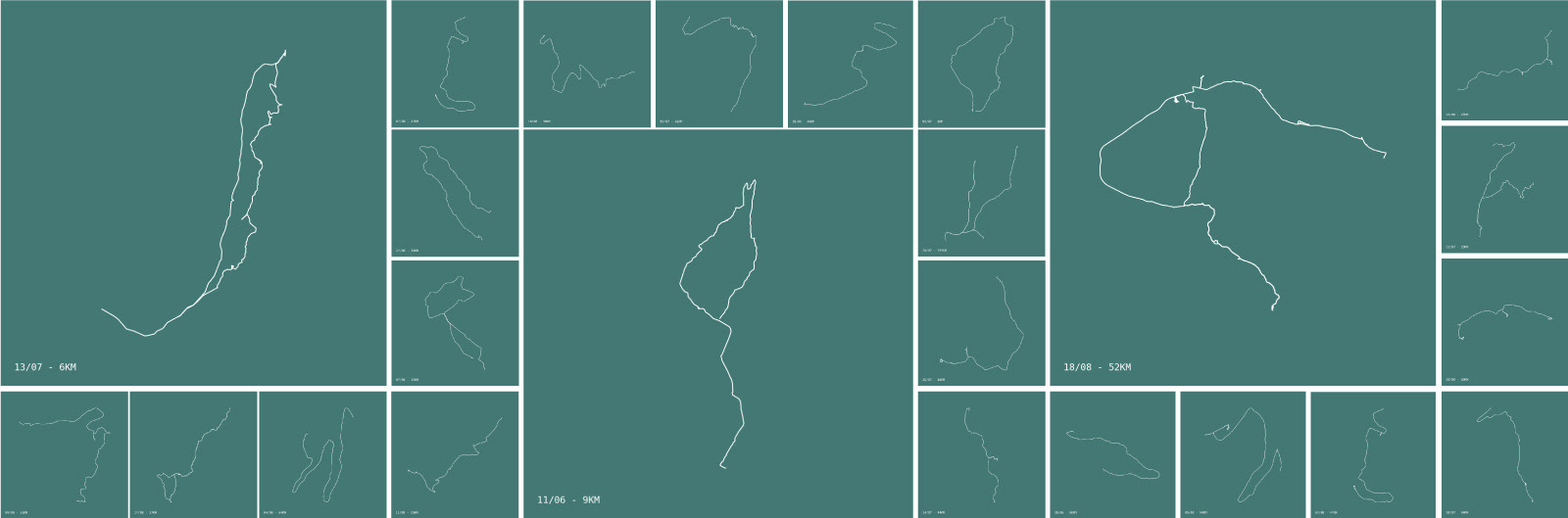
Digital drawings and GPS tracks
When you are in the middle of it, it is almost impossible to look at a map of Iceland and grasp the line you are actually tracing.
The reality on the ground is a heavy, crushing cycle of déjà vu. The daily routine can bring you to your knees if you lose sight of the big picture, forcing a very raw question: how do you convince yourself to step out into miserable weather and start walking when you are still exhausted from the day before?
Out there, walking becomes both the tool and the subject of the project. While the mind grapples with fatigue and the elements, the body is busy writing a parallel narrative. A digital line unfolds almost independently of your conscious thoughts, drawn simply because you keep moving forward.
When it is all over, you can finally look at the screen and see the country brushed with your feet. But until that moment, the nature of the act remains suspended.
Is every day its own solitary performance? Or is it just a fragment of a much larger picture you cannot yet see?
ORIGINAL STATEMENT / PRESS RELEASE BEFORE THE PROJECT
Walking artist and photographer Dario J. Laganà places the body at the center of the action, using endurance to humanize the relationship with nature and building a narrative that connects lived experience with observation.
The interplay of time, body, route and landscape in a juxtaposition of solitude, endurance and encounters in which environmental forces and logistical constraints actively influence perception and decision-making.
Beginning in Reykjavik, Laganà will participate in the Reykjavik Art Festival Hub, (4th June 15:00 - 19.30 at the Iðnó terrace) with a performance and after engaging in an artistic discussion with curator Annabelle von Girsewald, who is facilitating connections within local artistic communities. Through the end of August, he will walk counterclockwise around the island, gathering photographic material, moving images, sound recordings, and interviews with local figures in art, environmentalism, and hospitality. These encounters blend solitary walking with dialogue, creating a shared investigation of nomadic practices and site-specific understanding.
Central to this nomadic mobility is a custom-built, solar-powered trolley, equipped with a rechargeable battery system and an electric friction drive; it allows for long time off-grid autonomy and it transforms the technical necessity of hauling gear into a deliberate, dialogue with the terrain, without renouncing to technology, enabling a continuous presence in remote landscapes.
The project’s development will be accessible through (this) dedicated website ofwalkingonfoot.com. This platform acts as a field diary, combining objective data with personal observations to document the journey in real time and prepare the base for a future exhibition.
By grounding ecological questions in embodied experience, the project seeks to make environmental issues tangible at a human scale, emphasizing effort and fragility over narratives of deprivation. Inspired also by the personal resonance of Andri Snær Magnason’s On Time and Water, Laganà aims to move beyond abstract data, creating stories that make the climate crisis personal, tangible, and deeply human.
Dario J. Laganà is a photographer and walking‑based artist based in Berlin. His practice explores endurance, solitude, and ecological awareness through self‑supported, long distance journeys. Using walking as both method and medium, he places the body in direct exposure to landscape and environmental conditions.
His ongoing project Of Walking on Foot, a long-ter
m artistic research project through walking, includes Wilderness Australis (a series of walks in Australian rainforest), a 600 km traversal of the Shetland Islands, and 1,000 km crossing of Norway, which became the short movie Like a fern between rocks (selected in 3 film festivals in 2025).
Generating visual, sonic, and textual materials to be developed into future exhibitions, publications, and audiovisual works, his practice investigates thresholds between solitude and isolation.
The interplay of time, body, route and landscape in a juxtaposition of solitude, endurance and encounters in which environmental forces and logistical constraints actively influence perception and decision-making.
Beginning in Reykjavik, Laganà will participate in the Reykjavik Art Festival Hub, (4th June 15:00 - 19.30 at the Iðnó terrace) with a performance and after engaging in an artistic discussion with curator Annabelle von Girsewald, who is facilitating connections within local artistic communities. Through the end of August, he will walk counterclockwise around the island, gathering photographic material, moving images, sound recordings, and interviews with local figures in art, environmentalism, and hospitality. These encounters blend solitary walking with dialogue, creating a shared investigation of nomadic practices and site-specific understanding.
Central to this nomadic mobility is a custom-built, solar-powered trolley, equipped with a rechargeable battery system and an electric friction drive; it allows for long time off-grid autonomy and it transforms the technical necessity of hauling gear into a deliberate, dialogue with the terrain, without renouncing to technology, enabling a continuous presence in remote landscapes.
The project’s development will be accessible through (this) dedicated website ofwalkingonfoot.com. This platform acts as a field diary, combining objective data with personal observations to document the journey in real time and prepare the base for a future exhibition.
By grounding ecological questions in embodied experience, the project seeks to make environmental issues tangible at a human scale, emphasizing effort and fragility over narratives of deprivation. Inspired also by the personal resonance of Andri Snær Magnason’s On Time and Water, Laganà aims to move beyond abstract data, creating stories that make the climate crisis personal, tangible, and deeply human.
Dario J. Laganà is a photographer and walking‑based artist based in Berlin. His practice explores endurance, solitude, and ecological awareness through self‑supported, long distance journeys. Using walking as both method and medium, he places the body in direct exposure to landscape and environmental conditions.
His ongoing project Of Walking on Foot, a long-ter
m artistic research project through walking, includes Wilderness Australis (a series of walks in Australian rainforest), a 600 km traversal of the Shetland Islands, and 1,000 km crossing of Norway, which became the short movie Like a fern between rocks (selected in 3 film festivals in 2025).
Generating visual, sonic, and textual materials to be developed into future exhibitions, publications, and audiovisual works, his practice investigates thresholds between solitude and isolation.
My practice is rooted in walking as an artistic method where body, route, and landscape are inseparable. In 2026, I will enter its most intensive phase: a sustained act of walking that I will prepare through months of artistic development. This will take the form of around 3,000 km nomadic journey around Iceland, entirely on foot with a custom-built, solar-powered trolley. Along the way, I will gather photographs, videos, sound recordings, archival pictures of objects, audio and written observations, building a comprehensive artistic archive.
Earlier in my career, beginning with a walk on the Orkney Islands 20 years ago, travel served as an unspoken backdrop. I moved through landscapes and societies to take photographs, with the journey's choices, constraints, and demands remaining invisible. In recent years, also with the development of the trolley, my practice has shifted toward a form of field-based research where the act of walking, the encounters along the way, and the states of mind they generate become integral to the work.
This approach is "in itinere", developed during walks of increasing duration: 360 km in the Australian rainforest, 560 km across the Shetland Islands, and 1,000 km through Norway, resulting in the short film Like a fern between rocks, selected for the Frome International Climate Film Festival, Beyond Cars Festival and Premio Corto Montagna in 2025 as time-based visual art.
I took a pause in 2025 to reflect on the deeper frameworks of my practice, engaging with Rebecca Solnit's critiques of heroic narratives in Wanderlust and her vision of walking as "a mode of making the world as well as being in it". This period also allowed me to explore more fully Frédéric Gros' assertion that walking "suspends time, interrupts work, and breaks with everyday routines" (A Philosophy of Walking). Stepping back from the field renewed both my mind and spirit, and I now return with a sharper sense of purpose.
This methodology draws from performance art, site-specific installation, and environmental art, echoing the lineage of artists like Hamish Fulton and also integrating it with Iceland's related environmentalist writers like Andri Snær Magnason, but extending it with a multi-sensory, logbook-building form.
In my walking practice, I see technology as a quiet ally rather than an intrusion. I work with whatever tools I can build or adapt, from solar power systems to modular engineering, to help me endure the physical demands of long and remote journeys. For the Iceland walk, I will adapt the trolley I designed to carry my equipment with an engine (allowing me to walk hands free), to be used as a shelter and further ideas are scheduled. Even though Hamish Fulton's walks in Iceland remain an important reference for me, especially his focus on the walk as the work, my approach places technology within that frame, using renewable energy and DIY solutions to help me focus more on other topics. In this way the trolley becomes both a survival tool and a companion, bridging the endurance and meditative qualities of walking with the possibilities of contemporary tools and ecological awareness.
The gradual shift toward Arctic environments emerged both from practical necessity, as walking proves easier in colder climates, and personal history: growing up in Naples under Mount Vesuvius' shadow, I've always questioned how other communities coexist with geological forces. This walk will also align with the rare total solar eclipse of summer 2026, a singular moment to experience and document in solitude, to be included in my future works.
As I prepare, I hold these questions for seeing, keeping me awake to what the walk might offer: How will months of walking fracture and reshape time? Is exhaustion a path to discovery or just a romanticized struggle? What remains when everything nonessential falls away? These are not problems to solve but ways of looking that keep the work alive.
Beyond financing, institutional support represents vital recognition, enabling this demanding journey as an open field of artistic inquiry. With such support, I will develop a significant new body of work through months of endurance walking through Iceland's shifting landscapes, laying the foundation for future artistic projects that may include presentations, installations, or other forms of sharing.
The project is supported by Culture Moves Europe,
a project funded by the European Unionin collaboration with the Goethe Institut.
a project funded by the European Unionin collaboration with the Goethe Institut.